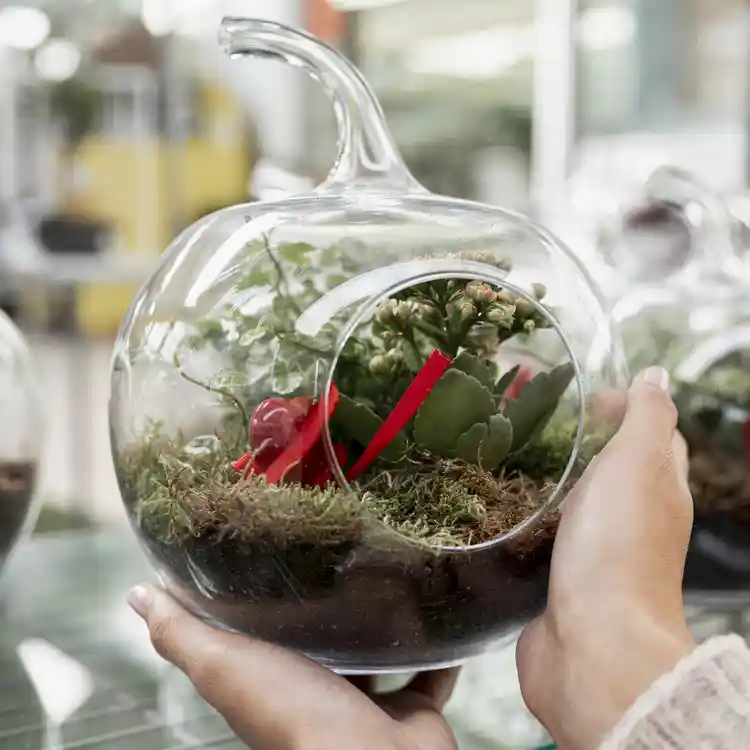
There’s something quietly magical about a garden you can hold in two hands. A garden in a jar — often called a terrarium — packs moss, ferns, and tiny foliage into a sealed or open glass container, creating a self-contained little ecosystem that can thrive for months, sometimes years, with barely any attention.
It’s one of the most rewarding entry points into gardening for people with no yard, no time, or no confidence with plants.
This guide covers what a garden in a jar actually is, which plants and containers work best, how to build one layer by layer, and how to keep it alive long-term.
See also: Creating Your Own Oasis: Guide to Setting Up a Lush Indoor Garden >
What Is a Garden in a Jar Exactly?
A jar garden is a small planting enclosed in glass — anything from a repurposed pickle jar to a proper apothecary-style terrarium — that mimics the humidity and moisture cycle of a greenhouse.
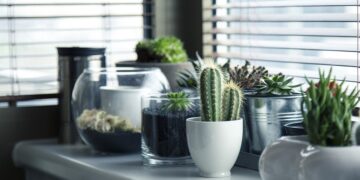
In a closed garden in a jar, the lid stays on most of the time, trapping moisture that evaporates from the soil, condenses on the glass, and drips back down, creating a self-watering cycle. In an open jar garden, the container has no lid or a wide opening, allowing more airflow — better suited to plants that dislike constant humidity, like succulents.
The core appeal is low maintenance: a well-built closed terrarium may only need watering every few weeks, or even less.
Choosing the Right Container
Almost any clear glass vessel can work, but a few features make life easier:
A wide opening makes planting and maintenance far less fiddly than a narrow-necked bottle.
Clear, uncolored glass lets in the most light — tinted glass can restrict plant growth.
A lid or stopper is essential for closed, humidity-loving setups; open containers work fine without one.
Popular choices include apothecary jars, brandy snifters, fish bowls, glass cloches, and even large mason jars.
Reused containers — pickle jars, sweet jars, fishbowls — work just as well as anything bought specifically for the purpose.
Building the Layers
A garden in a jar’s long-term health depends heavily on how it’s layered.
Working from the bottom up:
Drainage layer – A layer of small pebbles, gravel, or clay pellets (about an inch, more in a larger jar) gives excess water somewhere to go besides the roots, since most jars lack drainage holes.
Charcoal layer – A thin layer of horticultural charcoal sits above the drainage stones. It helps filter the water and keeps the enclosed environment from developing a stale or musty smell.
Substrate barrier (optional) – A thin layer of sphagnum moss laid over the charcoal stops soil from washing down into the drainage layer over time.
Potting mix – A well-draining, low-nutrient potting soil goes on top — roughly 2–3 inches, depending on your plants’ root depth. Standard houseplant soil, ideally mixed with a bit of perlite, works well.
Plants and top layer – Once plants are placed and settled, a decorative top layer of moss, bark, or small stones finishes the look and helps retain moisture at the soil surface.
Choosing Plants for a Garden in a Jar
The single biggest factor in a jar garden’s success is matching plants to the container type — closed and humid, or open and airy.
Best Plants for Closed (Humid) Terrariums
These thrive on moisture and low light, and tend to stay small and slow-growing:
Mosses (sheet moss, cushion moss) — the classic terrarium ground cover
Ferns — particularly small varieties like button fern or maidenhair fern
Fittonia (nerve plant) — prized for its striking vein patterns
Peperomia — compact, tolerant of low light
Baby’s tears (Soleirolia soleirolii) — a dense, mossy carpet plant
Miniature pothos or philodendron — for a bit of trailing greenery
Best Plants for Open (Dry) Terrariums
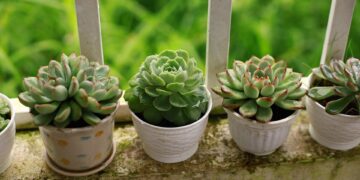
Succulents (echeveria, haworthia, sedum)
Cacti (small varieties only)
Air plants (tillandsia) — technically soil-free, but they suit an open glass display beautifully
Mixing plants from the wrong category — say, a succulent in a closed, humid jar — is one of the most common reasons jar gardens fail. Succulents and cacti rot quickly in trapped moisture, while moss and ferns dry out and brown in open, dry air.
Watering and Care
Overwatering is the single most common cause of jar garden failure, especially in closed setups.
Closed terrariums need very little water. Mist lightly or add a small amount of water only when the soil looks dry and there’s no condensation on the glass. A well-balanced closed jar can sometimes go a month or more between waterings.
Open terrariums dry out faster and need more regular, light watering — treat them roughly like you would any potted succulent.
Watch for condensation. Heavy, constant fogging on the glass means there’s too much moisture; leave the lid off for a day to let it dry out. No condensation at all after a fresh watering suggests it needs a bit more water.
Light matters more than most people expect. Bright, indirect light suits most jar garden plants. Direct sun through glass can act like a magnifying glass and scorch or overheat plants, so an east-facing windowsill or a spot a few feet back from a bright window usually works better than direct sun.
Prune as needed. Trim back any plant that’s outgrowing its space — in a closed environment, overcrowding restricts airflow and encourages mold.
Troubleshooting Common Problems
Mold or fungus on the soil surface — Usually means too much moisture and not enough airflow. Remove the lid for a day or two and cut back on watering.
Yellowing or rotting leaves — A classic overwatering symptom, especially in succulents placed in a closed jar.
Leggy, pale growth — A sign of insufficient light; move the jar to a brighter spot.
Plants shrinking or browning at the edges — Common in open terrariums that have dried out; increase watering frequency slightly.
Why Jar Gardens Are Worth Trying
Beyond their low-maintenance appeal, jar gardens are an easy way to bring greenery into small apartments, offices, and any space without room for full-sized houseplants.
They also make excellent, long-lasting gifts, and because most of the materials — jars, soil, small plant cuttings — are inexpensive, they’re a low-risk way to experiment with plant care before committing to something bigger.
A well-built jar garden isn’t a static display; it’s a genuinely living ecosystem, complete with its own tiny water cycle, quietly doing its thing on a shelf for years with almost no help from you.
Frequently Asked Questions
1. How long do jar gardens last?
A well-maintained closed terrarium with the right plant choices can last for years — some enthusiasts have kept the same sealed jar garden thriving for a decade or more with only occasional watering and pruning.
2. Do jar gardens need sunlight?
Yes, but indirect light is best. Direct sunlight through glass can overheat and scorch the plants inside, so bright, filtered light — such as a few feet back from a sunny window — is ideal.
3. Can I use any glass jar?
Most clear glass containers work, provided the opening is wide enough to plant and maintain comfortably. Tinted or heavily colored glass isn’t ideal, since it blocks light plants need.
4. Do closed terrariums need drainage holes?
No — instead of drainage holes, a layer of gravel or clay pellets at the base collects excess water and keeps it away from the plant roots.
5. Why is my jar garden smelling musty?
A charcoal layer beneath the soil typically prevents this by filtering the water and air inside the jar. If odor develops anyway, it usually signals overwatering or poor airflow; letting the jar sit open for a day or two often resolves it.
6. Can succulents go in a closed jar garden?
Not recommended. Succulents and cacti are adapted to dry conditions and tend to rot in the trapped humidity of a closed terrarium. They do much better in an open container with good airflow.