
The best gardens give homeowners the chance to extend their homes into a beautiful natural setting that reflects their taste and personality.
Maybe you’ve just moved into a new home and want to make your garden feel like your own, or your garden’s in dire need of a refresh ahead of the summer; whatever your motivation, there’s one thing you need to know before we proceed: there’s no rulebook to stick to when it comes to designing your garden.
Gardening is a form of art. It’s an opportunity for us to express ourselves without limits (besides our fences) and design a space that really represents who we are and where we want to live.
Some people might prefer a smaller urban garden that’s an explosion of vivid colours, while others want to create a spacious countryside backyard that’s full of different features that are perfect for entertainment and relaxation.
But you won’t be able to express yourself without understanding the craft. Deepen your understanding of practical features and planting schemes, assess plenty of different materials before making a selection, and keep an eye on what’s in season to create a garden with plenty of personal flair that stays functional all year round.
In this guide, I want to explore a variety of different design ideas that can give you the tools and inspiration you need to create an outdoor space that is quintessentially you.
Clearly Defined Garden Zones
It’s easy for a lot of us to go nuts at the garden centre, then lug everything back and plop it all in the garden haphazardly, making it up as we go. And don’t get me wrong – this can still net some amazing results.
But more often than not, in the following days and weeks, I’ll start to get some creeping regrets about certain placements or entire sections of the garden as a whole.
That’s why one of the easiest and most effective ways to design your garden is to give it some structure. Do this by dividing the space into distinct sections. It might sound a bit simple and obvious, but this approach will help you get the most out of the entire space.
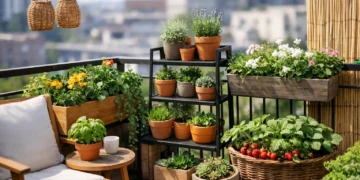
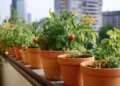
You can start by assigning purposes to different areas, like dining, lounging, growing vegetables, or a play area for little ones. If you have a patio area, then that’s perfect for an outdoor dining area. A secluded corner with nothing to it? Plonk down some comfortable seating or hang up a hammock, and you have yourself a peaceful retreat.
If you want to clearly mark the borders between each section, then raised beds, decorative borders, or a neatly trimmed hedge are ideal because they help to guide people through the space almost subconsciously.
To accomplish this, a good pair of garden shears or a heavy duty hedge trimmer can get the job done.
Incorporate Layered Planting
Almost any garden stands to benefit from layered planting, as it adds more depth and visual detail. Instead of grouping together plants that are all a similar size, try arranging them in layers to create a more natural and varied look.
This will transform your garden into a much more dynamic space, and, when you break it down, it’s extremely straightforward.
To get started, try laying a backdrop of taller trees and/or shrubs, followed by some medium sized plants, before finishing off with eye catching, low growing flowers and ground covers at the front.
If you’re able to follow these steps as a guide (even broadly), you’ll allow all of your plants to be visible while, at the same time, creating a vivid and abundant look. Plus, if you’re newer to gardening, then you won’t need an extensive toolset to do this – just stick to a trowel, spade, and watering can.
Stylish Outdoor Seating
If you’re remotely interested in spending any time whatsoever in your garden, then you’ll likely need a comfortable place to sit. Inviting outdoor seating will encourage you and your family or friends to spend more time away from screens and outdoors, especially during Spring and Summer.
You’ll no doubt want to choose seating arrangements that complement your vision for your garden, but you also need to consider the practicxal requirements.
Modern outdoor sofas seem more luxurious, but you’ll need to remember to take the cushions inside when the weather takes a turn for the worse!
Also, you should naturally pay attention to reviews when you’re considering any major purchase, but if you’re looking at metal furniture, you’ll definitely need to see if there are any comments about rusting.
There’s nothing worse than forking out a load of your hard-earned cash on luxury outdoor furniture, only for it to start rusting after just a couple of months. That’s why wooden furniture is an excellent practical choice, as well as being a safer, more timeless design choice.
Consider the layout of your seating before committing to a purchase too; I’d always recommend positioning it to take advantage of the best views and in areas that catch the most sunlight.
Introduce Water Features
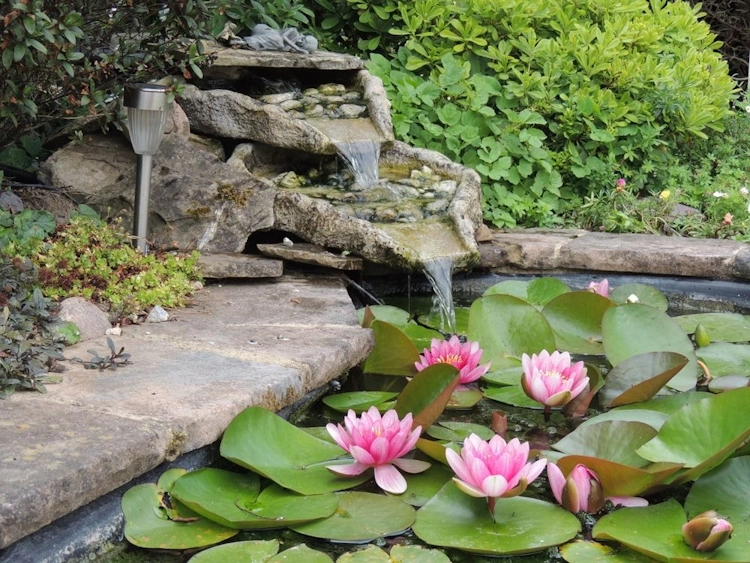
Lots of people out there have good gardens. But what separates a good garden from a great garden? I believe, it often comes down to features that have a ‘wow’ factor, and water features certainly have that.
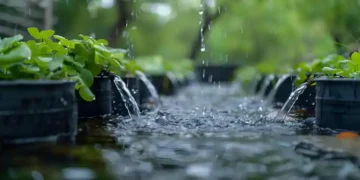
They’re capable of creating either a sense of drama or tranquility, depending on preference. Oftentimes, the mere sound of flowing water is enough to create a serene environment that helps block out unwanted sounds from nearby roads or neighbours’ homes.
There are plenty of options to choose from – more than I could possibly cover in detail here. I could talk about water features all day, but since I need to keep it brief, I’ll say that even the most modest of grdens can be elevated with the right water feature, even if it’s just a simple fountain.
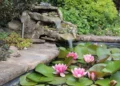
Personally, I’ve always loved ornamental ponds, as they feel authentic to any natural space and help support local wildlife.
Summary
Designing your garden shouldn’t feel like another chore to do on Sundays. I liken it to an ongoing creative project, where somedays I’ll make a splash with some huge changes to my beds or furniture, while on other days, I’ll just make some minor tweaks here and there.
Break down your ideal garden into a vision comprised of different elements, like flower beds, outdoor seating and water features, that are all organised into clear, distinct areas.
We all want something slightly different from our gardens, but when my garden feels like a really extension of my home and is a great place to relax, entertain, and connect with the local wildlife, then I know that I’m doing something right.