
There’s something rather wonderful about spring bulbs. Just when the garden has spent months looking a little bare, the first green shoots appear and suddenly you know winter is finally on its way out.
I think bulbs are also one of the easiest ways to make a garden look as though you’ve put far more effort into it than you actually have. Plant them once in fall, wait patiently through winter, and you can be rewarded with weeks — or even months — of color the following spring.
And you don’t need an enormous garden. Spring bulbs are equally at home in flower beds, beneath deciduous trees, along pathways, scattered through lawns, tucked into rock gardens or packed into containers by the front door.
The real trick is choosing a mixture rather than relying on one type. Combine very early bulbs such as snowdrops and crocuses with daffodils, tulips and later-flowering alliums and your spring display can keep changing as the season progresses.
Here are some of my favorite spring bulbs for transforming a garden.
Quick Guide to the Best Spring Bulbs
| Bulb | Typical Flowering Time | Height | Best For |
|---|---|---|---|
| Snowdrops | Late winter–early spring | 4–8 inches | Woodland-style planting |
| Crocuses | Early spring | 3–6 inches | Lawns, borders and pots |
| Muscari | Early–mid spring | 6–8 inches | Edging and naturalizing |
| Daffodils | Early–mid spring | 6–24 inches | Almost anywhere |
| Hyacinths | Early–mid spring | 8–12 inches | Fragrance and containers |
| Tulips | Mid–late spring | 6–24+ inches | Bold displays |
| Fritillaries | Mid–late spring | 8–36+ inches | Unusual statement planting |
| Alliums | Late spring–early summer | 12–48+ inches | Borders and architectural displays |
Flowering times vary considerably according to variety, climate and local weather.

1. Daffodils
If I could recommend only one spring bulb, I’d probably choose the daffodil.
They’re cheerful, instantly recognizable and available in far more varieties than the familiar large yellow trumpet daffodil.
You can find white, cream, lemon, orange and even pink-tinged varieties, as well as miniature daffodils that are perfect for containers and rock gardens.
One of their biggest attractions is reliability. Many daffodils can remain in the ground and gradually multiply, creating increasingly impressive displays.
They work beautifully:
beneath deciduous trees
through lawns
along driveways
in perennial borders
in woodland gardens
in containers
If you want bulbs that will become a long-term part of your garden rather than simply putting on a one-season performance, daffodils are hard to beat.
Good varieties to try
‘Tête-à-Tête’ – A lovely miniature variety for containers and border edges.
‘Thalia’ – Elegant white flowers with a particularly graceful appearance.
‘Ice Follies’ – Large creamy-white blooms with pale yellow centers.
‘Tahiti’ – Showy double flowers in yellow and orange.
View our guide to Growing Daffodils >
2. Tulips
Tulips are the bulbs I choose when I really want spring color to make an impact.
Few plants produce quite the same range of colors. There are tulips in practically every shade imaginable, from pure white and pastel pink through vivid orange, deep crimson and almost black.
There are also striped, fringed, ruffled and double varieties.
Rather than planting one tulip here and another there, I prefer planting them generously in groups. A substantial drift or container filled with the same variety usually produces a much stronger effect than lots of isolated flowers.
Tulips are fantastic for:
statement containers
formal borders
cottage gardens
cutting gardens
planting among perennials
One thing worth knowing is that not every tulip behaves like a dependable perennial. Some return well, while others become weaker after their first or second year.
If longevity is particularly important, look at species tulips and varieties specifically recommended for perennializing.
View our guide to Growing Tulips >
3. Crocuses
Crocuses may be small, but they’re some of the most exciting flowers in my garden.
They appear so early that finding the first crocus of the year can feel like an event in itself.
Their cup-shaped flowers come in white, yellow, lavender, purple and striped combinations.
Crocuses look especially attractive when planted naturally rather than in rigid lines.
Try scattering a handful of bulbs over an area and planting them wherever they fall. The resulting irregular clusters look much more as though nature put them there.
They’re particularly good for naturalizing in lawns, although you need to allow their foliage to mature before mowing it away.
They also work beautifully along pathways and at the front of borders where their tiny flowers won’t disappear behind taller plants.
View our guide to Crocus Flowers >
4. Snowdrops

For an early indication that spring is coming, it’s difficult to beat snowdrops.
In some gardens they’re flowering while much of the landscape still looks firmly stuck in winter.
Their delicate white flowers are particularly lovely beneath bare deciduous trees and shrubs.
That’s one of the clever things about many spring bulbs: they can make use of sunny areas beneath deciduous trees before the branches produce their full canopy of leaves.
Snowdrops look wonderful planted:
beneath trees
along woodland paths
in shady borders
around shrubs
through informal areas of lawn
They are particularly effective when allowed to spread into colonies rather than being kept in tiny groups.
View our guide to Snowdrop Bulbs >
5. Grape Hyacinths – Muscari
Muscari, commonly called grape hyacinths, produce clusters of tiny bell-shaped flowers that resemble miniature bunches of grapes.
Blue is the classic color, although white and paler varieties are also available.
They are low-growing and therefore perfect for filling the front of a spring border.
I particularly like combining blue muscari with yellow daffodils. It’s simple, but the contrast is fantastic.
They also naturalize readily in suitable conditions.
Plant them beneath taller bulbs such as tulips and you effectively create two layers of flowers from almost the same patch of ground.
6. Hyacinths
If fragrance matters as much as appearance, hyacinths deserve a place in your spring planting plans.
Their dense flower spikes have a strong, distinctive perfume and come in shades including:
blue
purple
pink
white
yellow
apricot
Because their flowers are compact and dramatic, hyacinths are particularly effective in pots.
A container near a doorway, patio or seating area means you get to enjoy their fragrance every time you pass.
I wouldn’t scatter hyacinths randomly through a large border. I think they tend to look better arranged in generous groups or containers where their distinctive shape becomes part of the display.
View our guide to Growing Hyacinths >
7. Alliums

Alliums arrive slightly later and provide a wonderful bridge between traditional spring bulbs and the early-summer garden.
They’re members of the onion family and many varieties produce spectacular spherical flower heads held above the garden on tall stems.
Large purple alliums can look almost like floating pom-poms.
They’re superb among perennial plants because their narrow stems take up remarkably little visual space.
By the time surrounding perennials start putting on serious growth, the allium flowers appear above them.
Some varieties are enormous statement plants while others remain relatively compact.
For dramatic height, look at varieties such as ‘Globemaster’ and ‘Purple Sensation’.
8. Fritillaries

If you want something a little more unusual than tulips and daffodils, have a look at fritillaries.
The group ranges from delicate little plants to surprisingly imposing flowers.
Fritillaria meleagris, commonly called snake’s head fritillary, is one of my favorites.
Its nodding bell-shaped flowers have an extraordinary checkerboard pattern in shades of purple and pink, although white versions are also available.
At the other extreme is Fritillaria imperialis, or crown imperial, which produces tall stems topped by dramatic clusters of flowers.
They are an excellent way of adding something unexpected to a spring garden.
9. Glory of the Snow
Glory of the snow is another small bulb that deserves more attention.
As its name suggests, it flowers extremely early.
The star-shaped blue flowers have pale centers and look lovely planted in informal drifts.
Because they’re small, don’t hide them at the back of a busy flower bed.
Instead, try them:
beneath deciduous shrubs
beside pathways
in rock gardens
at the front of borders
They’re particularly attractive when several bulbs spread into larger colonies.
10. Spring Starflower
Spring starflower produces pretty star-shaped flowers, commonly in shades of pale blue, lavender or white.
These aren’t huge statement flowers. Instead, they’re useful for creating that soft carpet of spring color that looks fantastic beneath trees and between larger plants.
Mixing smaller bulbs like these with taller varieties creates a much more interesting garden than relying entirely on tulips or daffodils.
How to Create a Spring Bulb Display That Lasts for Months
One of the most common mistakes with spring bulbs is buying everything because it looks beautiful on the packet without checking when it flowers.
The result can be an incredible display for two weeks followed by very little.
Instead, think about your bulbs as a sequence.
Very Early Spring
Plant:
snowdrops
early crocuses
glory of the snow
These provide the first splashes of color.
Early to Mid Spring
Next come:
daffodils
muscari
hyacinths
Your garden begins looking much fuller.
Mid to Late Spring
Then introduce:
tulips
later daffodils
fritillaries
Late Spring to Early Summer
Finally, let alliums take over.
By deliberately choosing varieties with different flowering periods, you can create a succession rather than one enormous spring explosion followed by nothing.
How Many Bulbs Should I Plant Together?
More than you probably think.
Bulbs generally have much greater visual impact when grouped together.
Five daffodils look better than one.
Fifteen tulips look better than five.
Fifty crocuses scattered through an area can look dramatically better than ten planted in a straight row.
For borders, try planting bulbs in irregular groups or drifts.
This gives the planting a more natural appearance and stops the garden looking as though every plant has been carefully positioned at identical intervals.
Penn State Extension similarly recommends creating waves or drifts of bulbs for stronger visual impact rather than scattering individual colors and varieties around the garden.
When Should You Plant Spring Bulbs?
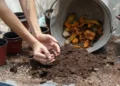
Most spring-flowering bulbs are planted in fall.
The exact timing depends on where you live and your local climate, but they generally need time to establish roots before the soil freezes.
Tulips can often be planted somewhat later than other spring bulbs.
Don’t panic if you discover an unopened bag of bulbs later than planned, though. If the ground is workable and conditions are suitable, planting them is generally preferable to leaving hardy spring bulbs forgotten in a garage until spring.
Where Should You Plant Spring Bulbs?
Most traditional spring bulbs prefer a sunny position and, importantly, well-drained soil.
Drainage matters enormously.
Bulbs sitting in persistently waterlogged soil have a much greater chance of rotting.
An interesting option is planting bulbs beneath deciduous trees.
Because spring bulbs grow and flower before many trees produce their full canopy, they can take advantage of the early-season sunlight reaching the ground.
Once the bulb foliage starts disappearing, the trees and surrounding plants take over.
It’s a lovely way to make one part of the garden perform several different jobs during the year.
How Deep Should You Plant Bulbs?
Always check the instructions supplied with your bulbs because different species have different requirements.
However, a widely used general guideline is to plant bulbs roughly two-and-a-half to three times as deep as the height of the bulb.
Large bulbs therefore go considerably deeper than tiny bulbs.
Place the bulb with its pointed growing end facing upward and its root end downward.
Can’t tell which end is which?
Don’t worry too much. With many bulbs, planting them sideways is preferable to endlessly trying to work it out. The shoot can usually find its way toward the surface.
Plant Spring Bulbs in Containers
You absolutely don’t need a traditional garden bed to enjoy bulbs.
Containers may actually be one of the best ways to grow them.
Tulips, miniature daffodils, crocuses, muscari and hyacinths all work beautifully in pots.
The important thing is drainage.
Use containers with drainage holes and avoid leaving pots sitting permanently in water.
Try a Bulb Lasagna
One of my favorite techniques is sometimes called lasagna planting.
You plant different bulbs at different depths in the same container.
For example:
Bottom layer: tulips
Middle layer: daffodils
Upper layer: crocuses or muscari
The bulbs aren’t literally stacked directly on top of each other. Instead, they’re positioned at their appropriate planting depths.
As spring progresses, the different bulbs emerge and flower at different times.
You get an enormous amount of interest from one pot.
Naturalizing Bulbs in Your Garden
Naturalizing simply means planting bulbs so that they establish themselves and gradually produce a larger, informal display.
Small bulbs are particularly useful for this.
Good candidates include:
crocuses
snowdrops
muscari
small daffodils
Gardener’s Supply notes that crocuses, muscari, snowdrops and several other small spring bulbs work particularly well for naturalizing in lawns or informal spaces.
If planting bulbs through grass, remember that their leaves need time after flowering to continue photosynthesizing.
That leads us to one of the most important rules of bulb growing.
Don’t Cut the Leaves Off Too Soon
The flowers may be the glamorous part of the plant, but the leaves have an important job to do after flowering finishes.
They continue collecting energy that is stored in the bulb and helps support future growth and flowering.
Penn State Extension recommends leaving green bulb foliage in place after flowering.
Let the leaves turn yellow and die back naturally before removing them.
Yes, fading daffodil leaves can occasionally look untidy.
But cutting them off while they’re still green can reduce the plant’s ability to replenish its energy reserves.
One trick is to plant bulbs among later-emerging perennials.
As the bulb foliage begins looking tired, the perennial plants grow around it and help hide it.
My Favorite Spring Bulb Combinations
Sometimes choosing individual bulbs is harder than creating combinations.
Here are a few easy starting points.
Classic Spring
Yellow daffodils + purple crocuses + blue muscari
Bright, cheerful and difficult to get wrong.
Soft Pastels
White daffodils + pale pink tulips + white hyacinths
Ideal for a calmer cottage-style garden.
Bold and Dramatic
Dark purple tulips + orange tulips + purple alliums
A much stronger, contemporary look.
Woodland Spring
Snowdrops + crocuses + snake’s head fritillaries
Perfect beneath deciduous trees.
Container Display
Miniature daffodils + tulips + muscari
Use different planting depths to create a long-lasting layered pot.
How to Choose Healthy Bulbs
When buying bulbs, have a quick inspection before planting them.
Good bulbs should generally feel:
firm
substantial for their size
free from obvious rot
free from major cuts or damage
Avoid bulbs that are extremely soft, mushy or badly shriveled.
Penn State Extension recommends choosing firm, good-quality bulbs without cuts or obvious damage.
It may be tempting to buy the cheapest bag available, but bulb quality can make a difference to the eventual display.
Which Spring Bulbs Come Back Every Year?
Several spring bulbs can return year after year when grown in suitable conditions.
Some of the best options include:
Daffodils – One of my first choices for dependable perennial displays.
Crocuses – Particularly good for naturalizing.
Snowdrops – Can slowly spread into beautiful colonies.
Muscari – Often spreads readily.
Alliums – Many varieties return reliably.
Species tulips – Often more reliably perennial than heavily bred exhibition-style tulips.
Your results will always depend on the particular variety, climate, drainage, soil and growing conditions.
Are Spring Bulbs Worth Planting?
Absolutely.
Few gardening projects provide such a generous reward for such a small amount of work.
You might spend a chilly fall afternoon planting seemingly lifeless brown bulbs, then completely forget about them during winter.
A few months later, you’ve suddenly got flowers.
And when you plant a mixture of snowdrops, crocuses, daffodils, muscari, hyacinths, tulips, fritillaries and alliums, you’re not creating just one display.
You’re creating a sequence.
The garden changes week after week as one group finishes and another starts.
That’s why I’d always recommend planting more than one type of spring bulb.
Start with dependable favorites such as daffodils and crocuses, add tulips for a burst of spectacular color, tuck smaller bulbs around their feet, and finish the season with architectural alliums.
Do that, and those few hours spent planting bulbs in fall can completely transform the following spring garden.
Frequently Asked Questions
1. What are the best spring bulbs for beginners?
Daffodils, crocuses and muscari are excellent places to start. They’re relatively straightforward to plant and many varieties can return for subsequent years.
2. Which spring bulbs flower first?
Snowdrops and some crocuses are among the earliest, sometimes appearing while the garden still looks wintry.
3. What bulbs bloom the longest?
Rather than looking for one exceptionally long-flowering bulb, I recommend planting several varieties with different flowering times. This creates a much longer overall display.
4. Can I plant spring bulbs in pots?
Yes. Tulips, daffodils, hyacinths, muscari and crocuses are all excellent container plants provided the pot has good drainage.
5. Can spring bulbs grow beneath trees?
Many can. Deciduous trees are particularly useful because plenty of sunlight may reach the bulbs during early spring before the tree canopy develops fully.
6. Should I water bulbs after planting?
Watering after planting can help settle the soil and encourage root development. After that, additional watering requirements depend on rainfall, soil and local conditions.
7. Should I deadhead spring bulbs?
Removing spent flowers can be useful for many bulbs, particularly when you want the plant’s resources directed back toward the bulb rather than seed production. However, leave the green foliage intact until it dies back naturally.
8. Can I mow over crocuses planted in my lawn?
Eventually, yes, but avoid mowing the foliage immediately after flowering. Give the leaves time to mature and die back so they can replenish the bulbs.
9. How can I make spring bulbs look natural?
Plant them in irregular groups rather than straight rows. Scattering small bulbs and planting them approximately where they fall is an easy way to create a less formal effect.
10. Is it worth planting 100 bulbs?
Definitely — and for smaller bulbs, 100 isn’t necessarily excessive. Large drifts tend to produce considerably more visual impact than a handful of isolated flowers.
Useful Links
A Way to Garden – Extending Spring Bloom from Bulbs
A useful, detailed guide to creating a longer bulb season with crocuses, hyacinths, daffodils, tulips and other spring bulbs.
https://awaytogarden.com/extending-spring-bloom-bulbs-scott-kunst/
Empress of Dirt – 20 Flower Bulbs to Plant in Fall for Spring & Summer Blooms
A practical list of bulbs arranged by bloom time, including snowdrops, glory of the snow, hyacinths, alliums and more.
https://empressofdirt.net/FLOWERING-BULBS-PLANT-FALL/
Longfield Gardens – How to Plan a Spring Bulb Garden
Good advice on creating a succession of spring color, choosing varieties, planting in groups and deciding which bulbs are likely to return.
https://www.longfield-gardens.com/a/blog/how-to-plan-a-spring-bulb-garden