
When much of the garden is still sleeping, hellebores quietly get on with putting on one of the loveliest displays of the year. Their elegant, often downward-facing flowers can appear from the depths of winter into early spring, bringing welcome shades of white, cream, pink, plum, green and almost black to otherwise bare borders.
I think hellebores are one of those plants that give far more than they ask for. Once established in the right spot, they can flower year after year with relatively little attention. They are particularly useful beneath deciduous trees, along woodland-style borders and in those slightly shady corners where many more flamboyant flowering plants struggle.
View Plant Types and Species >
They are not completely foolproof, though. Poor drainage, planting too deeply and choosing the wrong position can all leave hellebores looking decidedly miserable.
Fortunately, getting them right isn’t difficult. Here’s how I grow healthy hellebores that return with beautiful winter blooms year after year.
What Are Hellebores?
Hellebores belong to the genus Helleborus and are perennial plants grown primarily for their winter and early-spring flowers.
Despite familiar names such as Christmas rose and Lenten rose, hellebores aren’t actually roses.
Many originate from woodland edges and similar environments, which gives us a useful clue about the conditions they prefer: reasonably rich soil, good drainage and at least some protection from intense summer sunshine.
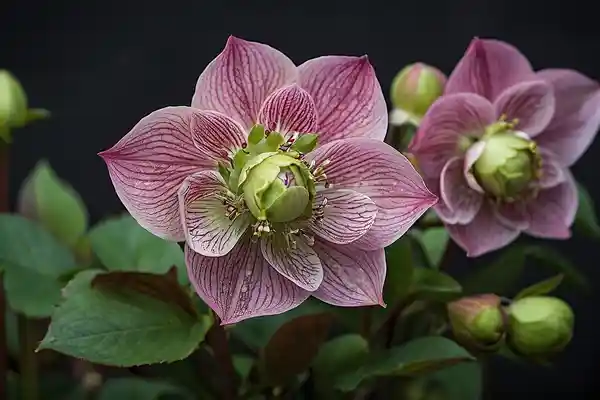
Their flowers are distinctive too. What we usually think of as petals are actually persistent sepals, which is one reason individual blooms can remain attractive for such a long time.
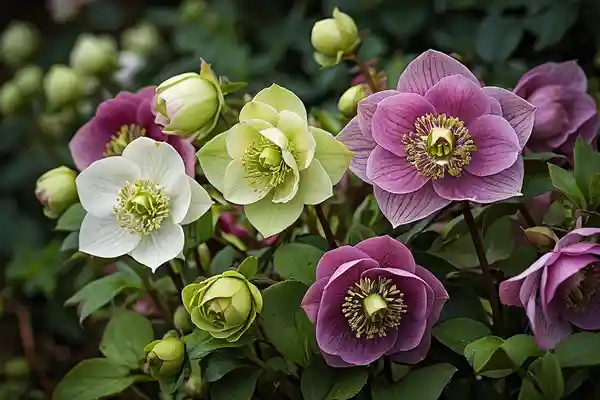
Depending on the variety, flowers may be:
Pure white
Cream
Pale yellow
Soft pink
Deep rose
Burgundy
Purple
Green
Speckled
Picotee-edged
Single or double
Many varieties also have attractive evergreen or semi-evergreen foliage, providing structure long after flowering has finished.
Why I Think Hellebores Deserve a Place in Almost Every Garden
Winter flowers are precious.
Once autumn’s asters, dahlias and chrysanthemums have disappeared, the garden can suddenly feel very empty. Hellebores help bridge that gap between autumn and the first major rush of spring flowers.
They have several other advantages.
They Flower When Little Else Does
Depending on species, variety and climate, hellebores can start blooming during winter and continue into spring.
That means they pair beautifully with snowdrops, crocuses, winter aconites, early narcissus and other early-flowering bulbs.
They Tolerate Shade
Many flowering perennials demand full sunshine.
Hellebores are different.
Most varieties grow particularly well in light or dappled shade, making them excellent companions beneath deciduous shrubs and trees.
They Are Long-Lived
A happy hellebore isn’t something you should need to replace every few years.
Established clumps can remain productive for years and gradually become more impressive.
Early Pollinators Appreciate Them
Hellebore flowers can provide nectar for insects emerging during mild spells in late winter and early spring, when comparatively few other plants are flowering.
Deer Often Leave Them Alone
No plant is completely deer-proof, but hellebores are generally considered relatively unappealing to browsing deer.
Learn more about Deer Resistant Plants >
Choosing the Right Hellebore
There are several species and many hybrids available.
For an easy garden plant, one of my first choices would be an Oriental hybrid, usually sold as Helleborus × hybridus.
These are the classic garden hellebores producing wonderful displays of nodding flowers in an enormous range of colors and markings.
Other commonly grown types include:
Christmas Rose – Helleborus niger
The Christmas rose produces beautiful white flowers, sometimes beginning surprisingly early.
Despite the name, it won’t necessarily flower at Christmas in every garden.
It appreciates good drainage and can struggle where winter soil remains persistently wet.
Lenten Rose – Helleborus × hybridus
These are among the easiest and most colorful hellebores.
Flowers commonly appear from late winter through spring and may be white, pink, purple, burgundy, yellow, green or heavily spotted.
If you’re buying your first hellebore, this group is hard to beat.
Stinking Hellebore – Helleborus foetidus
The unfortunate name shouldn’t put you off.
This architectural species produces attractive divided foliage and clusters of pale green flowers, often edged with purple.
It also copes well with shade.
Corsican Hellebore – Helleborus argutifolius
This is a larger, more imposing plant with leathery evergreen leaves and green flowers.
Unlike many hellebores, it generally prefers a somewhat sunnier position.

The Secret to Hellebore Success: Choose the Right Position
If there is one thing worth getting right from the beginning, it’s location.
Hellebores aren’t particularly fond of being repeatedly moved, so taking a little time to choose the right place pays dividends later.
Most appreciate partial or dappled shade.
One of the best positions is beneath a deciduous tree.
During winter and early spring, when the tree has few or no leaves, plenty of light reaches the hellebores while they flower. During summer, the developing tree canopy provides shade and helps protect them from hot afternoon sun.
I’d also consider planting them:
On the edge of woodland gardens
Along north- or east-facing borders
Beneath deciduous shrubs
Beside shaded pathways
At the front of mixed shrub borders
Avoid extremely dry shade beneath trees with aggressive surface roots unless you’re prepared to provide additional water.
How Much Sun Do Hellebores Need?
Most hellebores appreciate some sunshine but don’t require an entire day of it.
Morning sun followed by afternoon shade can be ideal.
In cooler regions, many varieties tolerate more sunshine as long as the soil remains reasonably moist.
In hotter climates, afternoon shade becomes increasingly important.
Too much hot sun can scorch foliage and dry the soil excessively.
There are exceptions. Species such as Helleborus argutifolius generally tolerate or prefer sunnier conditions.
Always check the requirements of your particular variety rather than assuming every hellebore needs identical conditions.
Getting the Soil Right
Good soil makes an enormous difference.
Hellebores enjoy fertile soil that retains some moisture but still drains effectively.
That distinction matters.
They don’t want bone-dry soil, but neither do they want roots sitting in stagnant winter water.
Before planting, I like to improve ordinary garden soil with organic matter such as:
Well-rotted compost
Leaf mold
Well-rotted manure
Good-quality homemade garden compost
This improves both moisture retention and soil structure.
Heavy Clay Soil
Clay can actually grow excellent hellebores provided excess water can drain away.
If your soil remains waterlogged for long periods, improve its structure with organic matter and consider planting on a slightly raised section of border.
Sandy Soil
Very sandy ground drains quickly and can dry excessively.
Regular additions of compost or other organic material help the soil retain moisture and nutrients.
What Soil pH Do Hellebores Prefer?
Hellebores generally grow well in neutral to alkaline soil, although many garden hybrids tolerate a reasonably broad pH range.
Unless your plants are struggling, I wouldn’t become overly concerned about measuring soil pH.
Good drainage, adequate moisture and decent organic matter are usually much more important practical considerations.
When Should You Plant Hellebores?
The Royal Horticultural Society recommends planting hellebores from autumn through spring, while avoiding very dry summer periods where possible.
Garden centers frequently sell them while they are flowering, which has a big advantage.
You can see exactly what you’re buying.
Seed-grown hellebores can vary considerably, so purchasing plants in flower allows you to choose your preferred colors, markings and flower forms.
How to Plant Hellebores
Hellebores aren’t difficult to plant, but one detail is particularly important:
Don’t plant them too deeply.
They generally prefer to remain at approximately the same soil level they occupied in their nursery pot. The RHS similarly advises positioning them at their original growing depth.
My basic planting method is:
Water the plant thoroughly before planting.
Dig a hole somewhat wider than the root ball.
Mix compost or other well-rotted organic matter into the surrounding soil if needed.
Carefully remove the hellebore from its container.
Position it at approximately the same depth as it was growing in the pot.
Backfill and firm the soil gently.
Water thoroughly.
Add a layer of organic mulch around the plant without piling mulch directly against the crown.
For many hybrid hellebores, spacing plants roughly 14–18 inches apart gives them sufficient room to establish attractive clumps.
Watering Hellebores
Established hellebores can be surprisingly resilient, but newly planted specimens need regular moisture while their root systems become established.
During their first growing season, check them regularly during dry weather.
After establishment, you may rarely need to water plants growing in naturally moist, shaded soil.
Long periods of drought are different.
Hellebores beneath trees can face particularly fierce competition for water during summer, so occasional deep watering may be necessary.
Rather than giving frequent little splashes, water thoroughly enough to encourage roots to grow deeper into the soil.
Mulching: One of the Easiest Ways to Improve Hellebores
An annual mulch is one of my favorite low-effort ways to keep hellebores happy.
A layer of organic material helps:
Conserve moisture
Suppress weeds
Improve soil structure
Gradually return nutrients to the ground
Protect roots from temperature extremes
Good choices include leaf mold, garden compost or well-rotted manure.
Keep the material slightly away from the central crown rather than burying it.
Do Hellebores Need Fertilizer?
Hellebores growing in decent garden soil usually aren’t ravenous feeders.
An annual compost mulch may provide everything they need.
If growth is poor and you’ve already ruled out dry soil, waterlogging, excessive shade or disease, a modest application of balanced fertilizer during spring can help.
Avoid becoming overly enthusiastic with nitrogen-rich fertilizers.
Lots of nitrogen can encourage lush leafy growth at the expense of a balanced plant.
Should You Remove Hellebore Leaves?
This is one of the most frequently discussed parts of hellebore care.
With Helleborus × hybridus, I usually remove old, tatty foliage around late winter as the flower stems start appearing.
There are two benefits.
Firstly, the flowers become much easier to see.
Secondly, removing older foliage can help reduce problems associated with hellebore leaf spot.
The RHS likewise recommends cutting back old leaves on Oriental hybrids during late winter or early spring.
Use clean, sharp pruning shears and remove affected foliage from the garden.
Other hellebore species don’t necessarily require exactly the same treatment, so don’t automatically cut every hellebore to ground level.
Deadheading Hellebores
You don’t have to deadhead hellebores.
In fact, leaving the flowers allows seedpods to develop, and some varieties will scatter seedlings around the parent plant.
Whether that’s charming or annoying depends entirely on your garden.
I enjoy finding the occasional seedling appearing beneath established plants, but a large colony can eventually become crowded.
If you don’t want seedlings, remove fading flower stems before the seeds mature.
Growing Hellebores From Seed
Allowing hellebores to self-seed is great fun because you never quite know what you’ll get.
Hybrid seedlings aren’t necessarily identical to their parent.
That means a spectacular double purple hellebore might produce seedlings with completely different flowers.
For me, that’s part of the appeal.
Just remember that seedlings take patience.
They may need several years before producing their first flowers.
If you want an exact copy of a favorite plant, division is usually the better option where the variety is suitable for dividing.
Dividing Established Hellebores
Mature clumps of many hybrid hellebores can be divided.
The RHS recommends early autumn as an ideal time, although division can also be carried out after flowering in spring.
Dig around the plant carefully, lift the root mass and separate it into substantial sections, ensuring each division has healthy roots and growing points.
Replant promptly and water thoroughly.
Be patient afterward.
Hellebores sometimes take time to settle following division and may not immediately flower as heavily as the original plant did.
Some species, including H. foetidus and H. argutifolius, are generally better propagated from seed rather than division.
Growing Hellebores in Containers
You certainly can grow hellebores in pots.
They make beautiful winter container displays, particularly when combined with smaller bulbs and foliage plants.
However, I generally think many hellebores perform better long term in the ground.
If you want to grow one in a container:
Choose a generously sized pot.
Make sure it has excellent drainage holes.
Use a free-draining potting mix.
Don’t bury the crown.
Water when the compost begins drying.
Avoid allowing the pot to become permanently waterlogged.
Repot or plant into the garden when the plant becomes cramped.
Container-grown hellebores also dry faster than plants in borders, so don’t forget about them during dry spring and summer weather.
Learn more about Container Gardening >
What to Grow With Hellebores
One of the pleasures of growing hellebores is designing combinations around them.
They work particularly well with plants that appreciate similar woodland-style conditions.
Snowdrops
Probably the classic pairing.
White snowdrops weaving between dark hellebore foliage create an effortless late-winter display.
Crocuses
Early crocuses bring brighter splashes of purple, yellow and white.
Cyclamen
Hardy cyclamen can make lovely carpeting companions beneath established shrubs and trees.
Ferns
Ferns emerge later and beautifully disguise fading hellebore foliage during spring and summer.
Hostas
Hostas perform the same trick.
Their emerging leaves fill gaps as the hellebore flowering season finishes.
Heucheras
Colorful heuchera foliage contrasts wonderfully with hellebore leaves.
Pulmonaria
Pulmonaria provides spotted foliage and spring flowers and enjoys similar partially shaded conditions.
Early Narcissus
Smaller daffodils planted between hellebore clumps bring height and cheerful early-season color.
Learn more about Companion Planting >
Using Hellebores in a Woodland Garden
If you’re creating a naturalistic woodland border, hellebores are almost perfect.
Plant them beneath deciduous trees and shrubs alongside snowdrops, ferns, primroses, pulmonaria and hardy cyclamen.
I prefer planting them in loose groups rather than identical straight rows.
It creates a much more natural effect, particularly once seedlings start appearing between established plants.
Common Hellebore Problems
Healthy hellebores are usually straightforward, but occasionally problems arise.
Hellebore Leaf Spot
Dark or brownish spots developing on foliage can indicate hellebore leaf spot.
Remove badly affected leaves and dispose of them rather than allowing diseased material to accumulate around the plant.
Improving airflow and removing old leaves can also help.
Black Death
Hellebore black death is a much more serious viral disease.
Symptoms can include black streaks or rings appearing along leaves, stems or flowers, sometimes accompanied by distorted growth.
There is no practical cure for infected plants.
Affected plants should generally be removed rather than composted.
Fortunately, this condition isn’t something most gardeners will encounter regularly.
Aphids
New flowers and shoots can occasionally attract aphids.
Small populations may cause very little harm, while larger infestations can be removed with water or managed using appropriate garden pest-control methods.
Slugs and Snails
Mature leathery foliage isn’t necessarily their favorite food, but slugs and snails can still damage soft new growth and seedlings.
Flowers Hanging Down
This isn’t a disease.
Many traditional hellebore flowers naturally nod downward.
Modern breeding has produced more outward- and upward-facing varieties if you prefer to see flowers without having to bend down.
Why Is My Hellebore Not Flowering?
A healthy-looking plant that refuses to bloom can be frustrating.
Several things might be responsible.
It Is Too Young
Seedlings may take several years to reach flowering size.
It Was Recently Divided
Divided hellebores sometimes need time to become established again.
Too Much Shade
Although hellebores tolerate shade, extremely dark conditions can reduce flowering.
Dappled shade is generally preferable to perpetual gloom.
Poor Growing Conditions
Constantly waterlogged or exceptionally dry soil stresses plants and can interfere with good flowering.
Too Much Nitrogen
Excess nitrogen can encourage foliage rather than flowers.
Why Are My Hellebore Leaves Turning Yellow?
A few older yellowing leaves aren’t necessarily worrying.
Evergreen foliage doesn’t last forever.
However, widespread yellowing deserves investigation.
Possible causes include:
Waterlogged soil
Drought stress
Nutrient problems
Natural aging of old foliage
Disease
Root damage
Recently disturbed plants
Before automatically adding fertilizer, check soil moisture and drainage.
In my experience, unhappy roots are often more likely than hungry plants.
Are Hellebores Evergreen?
Some are evergreen, while others behave more like semi-evergreen plants.
Climate also plays a role.
Cold winters can damage or flatten old leaves, while plants growing in gentler climates may retain attractive foliage for much longer.
Don’t worry if winter foliage looks rather battered.
Fresh growth usually follows.
Are Hellebores Poisonous?
Yes. Hellebores contain compounds that can be toxic if eaten.
That makes them unsuitable for consumption by either people or pets.
Their sap may also irritate sensitive skin, so wearing gloves when pruning, dividing or otherwise handling them is a sensible precaution.
A Simple Seasonal Hellebore Care Calendar
Winter
Watch flower buds emerge.
Remove old, damaged foliage from Oriental hybrids as flowers begin developing.
Enjoy the display.
Early Spring
Keep flowering plants watered during unusually dry weather.
Mulch around established plants.
Remove diseased leaves promptly.
Late Spring
Deadhead if you don’t want seedlings.
Leave seedpods if you do.
Remove tired flower stems as required.
Summer
Water established plants during prolonged drought, particularly those growing beneath trees.
Maintain mulch.
Avoid unnecessary disturbance.
Autumn
Plant new hellebores.
Divide suitable mature clumps if necessary.
Remove damaged or diseased foliage.
Top up organic mulch.
My Top Tips for Better Hellebores
If I had to reduce everything to a handful of essentials, these would be my rules:
Give most hellebores dappled or partial shade.
Never leave their roots sitting in waterlogged soil.
Don’t plant the crown too deeply.
Improve poor soil with plenty of organic material.
Mulch annually but keep mulch away from the crown.
Water new plants until established.
Remove old Oriental hybrid foliage as the flowers emerge.
Don’t keep moving established plants unnecessarily.
Allow a few seedlings to grow if you enjoy surprises.
Buy hellebores while they’re flowering whenever possible so you know exactly what you’re getting.
Frequently Asked Questions About Growing Hellebores
1. Do hellebores come back every year?
Yes. Hellebores are perennials and, under suitable growing conditions, return year after year.
2. Do hellebores prefer sun or shade?
Most prefer partial or dappled shade, although exact requirements vary between species.
3. Can hellebores grow under trees?
Yes, and planting beneath deciduous trees can provide particularly suitable conditions. They receive more light while flowering in winter and increasing shade as the tree canopy develops.
4. How long do hellebores live?
Many hybrid hellebores can remain productive for many years when grown in suitable conditions.
5. Should I cut hellebores back?
Old foliage on Oriental hybrids can be removed in late winter or early spring as new flower stems emerge. Other species may require less drastic pruning.
6. When should I move hellebores?
If possible, avoid moving established plants unnecessarily. When division is needed, early autumn or spring after flowering are generally suitable times.
7. Can hellebores survive frost?
Many commonly grown hellebores are extremely hardy. Flowers may droop temporarily during freezing weather and recover when temperatures rise.
8. How quickly do hellebores spread?
Established plants gradually increase in size, while some varieties also self-seed readily.
9. Can you grow hellebores indoors?
They aren’t really houseplants. A flowering plant can be enjoyed temporarily in a cool indoor position, but it will generally be happier planted outdoors afterward.
10. Can I grow hellebores in pots permanently?
Some can be grown successfully in containers, particularly when excellent drainage is provided, but many popular garden varieties eventually perform better planted in the ground.
Final Thoughts
Hellebores prove that a winter garden doesn’t have to feel lifeless.
While much of the border is dormant, these remarkable plants quietly push their flower stems through cold soil and produce blooms that can rival many summer perennials for beauty.
Their needs are surprisingly simple.
Give them reasonably fertile soil, reliable drainage, some shelter from intense summer sunshine and enough moisture to prevent them drying out completely. Once established, they usually ask for very little in return.
I particularly love planting hellebores beneath deciduous shrubs and trees, where their flowers can emerge among snowdrops and early bulbs before the spring canopy develops overhead.
Choose several varieties with different colors and markings and you’ll soon find yourself looking forward to winter rather than simply waiting for it to end.
And once those first hellebore buds appear, you know the garden is already quietly preparing for spring.
Useful Links
Epic Gardening – How to Plant, Grow, and Care for Hellebore Flowers
A comprehensive American gardening guide covering planting, soil, sunlight, watering, varieties and general hellebore maintenance.
https://www.epicgardening.com/hellebore/
Gardener’s Path – How to Grow Hellebores, the Winter-to-Spring Sensation
A detailed U.S. gardening resource with advice on growing conditions, propagation and long-term care. The author gardens in Pennsylvania, making it particularly relevant to North American gardeners.
https://gardenerspath.com/how-to/shade/grow-hellebores/
Garden Design – How to Grow & Care for Hellebore Flowers
An excellent U.S. gardening source covering USDA Zones 4–9, planting, pruning, feeding, watering, companion planting and hellebore varieties.
https://www.gardendesign.com/flowers/hellebores.html