If your zucchini, pumpkin, or squash plants suddenly start looking miserable, two pests are likely to spring to mind: squash bugs and squash vine borers.
Unfortunately, both can cause yellowing, wilting, and eventually the death of a plant, which makes it surprisingly easy to confuse the two.
The good news is that they leave very different clues.
Learn more about Pest and Disease Management >
Squash bugs mainly feed on the outside of the plant, sucking sap from leaves and stems. Squash vine borer larvae, meanwhile, hide inside the stems, where they can cause a seemingly healthy plant to collapse remarkably quickly.
Knowing which pest you’re dealing with matters because the best control methods are quite different.
Here’s how I tell squash bugs and squash vine borers apart, what damage to look for, and what you can do to protect your squash plants.
Squash Bugs vs. Squash Vine Borers at a Glance
| Feature | Squash Bugs | Squash Vine Borers |
|---|---|---|
| Scientific name | Anasa tristis | Melittia cucurbitae |
| Type of pest | True bug | Clearwing moth |
| Main damaging stage | Adults and nymphs | Larvae |
| Where they feed | Leaves and stems | Inside stems |
| Typical symptom | Yellow or brown leaf patches and wilting | Sudden wilting of whole vines |
| Eggs | Bronze-colored clusters on leaves | Small brown eggs laid singly near stems |
| Obvious clue | Bugs or egg clusters beneath leaves | Sawdust-like material around stem base |
| Most vulnerable plants | Squash and pumpkins | Squash, zucchini and pumpkins |
| Best time to control | While eggs and young nymphs are present | Before larvae enter the stem |
What Are Squash Bugs?
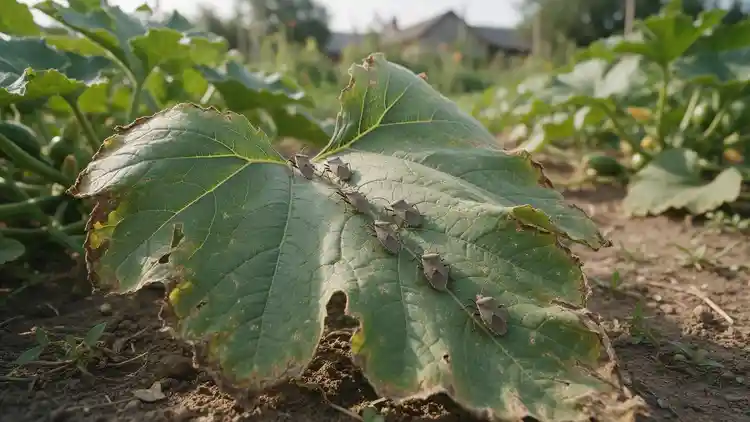
Squash bugs are flattened, brownish-gray insects commonly found on squash, pumpkins, zucchini, and other members of the cucurbit family.
Adults are around 5/8 inch long and usually dark gray or brown. Their flattened shape can make them look a little like stink bugs, although they’re different insects.
Look closely and you may see alternating brown and orange markings around the edge of the abdomen.
The younger insects, known as nymphs, look very different. Newly hatched nymphs have pale green or gray bodies with darker heads and legs. They often gather together in groups on the undersides of leaves.
What Do Squash Bug Eggs Look Like?
One of the easiest ways to discover a squash bug infestation early is to check for eggs.
Squash bug eggs are usually:
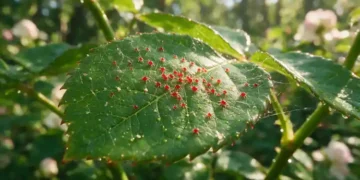
Bronze, yellowish-brown, or reddish
Oval shaped
Arranged in neat clusters
Commonly found underneath leaves or along leaf stems
I make a habit of turning over a few squash leaves whenever I’m checking the garden. Finding and removing eggs is much easier than dealing with dozens of squash bug nymphs a week later.
Eggs generally hatch within around 7 to 10 days.
What Damage Do Squash Bugs Cause?
Squash bugs have piercing mouthparts that they use to suck sap from plant tissue.
You’ll often notice small yellow spots on leaves first. These areas can gradually turn brown, dry, and crispy.
A heavier infestation may cause:
Yellowing leaves
Brown patches
Wilting
Damaged stems
Reduced growth
Weakening of young plants
Death of seedlings or badly affected plants
Young squash plants are particularly vulnerable, while larger established plants can usually tolerate some feeding.
If you lift the leaves of an affected plant and immediately see brown adults or groups of gray nymphs scurrying away, squash bugs are the most likely culprit.

What Are Squash Vine Borers?
The squash vine borer is completely different.
The adult is actually a clearwing moth, although you could easily mistake it for a wasp.
Adults have an orange abdomen marked with black spots, metallic-looking front wings, and clear hind wings. Unlike many moths, squash vine borers are active during the daytime.
But the adult moth isn’t what destroys your squash vine.
The real trouble starts when its eggs hatch.
The cream-colored larvae tunnel into squash stems and begin feeding inside them. Because they’re hidden inside the plant, gardeners often don’t realize anything is wrong until the vine starts wilting.
What Does a Squash Vine Borer Larva Look Like?
If you cut open an affected stem, you may find a pale caterpillar-like grub inside.
Squash vine borer larvae are:
White or cream colored
Equipped with a brown head
Soft bodied
Up to around one inch long
They feed through the center of the stem, interfering with the movement of water through the plant.
That explains the classic symptom of squash vine borer damage: a plant that suddenly wilts despite having enough water.
The Biggest Squash Vine Borer Clue: Frass
If I suspect vine borers, the first place I inspect is the base of the main stem.
Look for a small hole accompanied by a damp, crumbly material that resembles sawdust.
This material is called frass and may be greenish, yellowish, or orange.
It’s made up of chewed plant tissue and waste pushed out of the stem by the feeding larva.
Finding a hole and sawdust-like frass around the crown or lower stem is one of the strongest signs that you’re dealing with squash vine borers rather than squash bugs.
How to Tell Squash Bug Damage From Squash Vine Borer Damage
This is where things become much easier.
Look at the leaves
If individual leaves have yellow or brown feeding patches and you’re finding insects beneath them, suspect squash bugs.
Look at the base of the stem
If the whole vine seems to be wilting, inspect the crown and main stem.
A hole surrounded by sawdust-like frass strongly suggests squash vine borers.
Look for insects
Squash bugs are usually visible.
Check:
Under leaves
Along stems
Around the base of plants
Beneath garden debris
Squash vine borer larvae are normally invisible because they’re hiding inside the plant.
Consider how quickly the plant declined
Squash bug damage can gradually weaken the plant.
Squash vine borer damage can be much more dramatic. A vine may look healthy and then suddenly begin wilting because its internal plumbing has essentially been damaged.
How to Control Squash Bugs Naturally
Squash bugs are frustrating, but they’re quite manageable if you catch them early.
1. Remove the Eggs
This is probably my favorite control method because it stops a new generation before it starts.
Check the undersides of squash leaves regularly.
If you find egg clusters, scrape them off or crush them.
A strip of sticky tape can also work well for lifting eggs from leaves without causing too much damage.
2. Hand-Pick Adults and Nymphs
If you only have a few squash plants, hand removal can make a surprising difference.
Drop the insects into a container of soapy water.
Pay particular attention to the undersides of leaves where young squash bugs tend to gather.
3. Use the Board Trap Trick
Squash bugs like sheltered hiding places.
Place a board, piece of cardboard, or folded newspaper near affected plants overnight.
The bugs may gather underneath it.
Lift the trap first thing in the morning and remove the insects.
The University of Minnesota Extension specifically recommends boards or newspapers as simple traps for squash bugs.
4. Keep the Garden Tidy
Adult squash bugs can overwinter in plant debris.
At the end of the growing season, remove old squash vines and other debris that could provide shelter.
Good cleanup won’t guarantee a squash-bug-free garden next year, but it can reduce potential overwintering sites.
5. Keep Plants Healthy
Healthy, vigorously growing squash plants tolerate some insect feeding better than stressed ones.
Make sure plants receive:
Consistent water
Suitable soil fertility
Plenty of sunlight
Enough growing space
Avoid overreacting to one or two squash bugs on a large established plant. A small population doesn’t necessarily mean you’re going to lose your crop.
How to Prevent Squash Vine Borers
Vine borers are trickier.
Once the larva is deep inside a stem, most treatments applied to the outside of the plant aren’t going to reach it.
Prevention is therefore much more important.
1. Use Row Covers
Floating row covers can stop adult moths from laying eggs on susceptible plants.
They need to be properly secured around the edges so moths can’t crawl underneath.
However, there’s one important catch.
Squash flowers need pollinators.
Remove the covers when plants begin flowering so bees and other pollinating insects can reach them.
There’s another wrinkle too.
If you grew squash in the same location last year, vine borers may already be overwintering in the soil. Covering that soil could potentially trap emerging moths underneath the row cover.
Crop rotation makes row covers more effective.
2. Rotate Squash Around the Garden
Squash vine borers overwinter in the soil near previously infested plants.
When possible, grow squash in a different section of the garden the following year.
Rotation is particularly useful when combined with row covers.
3. Watch for Adult Moths
Keep an eye out for the distinctive orange-and-black moths during the early part of summer.
Adult activity varies somewhat according to climate, but they’re commonly active around June and July in many areas of the United States.
Once adults appear, start checking the bases of squash plants for eggs.
4. Remove Eggs
Squash vine borer eggs aren’t laid in the same obvious clusters as squash bug eggs.
They’re usually laid individually around:
The lower stems
Leaf stalks
The base of the plant
Check susceptible plants regularly during moth season.
Removing eggs before they hatch is far easier than removing larvae from inside the plant.
5. Grow Less Susceptible Squash
Some cucurbits are attacked much less frequently.
Butternut squash is generally considered less susceptible to squash vine borers, while cucumbers, melons, and watermelons are also attacked less frequently.
If vine borers destroy your zucchini every single year, changing what you grow may save a lot of frustration.
Can You Save a Squash Plant With a Vine Borer?
Sometimes.
If you discover the problem early enough, surgery is an option.
Find the area of the stem where the frass is appearing.
Using a clean, sharp knife, carefully make a lengthwise slit in the stem until you locate the larva.
Remove or kill it.
Then cover the damaged section with moist soil and keep the area watered.
Squash stems can sometimes produce new roots where they’re covered with soil, allowing the vine to recover.
It isn’t guaranteed to work, particularly if several larvae are present or the stem is already badly damaged.
But if it’s a productive plant that you’d otherwise lose, it’s certainly worth trying.
Should You Use Insecticides?
For a home vegetable garden, I’d start with monitoring, egg removal, crop rotation, physical barriers, and hand-picking wherever practical.
Squash bugs are easiest to control while nymphs are still young.
Squash vine borers are different because treatments need to work before the larva enters the stem. Once the caterpillar is protected inside the vine, surface treatments become far less effective.
If you choose to use a pesticide, always check that the product is:
Labeled for the pest you’re treating
Suitable for use on edible squash crops
Approved for use where you live
Applied exactly according to label directions
Take particular care when squash plants are flowering.
Squash flowers are extremely attractive to bees, and broad-spectrum insecticides can harm pollinating insects. Where pesticide use is necessary, timing and product selection are particularly important.
Don’t Forget Other Causes of Wilting
One final point is worth remembering.
Not every wilting squash plant has squash bugs or vine borers.
Other possibilities include:
Lack of water
Root damage
Heat stress
Bacterial wilt
Other pests
Stem or crown diseases
Squash naturally droops somewhat during very hot afternoons too.
If the plant perks up again in the evening, don’t immediately assume there’s a pest problem.
But a plant that remains badly wilted first thing in the morning deserves a closer inspection. Persistent morning wilting is one of the warning signs associated with squash vine borer damage.
My Quick Squash Pest Check
Whenever one of my squash plants starts wilting, I’d check things in this order:
1. Turn over the leaves.
Look for bronze egg clusters, gray nymphs, or brown squash bugs.
2. Examine the crown.
Look closely around the lowest few inches of stem.
3. Search for frass.
Wet, sawdust-like material coming from a hole in the stem strongly suggests vine borers.
4. Check the plant in the morning.
A vine that’s still badly wilted before the heat of the day may have a more serious problem.
5. Act quickly.
Both pests are far easier to control at an early stage.
Squash Bugs vs. Squash Vine Borers: The Bottom Line
Squash bugs and squash vine borers may attack the same plants, but they’re actually very different pests.
If you can see bugs, nymphs, or bronze egg clusters on the leaves, squash bugs are the likely culprit.
If the whole vine is wilting and there’s a hole with sawdust-like material around the stem, suspect squash vine borers.
For squash bugs, concentrate on removing eggs and young insects.
For squash vine borers, concentrate on prevention: crop rotation, row covers, monitoring for adult moths, and removing eggs before larvae enter the stems.
And most importantly, check squash plants regularly.
With these pests, spotting the first few eggs, insects, or stem holes can make the difference between a minor garden problem and watching your entire zucchini plant collapse just as it begins producing.
Useful Links
University of Minnesota Extension – Squash Vine Borers
https://extension.umn.edu/garden-and-home/yard-and-garden/yard-and-garden-insects/squash-vine-borers
Excellent guide to identifying vine borer adults, larvae, frass and plant damage, plus prevention and control methods.
Utah State University Extension – Squash Bugs
https://extension.usu.edu/planthealth/research/squash-bugs
Detailed information on squash bug eggs, nymphs, adults, feeding damage and cultural controls.
Utah State University Extension – Squash Bug Management
https://extension.usu.edu/vegetableguide/cucurbits/squash-bug
A particularly useful practical resource covering hand-picking, egg removal, garden cleanup and the wooden-board trapping method.