Spider mites are one of the most common — and most frustrating — pests a gardener or houseplant owner will run into. They’re tiny, they multiply fast, and by the time most people notice a problem, the population has often already exploded.
The good news is that once you know what to look for and act quickly, spider mites are very manageable without resorting to harsh chemicals.
Learn more about Pest Disease and Management >
What Are Spider Mites?
Spider mites aren’t insects — they’re arachnids, related to spiders and ticks. The most common species affecting gardens and houseplants is the two-spotted spider mite (Tetranychus urticae), though there are other species that target specific plants, like the spruce spider mite on conifers.
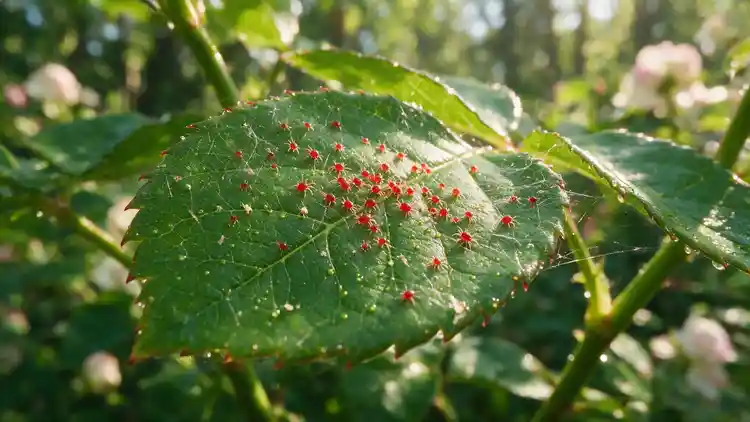
They’re barely visible to the naked eye, roughly the size of a grain of ground pepper, and can be red, brown, yellow, or greenish depending on the species and their diet.
Because they’re so small, most people don’t spot the mites themselves at first — they notice the damage instead.
Spider mites thrive in hot, dry conditions.
This is why outbreaks are especially common in summer, in greenhouses, and on indoor plants sitting near heating vents or in low-humidity rooms.
A single female can lay dozens of eggs in her short lifespan, and in warm weather a generation can complete in under a week — which is why an infestation that looks minor on a Monday can be severe by the following weekend.
How to Spot Spider Mites
1. Stippling on the Leaves
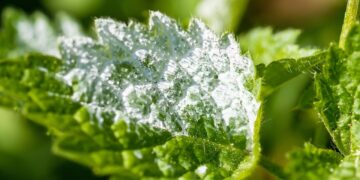
The earliest and most reliable sign is a fine, pale speckling or stippling on the upper surface of leaves. It can look like tiny yellow or white dots, almost as if the leaf has been lightly dusted or sandpapered.
This happens because mites pierce individual plant cells on the underside of the leaf and suck out the contents, leaving behind small dead spots that show through on top.
2. Bronze or Yellow Discoloration
As an infestation progresses, the stippled areas merge and the leaf takes on a dull bronze, yellow, or grayish cast.
From a distance, a heavily affected plant can look dusty, faded, or generally unhealthy without an obvious cause — this vague “off” appearance is often what first catches a gardener’s eye.
3. Fine Webbing
This is the classic giveaway. In more advanced infestations, spider mites spin very fine silk webbing, usually concentrated around leaf joints, along stems, and on the undersides of leaves.
It’s much finer than a spider’s web — more like a dusty gauze — and in bad cases it can coat entire shoot tips.
4. The Paper Test
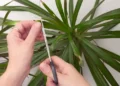
If you suspect mites but can’t see anything conclusively, hold a plain sheet of white paper or a paper towel under a leaf and tap the leaf firmly a few times.
Then look closely at the paper.
Spider mites will show up as tiny specks that move — this is the easiest way to confirm you’re dealing with mites rather than just general leaf stress, nutrient deficiency, or heat damage.
A magnifying glass or a smartphone camera zoomed in will make them even easier to see.
5. Check the Undersides of Leaves
Spider mites overwhelmingly feed and live on the undersides of leaves, so that’s where to look first — for the mites themselves, for webbing, and for early stippling.
By the time damage is obvious on the top of the leaf, the underside is usually well colonized.
Plants Especially Prone to Spider Mites
While they’ll attack a huge range of plants, spider mites show up especially often on:
Tomatoes, beans, and cucumbers in the vegetable garden
Roses
Houseplants such as ivy, palms, ferns, and calatheas
Marijuana and other high-value greenhouse crops
Evergreens, particularly spruce and juniper
Why Spider Mites Are Hard to Control
A few things make spider mites trickier than average garden pests:
They reproduce extremely fast.
A single mite can go from egg to egg-laying adult in as little as five to seven days in warm weather, so populations can multiply dozens of times over in a few weeks.
They thrive on stressed plants.
Drought-stressed, dusty, or overheated plants are far more attractive to mites, and outbreaks often follow a hot, dry spell.
They’re not insects.
Many general-purpose insecticides don’t touch mites at all, and can sometimes make things worse by killing off the predatory insects that would otherwise keep mite populations in check.
Resistance builds quickly.
Because of their rapid reproduction, mite populations can develop resistance to certain pesticides within just a few generations.
How to Get Rid of Spider Mites
1. Start With a Strong Blast of Water
For light to moderate infestations, simply spraying the plant thoroughly with a strong jet of water — focusing on the undersides of leaves — can physically knock mites and their webbing off the plant and disrupt their populations significantly.
This is often the first and most effective step, especially outdoors or in a shower/sink for houseplants.
Repeat every few days for a couple of weeks.
2. Increase Humidity
Since spider mites prefer hot, dry conditions, raising humidity around affected plants can slow them down considerably.
For houseplants, this might mean grouping plants together, using a pebble tray, or running a humidifier nearby.
Outdoors, regular watering (avoiding drought stress) and occasional misting can help, though be mindful of fungal issues with certain plants.
3. Insecticidal Soap or Horticultural Oil
Insecticidal soap and horticultural oils (including neem oil) are effective against spider mites and are far gentler on beneficial insects than broad-spectrum pesticides.
They work by disrupting the mites’ outer coating, so thorough coverage — especially on leaf undersides — is essential.
These products only work on contact, so a single light spray won’t do much; apply generously, and reapply every five to seven days for two or three cycles to catch newly hatched mites.
4. Miticides (Acaricides) for Serious Infestations
If soap and oil aren’t cutting it, a dedicated miticide may be necessary. These are specifically formulated for mites (regular insecticides often won’t work).
Because mites can develop resistance quickly, it’s worth rotating between products with different active ingredients if you need more than one treatment cycle, and always following label instructions on timing and reapplication.
5. Introduce Predatory Mites
In greenhouses or persistent indoor infestations, predatory mites such as Phytoseiulus persimilis can be purchased and released as a biological control.
They feed specifically on spider mites and can bring populations under control without any chemical intervention.
This works best when the infestation is caught before it’s completely out of control, and it’s not compatible with also using broad-spectrum pesticides.
6. Prune and Discard Heavily Infested Growth
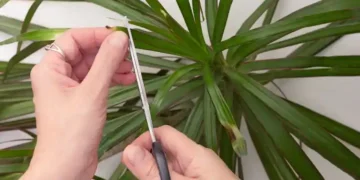
If certain leaves or stems are coated in webbing and clearly beyond saving, it’s often more effective to prune them off and dispose of them (not in the compost pile) rather than trying to treat them.
This removes a large chunk of the mite population instantly and lets the plant focus energy on healthy growth.
7. Isolate Affected Plants
For houseplants, move an infested plant away from others immediately. Spider mites can walk from plant to plant, or hitch a ride on air currents, so isolation buys you time to treat the problem without it spreading through your whole collection.
Preventing Future Infestations
Because spider mites favor hot, dry, dusty, stressed conditions, prevention largely comes down to good general plant care:
Keep plants well watered and avoid prolonged drought stress, especially during hot weather.
Rinse dust off leaves periodically, particularly for houseplants, since dusty leaves are more attractive to mites.
Maintain reasonable humidity for houseplants that prefer it.
Inspect new plants closely before bringing them home or introducing them to the garden, since spider mites are frequently introduced on infested nursery stock.
Encourage beneficial insects in the garden — ladybugs, lacewings, and predatory mites all help keep spider mite populations naturally in check, so avoid unnecessary broad-spectrum pesticide use that wipes them out.
Spider Mites: FAQs
1. What are spider mites?
Spider mites are tiny plant pests that are related to spiders and ticks. They are so tiny that I often see the damage before I see the mites. They feed by sucking the contents of plants through a piercing proboscis.
2. Spider mites look like what?
Spider mites are so small that you need a magnifying glass to see them. Depending on the species, they can be red, brown, yellow, green or nearly colorless. A more obvious clue is often fine webbing on leaves and stems.
3. How do I know if I have spider mites?
I look for tiny pale or yellow speckles all over the leaves, sometimes followed by yellowing, browning, curling or leaf drop. Another sign of infestation, especially in advanced stages, is the presence of fine webbing between leaves and stems.
4. What is the habitat of spider mites?
Spider mites like to hide under plant leaves and eat and reproduce there. This is why I have a habit of checking underneath leaves as well as looking at the tops.
5. What conditions are spider mites?
Warm, dry conditions are favored by spider mites. Indoor plants, greenhouse plants and plants under drought stress can be especially susceptible. The heat can also cause the population to grow quickly.
6. Are spider mites fatal to plants?
They can. A light infestation may cause cosmetic damage, but a heavy infestation can severely weaken a plant. Feeding can be so severe that leaves dry up and fall off. Very young or stressed plants are particularly susceptible.
7. Spider mites can travel from plant to plant.
Yes. Spider mites can crawl from plant to plant, and their fine webs can help them spread. They can also be carried by people, pets, tools or plants that are moved from one part of the garden to another.
8. Do spider mites live in garden soil?
Some species of spider mites can spend part of their life cycle off the plant. But the mites that cause the common garden infestations are almost entirely on the plant foliage. I concentrate my control efforts on the plant and do not assume the soil is the main problem.
9. How do you check for spider mites the easiest?
I use a simple test on white paper. I hold a white sheet of paper under a suspicious leaf, and tap lightly on the leaf. If you see tiny moving specks on the paper, that may be spider mites. A magnifying glass is very helpful for identification.
10. You can wash spider mites off your plants.
Yes. A strong blast of water can physically knock mites off the foliage, especially the undersides of leaves. I find this very useful as a first control measure but may have to repeat it regularly.
11. Can Spider Mites Be Killed by Water?
Water can knock many of the mites off the plant, but one spray is not guaranteed to get rid of an infestation. Repeated washing and other control measures may be more effective.
12. Should I isolate a plant with spider mites?
If I find spider mites on an indoor plant I usually take it to another location away from my other plants while I treat the infestation. This helps to prevent mites from spreading to nearby plants.
13. Spider mites can move to house plants.
Yes, absolutely. Indoor plants can be especially susceptible when conditions are warm and dry. I am especially watchful for houseplants during winter, because indoor heating can dry the air out so badly.
14. Which plants are most prone to spider mites?
Spider mites can attack a wide variety of plants. Common targets are tomatoes, cucumber, beans, roses, strawberries, ornamental plants and many houseplants.
15. Do spider mites prefer dry conditions?
Yes. Warm, dry conditions can be especially favorable for spider mite populations. Watering properly and not allowing unnecessary drought stress to occur will make the conditions less attractive to them.
16. Will misting help with spider mites?
Sometimes adding humidity can make conditions less favorable for certain spider mites, but I do not rely on misting alone. It’s better to check plants regularly and have good overall growing conditions.
17. Can Spider Mites Be Caused By Overwatering?
Overwatering does not cause spider mites. But stressed or unhealthy plants can be more likely to have pest problems. I don’t want to keep the soil wet all the time, but just moist enough.
18. Can insecticidal soap be used for spider mites?
Insecticidal soaps can be helpful against spider mites, if used properly. Complete coverage is important as mites are often located under the leaves. I always follow the product label and test a small area before spraying if I’m worried about plant sensitivity.
19. Does neem oil kill spider mites?
Neem-based products may help control spider mites, but results depend on the product, application and infestation severity. I look closely at the label and don’t just assume that a natural product is safe for all plants.
20. How about horticultural oil?
Horticultural oils can control some spider mite infestations. They work mainly by physical contact so good coverage is important. I pay a lot of attention to the application instructions, especially the temperature and the sensitivity of the plants.
21. Do I have to use pesticides for spider mites?
I’m not going for the heavy pesticides right away. Some broad-spectrum insecticides can kill beneficial predatory mites and insects and may actually make spider mite problems worse. I like starting with a physical removal, monitoring and spot treatments where necessary.
22. Are spider mites actually spiders?
They’re related to spiders, so they’re part of the arachnid group, which is why they have eight legs when they grow up. They are not true spiders, despite the name.
23. Are Spider Mites Dangerous to Humans?
Spider mites are plant pests and are not generally considered a threat to humans. The biggest issue is the damage they can cause to the plants.
24. Do spider mites bite humans?
Spider mites are not generally considered a common human-biting pest. If I’m working with them in the garden, I’m much more concerned about protecting my plants than I am myself.
25. How fast do spider mites reproduce?
Very quickly and in warm, pleasant weather. This is one of the reasons why I don’t ignore the first signs of an infestation. Small population can become a much larger problem very quickly.
26. How to naturally get rid of spider mites?
I begin with physical control. I wash the foliage thoroughly, particularly the undersides of the leaves, remove badly damaged leaves if appropriate, and isolate affected house plants. Then, if needed, I might use an appropriate insecticidal soap or horticultural oil.
27. Do ladybugs eat spider mites?
Some beneficial insects feed on mites, however not all ladybug species are equally effective in controlling spider mites. Other natural predators can also help to control spider mite populations such as predatory mites and some very small insects.
Predatory mites are good for spider mites.
Yes. Some predatory mite species are spider-mite predators and are useful biological controls, especially in greenhouses and other controlled growing environments.
28. How to Prevent Spider Mites
I check my plants frequently, especially the undersides of leaves. I also make an effort to avoid prolonged drought stress, keep my plants healthy and isolate any new or suspect houseplants until I’ve given them a good check.
29. Why do my spider mites keep returning?
The spider mites are stubborn. Eggs can survive the treatment, new mites can be brought in from other plants and conditions can stay favorable for them. I have found that repeated monitoring and treatment when needed is much more effective than treating once and assuming the problem has gone away.
30. Can you discard a plant with spider mites?
Not really. If the plant is valuable and reasonably healthy, I would normally try treatment first. That said, if a houseplant is badly infested and in poor shape, sometimes the most practical way to protect a large collection of plants is to remove it.
31. How do you get rid of spider mites best.
I think the best approach for me is a combination of methods, not one miracle treatment. I physically wash the mites off the plant, improve growing conditions, isolate affected houseplants, encourage natural predators where appropriate, and use targeted products when needed.
32. How often should I check for spider mite?
I check susceptible plants regularly in warm, dry weather. When I see spider mites, I check much more frequently as populations can explode quickly.
33. Can spider mites attack healthy plants?
Yes. Spider mites can even form on a healthy plant if mites are present and conditions are right. But healthy plants and the absence of extended stress can aid them in better withstanding pest pressure.
The Bottom Line
Spider mites are easy to miss until they’ve already done real damage, so the key is catching them early: watch for fine stippling, a dusty or bronzed look to leaves, and — most tellingly — webbing around stems and leaf joints.
A confirmed infestation usually responds well to a combination of strong water sprays, insecticidal soap or horticultural oil, and better humidity and watering practices.
For serious or recurring outbreaks, dedicated miticides or predatory mites are worth bringing in.
Catch it early, treat consistently over a couple of weeks rather than with a single application, and most plants recover fully.