• About Us
  • Write for Us
  • Advertise with Us
  • General Inquiries
Sunday, August 30, 2026
Good Garden Ideas
No Result
View All Result
  • Gardening Tools & Equipment
  • How To Guides
  • Indoor Gardening
  • Pest & Disease Management
  • Plant Care Tips
  • Sustainable Gardening
  • Gardening Tools & Equipment
  • How To Guides
  • Indoor Gardening
  • Pest & Disease Management
  • Plant Care Tips
  • Sustainable Gardening
No Result
View All Result
Good Garden Ideas
No Result
View All Result
Home Guest Posts
Contributed by Mulch Calculator Online

Guest post contributed by Vella Rath, a professional C++ Developer at Mulch Calculator Online.
Their calculator is designed to save users time, reduce waste, and help plan landscaping projects with confidence. Whether you are working on a small garden or a large outdoor space, this tool provides accurate calculations to help you make better decisions.
Visit: https://mulchcalculatoronline.com

How Much Mulch Do You Really Need? A Step-by-Step Calculation Guide

July 7, 2026
in Guest Posts, How To Guides
Reading Time: 4 mins read
0
How to Calculate How Much Mulch You Need (And Never Buy Too Much or Too Little)

Contents

  • 1. How to Calculate How Much Mulch You Need (And Never Buy Too Much or Too Little)
  • 2. Why Getting the Amount Right Matters
  • 3. Step 1 – Measure Your Garden Bed Area
  • 4. Step 2 – Decide on Mulch Depth
  • 5. Step 3 – Calculate the Volume of Mulch Needed
  • 6. Quick Reference Chart
  • 7. Step 4 – Bags vs. Bulk: Which to Buy?
  • 8. Pro Tips for Mulching Success
  • 9. Final Thoughts

How to Calculate How Much Mulch You Need (And Never Buy Too Much or Too Little)

Every gardener has been there — you load up at the garden center, haul bags of mulch home, and then realize you’re either three bags short or have a pile left over that you’ll trip over until next spring. Calculating mulch correctly before you buy saves money, saves time, and saves your back.

The good news: figuring out exactly how much mulch you need is simple arithmetic. This guide will walk you through every step, from measuring your garden beds to understanding mulch depth, bag sizes, and bulk cubic yard calculations.

You might also like

The Ultimate Guide to Choosing the Right Bird Feeder for Your Garden

Mastering the Art of Fence Painting: A Step-by-Step Guide

The Art of Gravel Garden Design

Rainwater Harvesting for Beginners: How Much You Can Actually Save


Why Getting the Amount Right Matters

Mulch does a lot of heavy lifting in the garden. It retains soil moisture, suppresses weeds, regulates soil temperature, and improves the look of any bed.

But too little mulch — less than 2 inches — won’t suppress weeds effectively. Too much — more than 4 inches — can suffocate plant roots and create a soggy, fungus-friendly environment.

Getting the amount right means you’re protecting your plants properly and not wasting money on excess material.


Step 1 – Measure Your Garden Bed Area

Before anything else, grab a tape measure and note down the dimensions of each bed you plan to mulch.

Rectangular or Square Beds

For rectangular beds, the formula is straightforward:

Area = Length × Width

Example: A bed that is 10 feet long and 4 feet wide = 40 square feet.

Circular Beds

For round flower beds or trees surrounded by a mulch ring, use:

Area = π × radius² (use 3.14 for π)

Example: A circular bed with a 3-foot radius = 3.14 × 9 = 28.3 square feet.

Irregular Beds

For irregular-shaped beds, break them down into smaller rectangles or triangles, calculate each section separately, and add the totals together.


Step 2 – Decide on Mulch Depth

The depth of mulch you apply makes a big difference to the total volume you need. Here are the general guidelines:

  • 2 inches – for existing beds being refreshed or topped up
  • 3 inches – the standard depth for new beds and most weed suppression needs
  • 4 inches – for areas with heavy weed pressure or in hot, dry climates


Keep mulch at least 2–3 inches away from plant stems and tree trunks to avoid rot.


Step 3 – Calculate the Volume of Mulch Needed

Mulch is measured in cubic feet or cubic yards. Here is the formula to convert your square footage into volume:

Cubic Feet = Area (sq ft) × Depth (inches) ÷ 12

Example: 40 square feet at 3 inches deep = 40 × 3 ÷ 12 = 10 cubic feet.

If you want to skip the arithmetic, you can use a free mulch calculator online — just plug in your measurements and it instantly tells you how many bags or cubic yards you need.

To convert cubic feet to cubic yards (useful when ordering bulk mulch):

Cubic Yards = Cubic Feet ÷ 27

Example: 10 cubic feet ÷ 27 = 0.37 cubic yards.


Quick Reference Chart

Use this table as a shortcut for common bed sizes at the standard 3-inch depth:

Bed Size (sq ft) Depth: 2 inches Depth: 3 inches Depth: 4 inches
25 sq ft 4.2 cu ft 6.3 cu ft 8.3 cu ft
50 sq ft 8.3 cu ft 12.5 cu ft 16.7 cu ft
100 sq ft 16.7 cu ft 25 cu ft 33.3 cu ft
200 sq ft 33.3 cu ft 50 cu ft 66.7 cu ft
500 sq ft 83.3 cu ft 125 cu ft 166.7 cu ft

Step 4 – Bags vs. Bulk: Which to Buy?

Once you know your cubic footage, you need to decide whether to buy bagged mulch or order in bulk.

Bagged Mulch

Most bagged mulch comes in 2 cubic foot bags. Simply divide your total cubic feet by 2 to get the number of bags needed.

Bags needed = Total cubic feet ÷ 2

Example: 10 cubic feet ÷ 2 = 5 bags. Always round up and buy one extra bag as a buffer.

Bulk Mulch

If you are covering a large area (generally over 3 cubic yards), ordering bulk mulch from a landscaping supplier is almost always cheaper per cubic foot. Bulk mulch is sold by the cubic yard, so use your cubic yard figure when ordering.

A standard pickup truck bed holds roughly 2–3 cubic yards of mulch, which is helpful to know if you’re hauling it yourself.


Pro Tips for Mulching Success

  • Always add 10% to your calculated amount to account for settling and uneven spreading.
  • Measure each bed separately rather than estimating the whole yard at once — it’s more accurate.
  • Wet mulch is heavier than dry mulch; factor this in if you’re hauling bags yourself.
  • Refreshing existing mulch? Check your current depth first — you may only need 1 inch rather than a full 3-inch application.
  • Different mulch types (wood chips, straw, rubber) have different densities. Ask your supplier if the coverage estimate differs from the standard formula.

Final Thoughts

Calculating mulch doesn’t require a math degree — just a tape measure, a few minutes, and the simple formulas above. Measure your beds, choose your depth, plug in the numbers, and you’ll arrive at the garden center knowing exactly what you need.

For an even faster estimate, bookmark this mulch calculator so it’s ready whenever you need it.

Getting this right from the start means healthier plants, fewer weeds, and no awkward pile of leftover mulch sitting in your driveway until next season. Happy mulching!
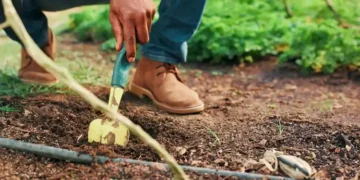
See also: Mastering Mulching: Elevating Your Home Garden

Previous Post

Growing Little Minds: Creative Gardening Adventures for Kids

Next Post

Harvest Harmony: Unlocking the Secrets of Companion Planting for a Thriving Garden

Related Posts

Raised Bed vs. In-Ground Gardening
How To Guides

Raised Bed vs. In-Ground Gardening: Which Actually Grows More?

by er wp
August 28, 2026
rainwater harvesting system
Sustainable Gardening

Rainwater Harvesting for Beginners: How Much You Can Actually Save

by er wp
August 27, 2026
how much compost do I need
How To Guides

How Much Compost Do You Really Need? A Step-by-Step Guide

by er wp
August 24, 2026
Winter Blooming Plants - Witch Hazel
How To Guides

Winter Blooms: Top 10 Spectacular Flowering Plants and Shrubs to Brighten Your Cold Season Garden

by er wp
August 24, 2026
10 Balcony Garden Examples for Small Spaces
How To Guides

10 Balcony Garden Examples for Small Spaces

by Ben Walker
August 10, 2026
Next Post
companion planting tomatoes, basil and marigolds

Harvest Harmony: Unlocking the Secrets of Companion Planting for a Thriving Garden

Leave a Reply Cancel reply

Your email address will not be published. Required fields are marked *

Guest Posts

improving clay soil

How to Improve Drainage in Clay Soil: What Actually Works (and What Makes It Worse)

August 3, 2026
Choosing the Right Bird Feeder

The Ultimate Guide to Choosing the Right Bird Feeder for Your Garden

July 14, 2026
How to Calculate How Much Mulch You Need (And Never Buy Too Much or Too Little)

How Much Mulch Do You Really Need? A Step-by-Step Calculation Guide

July 7, 2026
small space gardening

How to Start Gardening in a Small Space for Busy Families

June 22, 2026
Garden Design Ideas to Transform Your Outdoor Space

Garden Design Ideas to Transform Your Outdoor Space

June 15, 2026
Grow High Yield Tomatoes at Home

How to Grow High-Yield Tomatoes at Home (Most Ignore This)

August 20, 2026

Recommended

christmas garden decorations

10 Good Garden Ideas for Christmas Garden Decorations

December 29, 2025
Hedges vs. Fencing: What Works for Your Yard?

Hedges vs. Fencing: What Works for Your Yard?

August 26, 2026

Categories

  • Gardening Tools & Equipment
  • Guest Posts
  • How To Guides
  • Indoor Gardening
  • Pest & Disease Management
  • Plant Care Tips
  • Plant Types and Species
  • Sustainable Gardening

Don't miss it

Raised Bed vs. In-Ground Gardening
How To Guides

Raised Bed vs. In-Ground Gardening: Which Actually Grows More?

August 28, 2026
rainwater harvesting system
Sustainable Gardening

Rainwater Harvesting for Beginners: How Much You Can Actually Save

August 27, 2026
regenerative gardening
Sustainable Gardening

What Is Regenerative Gardening? A Beginner’s Guide

August 26, 2026
brown leaf tips
Pest & Disease Management

Brown Leaf Tips on Houseplants: Why It Happens and How to Fix It

August 26, 2026
companion planting for peonies
Plant Care Tips

Companion Plants for Peonies: The Best (and Worst) Garden Partners

August 26, 2026
whiteflies on plant
Pest & Disease Management

Whiteflies on Houseplants and Vegetables: Identification, Prevention, and Treatment

August 26, 2026

Categories

  • Gardening Tools & Equipment
  • Guest Posts
  • How To Guides
  • Indoor Gardening
  • Pest & Disease Management
  • Plant Care Tips
  • Plant Types and Species
  • Sustainable Gardening

Browse by Tag

Aphids Autumn Autumn Planting Bees Beetles Biodiversity Birds Bulbs Butterflies Companion Planting Compost Design Eco-friendly Ecosystem Ferns Fertilizer Flowers Fruit Guide Moss Pollinators Seeds Slugs Snails Spring Summer Sustainable Vegetables Winter

Recent News

Raised Bed vs. In-Ground Gardening

Raised Bed vs. In-Ground Gardening: Which Actually Grows More?

August 28, 2026
rainwater harvesting system

Rainwater Harvesting for Beginners: How Much You Can Actually Save

August 27, 2026
  • Write for Us
  • Advertise with Us
  • General Inquiries
  • HTML Sitemap
  • Terms and Conditions
  • Privacy Policy

© 2026 Good Garden Ideas

No Result
View All Result
  • Home
  • Gardening Tools & Equipment
  • How To Guides
  • Indoor Gardening
  • Pest & Disease Management
  • Plant Care Tips
  • Plant Types and Species
  • Sustainable Gardening
  • Advertise with Us
  • Write for Us
  • About Us

© 2026 Good Garden Ideas