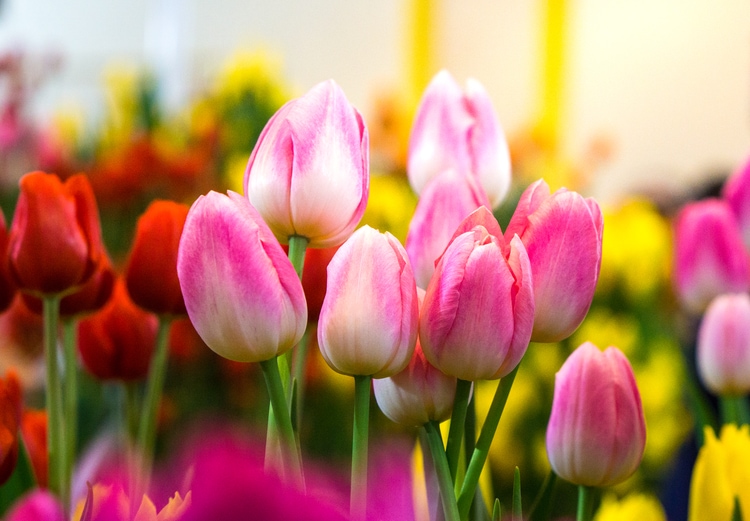
The first sign that spring is here is the emergence of the tulips, their beautiful forms and vibrant colours having captivated the hearts of gardeners and flower lovers for centuries, when the last remnants of winter start to fade.
In this article we’re going to take a closer look at tulip care tips, their history and varieties, as well as the joy that they bring into our lives.
The History of Tulips
When it comes to flowers, one of the most iconic and beloved blooms is the tulip. Originating from the mountainous regions of Central Asia, this beautiful flower is admired and cultivated in all over the world.
Coming from wild origins on the highlands, tulips were first admired and used by nomadic tribes and early civilisations, but didn’t get much recognition, and even then, didn’t become the global symbols they are today.
The name tulip is thought to come from the Turkish word tülbent, which means “turban”, fitting, given the shape of the flower.
It was in the Ottoman Empire that tulips gained popularity, especially in the 16th century, where Turkish gardeners, who worked wonders with the flowers, bred them in huge variety of colors and styles, turning them into symbols of wealth, beauty, and perfection, appearing in the world of poetry, textiles, and palace gardens, and even found themselves celebrated in the court of Sultan Suleiman the Magnificent.
The Tulip Festivals which took place at the sultan’s court during the spring, will live on in history.
It was in the late 1500s that tulip bulbs got sent to Western Europe, and Carolus Clusius a Dutch scientist, basically single-handedly kick-started the process of cultivating tulips in the Netherlands, and laid the foundation for the exquisite varieties we see today.
He lit the fuse on the flower’s European-wide popularity and in the Netherlands in particular, where the conditions are basically perfect for growing them, when Carolus Clusius first brought the tulip back to Europe.
Well-known as a status symbol, the tulip’s relatively rare and unusual varieties catapulted it into the spotlight in the early 1600s, and led to the first economic bubble in recorded history, known as Tulip Mania. Between ’34 and ’37, at the peak of this craze, one tulip bulb could be more valuable than a house, and when the bubble burst, investors were left reeling, some of them financially ruined.
Today, the Netherlands is the world’s largest producer and exporter of tulips, growing billions of bulbs every year. The flower is a symbol of love, rebirth and springtime and there are now over a thousand different types. Ranging from plain single-coloured blooms to delicate fringed and parrot varieties.
Tulip festivals are celebrated all over the world, in the Netherlands, Canada, Turkey and further afield, these celebrations acknowledge not just the flower’s beauty, but the impressive history and culture associated with the tulip.
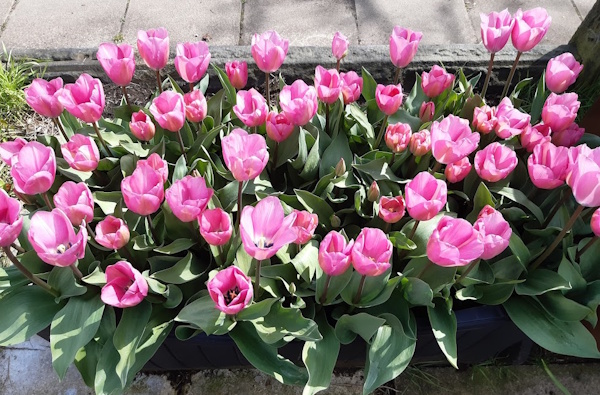
Diverse Varieties of Tulips
One of the reasons tulips are adored is their incredible diversity.
There are over 3,000 varieties of tulips, each with its distinct shape, size, and color.
Here are some popular types:
1. Darwin Hybrid Tulips
If you’re looking for a tulip variety that will reliably light up the spring, look no further than the Darwin Hybrid, a well-known and highly admired tulip breed.
Coming into the world in the mid-1900s, the result of cross-breeding between the original Darwin Tulips and Fosteriana Tulips has given rise to these beautiful hybrids that knock out the competition, offering larger flowers, often measuring 4 to 6 inches across, and towering stems that can grow to 24 inches high.
Their vibrant blooms in shades of red, pink, orange, yellow and white.
With delicate blends between these colours showcase the true beauty of the Darwin Hybrids. One of the biggest perks of this flower is that they’re perennials. Gone are the days of tulips that grow one year, wilt and disappear.
Darwin Hybrids will return to your garden every year, after planting in well-drained soil in the sun. Since they can withstand cool spring temperatures, you’ll get the benefit of this spectacular colour show right at the beginning of the growing season.
Darwin Hybrid Tulips are also super adaptable and suitable for garden beds, borders, or even cut-flower arrangements.
And, requiring virtually no maintenance, offer a pure, timeless charm that is anything but bland.
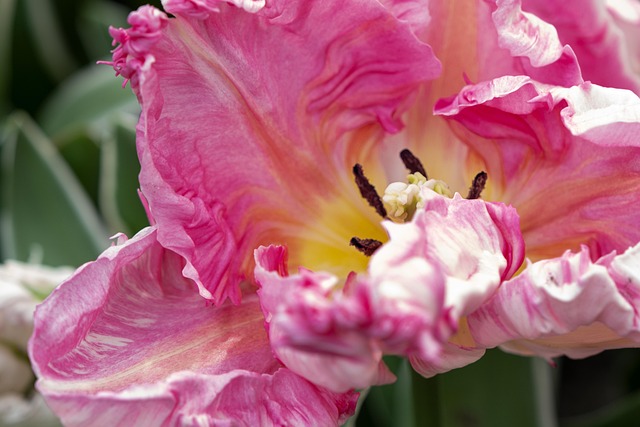
2. Parrot Tulips
If you’re looking for a tulip that makes a statement, Parrot Tulips are the way to go, known for their vibrant colors and ruffled petals that resemble the feathers of exotic birds, and that’s how they got their name.
Coming from natural mutations of single late tulips in the 17th century, over time, breeders really brought out the full extent of their dramatic features, and now they’re one of the most sought-after types of tulips.
Parrot Tulips are basically exploding with extravagance, artistic flair and turn any garden or bouquet into something truly eye-catching, and people love them for that reason.
These tulips are 20 inches tall, produce stunningly large flowers that will be the centerpiece of any arrangement, and usually bloom in late spring. They don’t like rough weather though, windy days and heavy rain can knock them off kilter, so they need a safe and sheltered spot to grow in.
Well-known for their sculptural beauty in floral arrangements, Parrot Tulips are also pretty delicate. They need to be paired with simpler flowers that won’t overpower them, and look absolutely stunning when they’re on their own.
When planted in the ground, Parrot Tulips will add a sumptuous mix of colour, texture and refinement to any outdoor space, and transform it into a work of art.
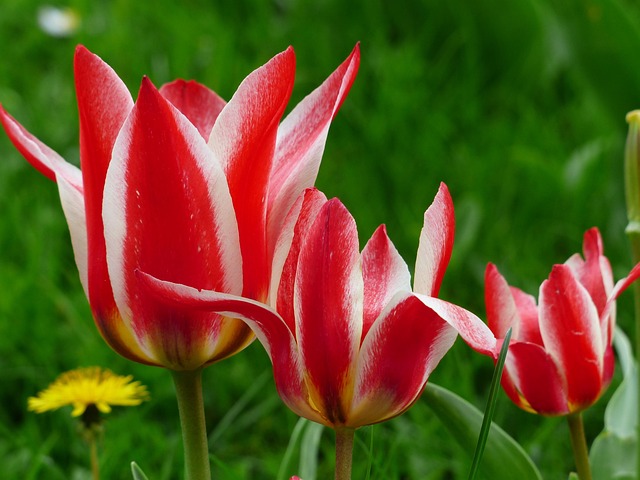
3. Lily-Flowering Tulips
Lily-Flowering Tulips stand out for their elegant, flared petals that taper to delicate points and resemble the shape of a lily, these are the epitome of refinement. Their striking form, and incredibly slender stems infuse a sense of dynamism and class to springtime gardens.
Blooming at the end of the tulip season, their displays of radiant color are nothing short of phenomenal.
Their vibrant palette of shades red, pink, purple, white, yellow and bicolor. In addition to adding height and drama to borders, beds and containers, when clustered together, creates a striking, star-like effect. The sunlight can’t help but be mesmerised by their upward-sweeping petals.
Requiring well-drained soil and full sun to flourish, the hardy stems of the Lily-Flowering Tulips make them basically ideal for arrangements, and they get along famously with perennials and late-blooming bulbs creating an absolutely seamless transition from spring into early summer.
These tulips are, in essence, a work of art, elegant, long-lasting and exquisitely unique.
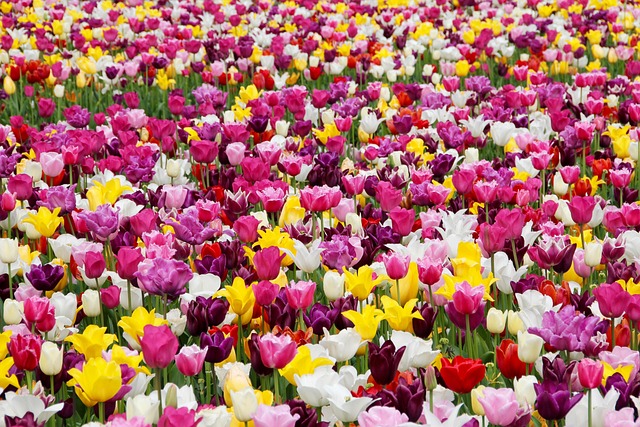
The Beauty and Symbolism of Tulips
Tulips are more than just visually stunning; they hold rich symbolism.
From love to rebirth, elegance and refinement, tulips have earned the reputation of being one of the world’s most expressive flowers.
Love and Passion, A Persian and Turkish origin story makes it clear that tulips are emblems of perfect love and devotion, coming from the legend of Farhad falling for a girl named Shirin who, to him tragically seemed gone. When he couldn’t bear the loss, he took his life, and out of the blood he bled, red tulips sprouted, representing love and sacrifice. Today, red tulips are synonymous with passionate love, like red roses.
Renewal and new starts are two other meanings of the tulip.
They burst into bloom in early spring after months of winter, radiating hope, growth and life, and that is why they’re often given for celebrations of fresh starts, such as birthdays, weddings and festivals.
Well-known shades of tulips have diverse meanings:
Red means deep love, yellow is cheerful and friendly, pink is for affection and good wishes, white is for purity and forgiveness, and purple is for nobility and admiration, allowing us to speak with delicate precision to one’s feelings.
Tulips are also famous for their elegant appearance, beautiful lines and perfect balance. And their beauty has motivated poets, artists and designers for centuries, basically, they’ve been given a sacred place in the world of art.
No matter what form they take, whether in a bouquet or in their natural state, tulips will carry with them the timeless meanings that celebrate love, renewal, and the elegance of life.
Here’s a comprehensive guide to ensure your tulips care:
Choosing the Right Bulbs
When picking out tulip bulbs, you’re basically guaranteed a vibrant and spectacular spring display if you choose firm, healthy bulbs, and avoid any that are soft, moldy or crushed. Larger bulbs tend to produce longer stems and bigger flowers.
Well-known as being low-maintenance, tulips are also a good option for those who like a reliable bloom period, and can be broken up into three types: early, mid- and late season, allowing you to have a continuous flowering period.
Popular varieties, such as Darwin Hybrids are the go-to for their reliability, Triumphs for their classic shapes and Parrot Tulips for their striking texture.
The climate and soil in your garden can be quite a lot to consider too.
Tulips need well-drained soil and lots of sunlight, and in colder areas, autumn planting, just before the first frost, is best.
If you go for top-quality bulbs that suit your garden’s conditions you’ll be treated to gorgeous tulip blooms that really make the most of your space, year after year.
Ideal Planting Conditions
Regarding growing tulips, the right conditions are everything. They’re most at home in cool climates, drained soil and lots of sunlight really get them going.
The best time to plant tulip bulbs is six to eight weeks before the first frost, allowing them to establish a strong root system before the winter. Well-known as the spot where they’ll grow best, sunny locations that get at least six hours of direct sunlight daily are necessary to avoid weak stems and smaller flowers.
The soil in which you plant tulip bulbs is also very important. They hate waterlogged soil, so choose a mixture that drains well, something that’s either loamy or sandy in texture, and give them a boost by adding compost or coarse sand. Plant the bulbs 6 to 8 inches deep and 4 to six inches apart with the pointed end facing upwards.
Avoid overwatering, moist but not sodden is the way to go. Covering them with a layer of mulch will also protect them from wild temperature swings.
Tulip Planting Technique
When planting tulips in the garden, you’re in for a treat, as they’re one of the most spectacular spring flowers, but different species require specific conditions to flourish, and mastering the right planting techniques is the key to healthy growth, stunning blooms and year after year beauty,
Darwin Hybrid tulips are the ones to go for if you want large, statement blooms and sturdy stems for your garden beds and borders, they adore full sun and rich, well-drained, fertile soil. Dig in six to eight inch deep and space them four to six inches apart in the fall.
Throw in some compost or bone meal at planting time, don’t drown them in water when they’re dormant, and they’ll probably come back for a few years in cooler climates, with excellent drainage.
Triumph Tulips are basically mid-spring bloomers that are extremely versatile, suitable for containers and formal arrangements.
They should be planted six inches deep in well-structured, sandy soil that has been enriched with organic matter, and need six hours of sunlight every day.
If you’re putting them in a pot, make sure it has good drainage holes and uses a light potting mix. Letting the foliage die back naturally after the bloom is over is crucial for the next year’s blooms.
Parrot Tulips have gorgeous ruffled petals and electric colours, but are on the more delicate side, and need protection from harsh winds and downpours.
Planting them five to six inches deep in well-fed, well-drained soil, and placing them in partial to full sunlight should do the trick. Keep in mind that they are short-lived and can be treated as annuals or lifted and stored in a cool, dry place for replanting. A characteristic that’s especially true of the Lily-Flowering Tulips, when planting tulips.
Lily-Flowering Tulips add elegance to borders and mixed beds with their pointed, flared petals. They must be planted 6 to 7 inches deep and 5 inches apart in well-drained, sunny areas and prefer slightly alkaline to neutral soil. Adding grit or sand to the planting hole is ideal as it enhances drainage, reduces the risk of bulb rot, and allows for more time to bloom. They are made to pair perfectly with the late-spring perennials.
Species, also known as wild tulips, Tulips are not too large in size and are almost impervious to the elements. They are best suited for rock gardens, naturalised areas and planters, need to be planted four to five inches deep in very well-drained ground and full sunlight.
Coming through the winter just fine, they often multiply naturally, giving you masses of colour without much work, and shouldn’t be overwatered. Allow the foliage to completely die back before cutting it back.
Double Early and Double Late Tulips have show-stopping peony-like flowers. They prefer sheltered locations to stop their heavy blooms from getting knocked over by the wind, and need to be planted six inches deep in rich soil with moderate watering. You may also want to prop up the taller varieties so they don’t bend.
Caring for Your Tulips
Once your tulips start sprouting in spring, provide them with adequate care:
- Watering: Ensure consistent moisture, especially during dry spells. However, be cautious of overwatering, as well-drained soil is vital.
- Mulching: Mulch around the base of the plants helps retain moisture and suppress weeds.
- Fertilizing: Use a balanced fertilizer in spring to promote healthy growth. Follow the recommended dosage on the fertilizer label.
Post-Bloom Care
The care of them is crucial in getting them back to the best state for next year, when tulips have finished blooming. Coming out to chop off the faded flowers is not always the best idea, as this deprives the plant of the chance to put its energy towards next year’s growth.
After the flowers have dropped off, you should deadhead them, cutting the stem right below the seed pod to stop the plant wasting energy on seed production. The rest of the plant, though, should be left alone, and allowed to turn yellow and wither naturally. This is the period when the leaves are doing their best work photosynthesizing and feeding the bulb for next year’s bloom.
You should still be giving the soil a light drink for about three weeks after the flowers have faded, but then you can gradually cut back on the water, as the leaves start to dry out. Don’t drown the soil, though, as tulip bulbs don’t like wet feet, and can rot if the soil is too damp.
When the leaves have completely turned brown and died back, you can cut them back, and think about lifting the bulbs, or leaving them in the ground.
In colder parts of the country or in heavy soil, it’s probably best to dig them up and store them in a cool, dry place until autumn, when you can replant them. In milder, well-drained areas, you can leave them in the soil to naturalize.
Creating Stunning Tulip Displays
Designing a tulip garden can be a fulfilling creative endeavor.
Here are some ideas for classically beautiful displays with tulips:
1. Color Combinations
Experiment with different color combinations to create a striking visual impact.
Pair contrasting colors like yellow and purple or go for a monochromatic scheme with varying shades of one color.
2. Layering Heights
Mix tulips with other spring bulbs and flowering plants of varying heights.
Tall tulips at the back and shorter varieties in the front create depth and dimension in your flower beds.
3. Container Gardening
Use pots and containers to plant tulips on patios or balconies.
This allows you to create stunning displays that are easy to manage and move.
Mixing tulips with other spring flowers in containers adds texture and variety.
Common Questions About Tulips
1. When Do Tulips Bloom?
Most tulips bloom in early to mid-spring, typically from March to May, depending on the variety and local climate conditions.
2. Can Tulips Grow in Shade?
While tulips prefer full sun, some varieties can tolerate partial shade. However, flowering may be reduced in shady conditions.
3. How Long Do Tulips Last?
Once cut, tulips can last up to a week or more in a vase with proper care. In the garden, they bloom for about 1-2 weeks, depending on the weather.
Summary
As you see tulips you can’t help but be reminded of the beauty and elegance of spring. Coming through the centuries with a rich history, these flowers bring us pure joy in gardens and homes. As a celebration of the season they are basically worth getting to know.
Well-known as being easy to plant, whether you’re a green thumb or a complete beginner, tulips can be the go-to way to add colour and beauty to your life, and with their timeless appeal, they’re a surefire bet.