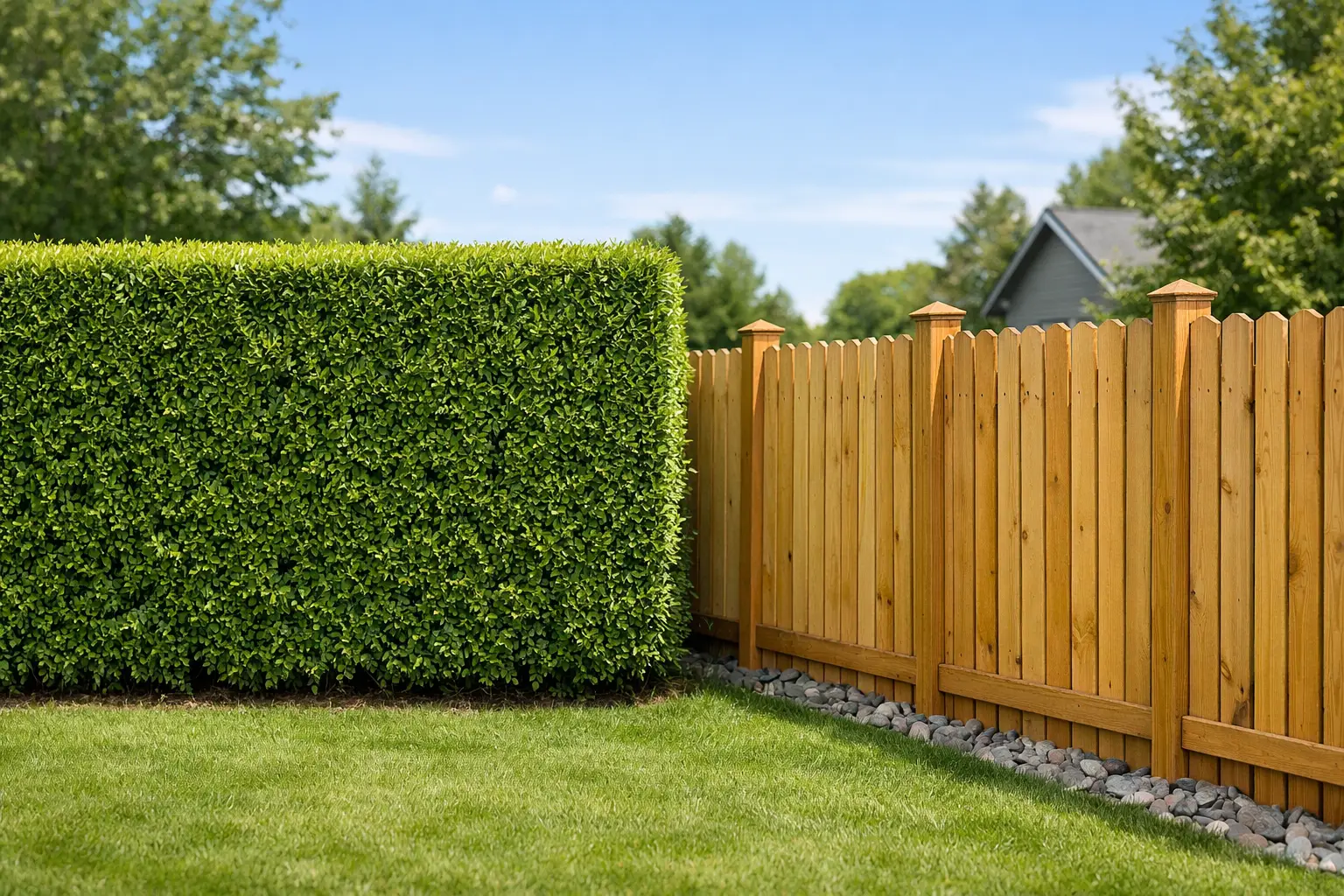
A backyard can feel surprisingly exposed even when the neighbors are perfectly pleasant. Whether you want a quieter patio, a safer play area, or a prettier view from the kitchen window, the choice often comes down to hedges vs. fencing.
Both can define a property line and create privacy, but they behave very differently once seasons, budgets, maintenance, and growing conditions enter the picture.
A fence gives you an instant boundary. A hedge grows into one, bringing leaves, flowers, birds, and changing color along the way.
The best option is not automatically the fastest or the greenest. It is the one that suits how you use your yard and how much care you realistically want to give it.
Hedges vs. Fencing: The Biggest Differences
Fencing is built structure. It provides a clear line, reliable enclosure, and immediate screening once installed.
Wood, vinyl, metal, composite, and chain-link fencing all have different looks and price points, but none need time to reach their intended height.
Hedges are living screens made from shrubs or small trees planted closely together. They can be clipped into a neat wall or allowed to take on a softer, more natural shape. Their privacy improves over time, which is part of their appeal and one of their biggest limitations.
The decision usually turns on five practical questions: How soon do you need privacy? What does your local climate support? Are pets or children involved? How much maintenance fits your routine? And do you want a boundary that supports wildlife and adds garden beauty?
When a Fence Is the Better Choice
A fence is hard to beat when you need privacy right away. A 6-foot privacy fence can block a direct view into your patio as soon as construction is complete, while even fast-growing hedges may need several growing seasons to fill in. If a new home sits close to neighboring houses, that instant result can make outdoor space feel usable much sooner.
Fencing also provides better containment. A solid fence is usually the practical choice for keeping a dog in the yard, creating a secure play zone, or separating a vegetable garden from a busy driveway. Check local rules before building, especially for maximum height, property-line setbacks, permits, and pool-safety requirements. Homeowners associations may also limit materials or colors.
Maintenance is generally more predictable with fencing. You may need to wash vinyl, repaint or stain wood, tighten hardware, and inspect posts after storms. But you will not be pruning several times each year or watering a new planting through dry weather. For busy households, that difference matters.
A fence can also work in difficult planting conditions. Narrow side yards, deep shade, compacted soil, and spots crowded by utility lines may not support a healthy hedge. In those places, a well-chosen fence can solve the privacy problem without forcing plants to struggle.
Still, fencing has trade-offs. Quality installation can be expensive, and materials eventually weather, warp, fade, or need replacement.
A tall solid fence may also cast shade into a garden bed, block cooling breezes, or look imposing in a small yard.
If you choose wood, look for durable, responsibly sourced materials and plan for ongoing protection from moisture.
When a Hedge Is the Better Choice
A hedge is often the more rewarding option when privacy and planting design can work together. Instead of placing a hard line at the edge of the yard, you create a living backdrop for flowers, seating areas, and vegetable beds. The effect can make a modest yard feel like a green retreat rather than a series of boxed-in spaces.
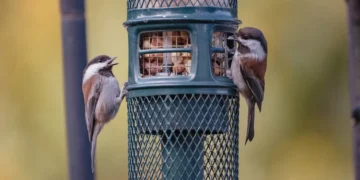
Hedges offer benefits that fencing cannot. Their roots help hold soil on sloped ground, their foliage can filter dust and soften wind, and their branches provide shelter for birds and beneficial insects. Flowering or berry-producing shrubs may add even more seasonal interest, though berries can create cleanup needs near patios and walkways.
The right hedge depends heavily on your USDA hardiness zone, sun exposure, soil moisture, and desired mature size.
Evergreen options such as arborvitae, holly, wax myrtle, and certain junipers offer year-round screening in suitable regions.
Deciduous shrubs, including lilac, ninebark, viburnum, and shrub roses, may lose leaves in winter but can bring blooms, fall color, and stronger wildlife value.
Avoid choosing plants only because they are labeled fast-growing.
A shrub that races upward can become too wide for the space, require constant trimming, or suffer in your climate.
Before planting, check the mature height and spread, then give each plant enough room to develop. Crowding young shrubs may seem like a shortcut to privacy, but poor air circulation can invite disease and leave gaps later.
New hedges need a real establishment period. Expect to water deeply and consistently during the first one to two years, especially in hot or dry areas. A 2- to 3-inch layer of mulch helps conserve moisture and protects roots, but keep mulch a few inches away from stems to prevent rot and pest problems.
Cost: Look Beyond the First Invoice
At first glance, a hedge may seem less expensive because individual shrubs can cost less than a full fence installation. But the total includes plants, soil amendments if needed, mulch, irrigation supplies, and replacement plants if a few fail. Larger shrubs give a more immediate screen but cost significantly more than small container plants.
A fence has a higher upfront price in many cases, particularly if you hire a professional or choose premium materials. Its cost is easier to estimate, though, because the project has a clear beginning and end. A hedge spreads expenses and labor over several years.
Think about the cost of your time, too. Formal hedges may need shearing two or three times during the growing season. Informal mixed hedges usually need less clipping, but they still require occasional thinning, watering during drought, and monitoring for pests. A fence needs fewer routine chores, while a hedge gives back more garden interest.
Privacy, Noise, and Wind: Set Realistic Expectations
Both options improve visual privacy, but neither creates complete silence. A solid, well-built fence can reduce some direct sound, especially when there are no gaps beneath or between boards.
Dense hedges help absorb and scatter noise, but they are not soundproof barriers. For traffic noise, combining a fence with layered planting is often more effective than relying on shrubs alone.
Wind is another area where living plants shine. A hedge with some airflow through its branches slows wind without creating the strong turbulence that can form behind a completely solid fence. This can be helpful around patios and exposed garden beds. In very windy regions, however, young hedges may need staking or protection until their roots are established.
The Smart Compromise: Use Both
For many yards, the best answer is not an either-or choice. A modest fence can provide immediate security and a dependable boundary, while shrubs planted in front of it soften the view and create a fuller sense of privacy.
This approach is especially useful where a dog needs containment but you do not want the yard to look like a wooden enclosure.
Plant shrubs far enough from the fence that you can reach both sides for pruning and repairs. The exact distance depends on the plant’s mature width, but do not press young plants right against the panels. Give roots room, preserve airflow, and leave access for staining or replacing boards later.
You can also use a low decorative fence to define a space, then create screening with taller plants farther inside the yard.
Layering evergreens with flowering shrubs and ornamental grasses produces a softer, more natural look than a single clipped row.
How to Choose for Your Yard
Start with the problem you are trying to solve. If you need a secure, immediate barrier for a pet, pool, or close neighbor, fencing belongs near the top of the list.
If your goal is to make the yard greener, support pollinators, reduce wind, and build privacy gradually, a hedge may be the better long-term investment.
Then look honestly at your site.
Measure the available planting width, observe how many hours of sun it gets, and locate underground utilities before digging.
A narrow strip beside a driveway may suit a fence and a few containers better than a hedge that will outgrow the space.
A sunny backyard with room for layered planting may be ready for a living screen that only gets better each year.
The most satisfying boundary is one you will enjoy looking at and caring for. Choose the structure or plants that make stepping outside feel more private, more beautiful, and more like your own piece of the garden.
FAQs
One of the biggest decisions you’ll make in planning a garden boundary is whether to plant a hedge or erect a fence.
Each choice can provide privacy, security and define your outdoor living space, but each has its own benefits and drawbacks.
The best option often depends on your budget, your garden style, how much work you’re prepared to put in and what you want your boundary to do.
Here are the 10 most commonly asked questions about hedges versus fences to help you decide.
1. Hedge or fence? Which is better?
That depends on what you prioritize.
A hedge is a living border, changing and growing with the seasons. It’s good for wildlife, reduces noise, provides natural beauty and can increase the biodiversity in your garden.
A fence gives you instant privacy and security. It needs far less patience than growing a hedge and comes in a great variety of styles for contemporary or traditional gardens.
Choose a hedge if you want:
- A natural appearance
- Wildlife habitat
- Long-term value
- Seasonal interest
Choose a fence if you want:
- Instant privacy
- Low maintenance
- Clear property boundaries
- Modern garden styling
2. Which option is the cheapest?
Initially, a fence is usually the more expensive option.
Quality timber or composite fencing can be a significant investment depending on your materials, labour and the size of your garden.
Young hedge plants are generally much cheaper to buy, although you will need enough to make a continuous screen.
Keep in mind that:
It takes years for a hedge to reach full height, with maintenance.
Fences may require repairs, staining or replacement in 10-20 years depending on the material.
In the long term the costs tend to even out.
3. Which is more private?
A fence wins for instant privacy.
The six-foot fence provides instant privacy from neighbours and passing roads.
A hedge takes a while to get established but can eventually be thicker than a fence.
Popular privacy hedges are:
- Laurel
- Yew
- Privet
- Holly
- Portuguese Laurel
- Hornbeam
Many mature hedges give year-round screening, which it is hard to see through.
4. Which takes more maintenance?
A hedge certainly requires more ongoing maintenance.
You’ll have to:
- Water young plants
- Feed occasionally
- Trim once or twice each year
- Remove dead branches
- Control weeds during establishment
A fence is usually lower maintenance.
Wooden fences will need to be stained or painted occasionally, but composite and metal fences may only need to be cleaned once a year.
If you want the easiest option, fencing generally takes the cake.
5. What’s better for wildlife?
Hedges can be a really good addition to a wildlife friendly garden.
They provide:
Bird nesting sites
Hedgehog houses
Pollinator food
Protection of useful insects
Winter shelter for small animals
Flowering hedges are also a major source of nectar for bees and butterflies.
Fences can be useful but do little to provide habitat unless they are integrated with climbing plants or wildlife-friendly features.
If you’re looking to promote nature, then a hedge is the clear winner.
6. What’s the longest lasting?
A good hedge will last for years. Years. Years.
With good management many countryside hedgerows have been around for hundreds of years.
Lifespan of a fence depends on the material.
Typical life spans are:
Pressure treated timber 15-20 years
Composite fencing: 25 to 30 years and more
Metal fencing: 30+ yrs
Fences have to be replaced eventually, but a well-maintained hedge can keep growing forever.
7. Can I join a hedge and fence?
Yeah, and it’s one of the best solutions.
Many gardeners will put up a fence first, for immediate privacy, and plant a hedge in front of the fence.
Advantages:
Instant screening process
Improved wind protection
More noise suppression
Increased safety
A more mellow, greener look
The hedge can eventually hide the fence partially or completely making a lovely natural boundary.
8. How can I best reduce the noise?
A hedge grown to maturity is usually better than an ordinary fence.
The thick layers of leaves, stems and branches act to absorb and scatter sound instead of just bouncing it back.
For the best noise reduction, choose dense evergreen hedges such as:
- Laurel
- Yew
- Leyland Cypress (kept well maintained)
- Holly
A solid fence can cut down some noise, but the best results are usually with a combination of fence and hedge.
9. What increases the value of a garden?
Both can add to a property’s appeal, but in different ways.
Many buyers appreciate a smart, well-installed fence that gives a tidy, secure look.
However, mature hedges often make a garden feel:
- More established
- More private
- More attractive
- More environmentally friendly
Beautiful planting can make a huge difference to kerb appeal, creating a warmer, more inviting home.
Quality fencing combined with attractive planting gives the best first impression.
10. What do I pick for my garden?
Ask yourself these questions:
Am I in need of privacy right now?
What maintenance can I realistically do?
Do I like gardening?
Do I care about wildlife support?
What is my budget?
Which do I prefer, natural or modern look?
Hedges are good for the environment and can be very beautiful, if you like working in the garden and are willing to wait for your plants to mature.
If you’re looking for something low maintenance, quick, and easy to install, a fence may be the better choice.
For many gardens, the best solution is not to choose between the two, but to have both and enjoy the benefits of both.
Summary
Hedges and fences both have their place in the garden and neither is necessarily better than the other.
A fence offers instant privacy, security and structure, whereas a hedge brings life, colour and invaluable wildlife benefits.
Your choice should be based on your style of gardening, your budget and your long-range goals.
If you can be patient, a hedge can be one of the most beautiful things in your garden, changing with the seasons and providing a haven for birds and pollinators.
A solid fence is a good bet if you need a quick fix.
Finally, you can have the best of both worlds: pair a fence with a carefully selected hedge for immediate privacy today, and a lush, living boundary for years to come.