When I first started thinking seriously about growing vegetables, I assumed raised beds must be better.
They look tidy. They make a garden feel organised. They warm up quickly in spring, the soil can be tailored to exactly what I want, and there’s something very satisfying about having neat little growing areas lined up ready for planting.
But then I started wondering something rather important:
Do raised beds actually grow more than an ordinary in-ground garden?
That’s a much more interesting question.
Because if I’m going to put time, money and effort into building raised beds, I want to know whether I’m getting something worthwhile in return.
The short answer is that raised beds can produce excellent yields, but they don’t automatically grow more than in-ground gardens.
In fact, under the right conditions, an in-ground garden can be just as productive — and sometimes more productive — than raised beds.
It really comes down to the soil, the plants, the space, the climate, how closely I plant everything and, perhaps most importantly, how well I look after the growing area.
See more How To Guides >
So let’s dig into the raised bed versus in-ground gardening debate and see which one actually comes out on top.
What Is a Raised Bed?
A raised bed is simply a growing area where the soil sits higher than the surrounding ground.
Some raised beds have obvious frames made from timber, stone, bricks or other materials.
Others are simply mounded areas of soil without any physical edging.
That’s worth remembering because a raised bed doesn’t necessarily need sides.
I can create a raised growing area by adding compost and organic matter and gently building up the soil.
A traditional framed raised bed is a little more involved because I’ll need materials and some construction.
But both approaches have the same basic idea: the growing medium is raised above the surrounding ground.
See also: A Step-by-Step Guide to Building a Raised Bed Garden >

What Is In-Ground Gardening?
In-ground gardening is the more traditional approach.
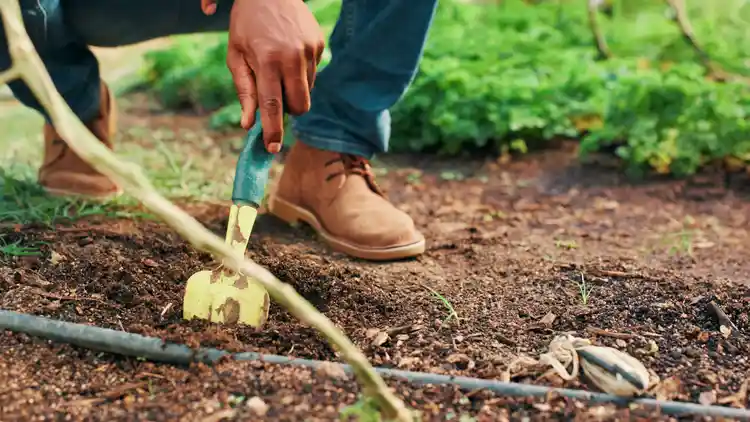
Instead of creating a separate bed and filling it with imported soil or compost, I plant directly into the soil that’s already in my garden.
It might need improving first, of course.
Very few gardens come with perfect soil ready for growing everything I want.
But with compost, organic matter, mulch and time, existing soil can often become wonderfully productive.
And that’s one of the big advantages of in-ground gardening.
I’m working with what I already have.
So, Which Actually Grows More?
Here’s where things get interesting.
If I take two gardens of exactly the same size and plant the same crops using the same spacing, there isn’t a magical productivity advantage simply because one is raised.
A raised bed doesn’t automatically make a tomato plant produce more tomatoes.
It doesn’t magically make carrots grow bigger.
And it certainly doesn’t make lettuce grow faster just because the soil is above ground level.
The productivity comes from the growing conditions.
If a raised bed gives me better soil, better drainage, fewer weeds, easier access and more intensive planting, then yes, it could produce more.
But if my existing in-ground soil is already fertile, well-drained and full of organic matter, I may see very little difference.
In other words:
It’s not raised versus in-ground that determines the harvest. It’s how well the growing environment suits the plants.
Raised Beds Can Make Intensive Growing Easier
One reason raised beds can be incredibly productive is that they encourage me to use space efficiently.
I can create a clearly defined growing area and plant it intensively.
Instead of leaving large paths between rows of vegetables, I can grow plants relatively close together, provided I understand the spacing requirements of the particular crop.
This can be particularly useful when I follow ideas such as:
Succession planting
Intercropping
Companion planting
Vertical growing
Square-foot-style intensive planting
Growing multiple crops in the same space throughout the season
A raised bed doesn’t make these techniques possible, but the defined space can make them easier to organise.
And organisation matters.
The more efficiently I use my available growing area, the more food I can potentially produce.
In-Ground Gardening Can Be Surprisingly Productive
I think in-ground gardening sometimes gets overlooked because raised beds are so popular.
But an established in-ground vegetable garden can be incredibly productive.
If the soil is fertile and well structured, plant roots can potentially explore a much larger volume of soil than they could in a relatively shallow raised bed.
That can be particularly useful for deep-rooted crops and larger plants.
And because the ground isn’t confined by the walls of a raised bed, roots can sometimes extend beyond the original planting area.
That’s something I don’t necessarily get with a raised bed sitting on top of compacted ground.
The Soil Question Is Huge
If there’s one factor I’d pay attention to when deciding between raised beds and in-ground gardening, it’s soil quality.
This is where raised beds can have a major advantage.
Imagine my existing garden soil is heavy clay.
It’s difficult to dig.
It becomes sticky when wet and hard when dry.
Perhaps it drains poorly.
Now compare that with a raised bed filled with a well-balanced growing medium containing plenty of organic matter.
It’s obvious which one gives me the better starting point.
But here’s the important bit:
I don’t necessarily need a raised bed to improve clay soil.
I can work on the existing soil by adding organic matter, using mulch, avoiding unnecessary compaction and improving its structure over time.
It may take longer, but I don’t have to build an entirely new growing system.
See also: How to Improve Drainage in Clay Soil: What Actually Works (and What Makes It Worse) >
Raised Beds Give Me More Control
One of the things I really like about raised beds is how much control I have over the soil.
I can decide what goes into them from the beginning.
If I’m starting with poor or contaminated soil, for example, a raised bed can create a separate growing environment.
I can choose an appropriate growing medium and amend it according to the plants I want to grow.
That can be particularly useful when growing specialist crops.
I can also have different beds for different purposes.
One might be particularly suited to vegetables.
Another could contain herbs.
Another might be dedicated to flowers for pollinators.
This makes it much easier for me to manage different growing conditions.
But There’s a Catch: Raised Beds Can Dry Out
This is something I think gets overlooked when people talk about the advantages of raised beds.
Because they’re elevated and often have good drainage, raised beds can dry out more quickly than surrounding ground.
That’s wonderful when I’m dealing with heavy, waterlogged soil.
But in a hot, dry spell, it can mean more watering.
And if the raised bed is shallow, the problem can be even more noticeable.
This doesn’t mean raised beds are bad.
It simply means I need to choose the right soil mix, mulch well and pay attention to watering.
In-Ground Soil Can Hold Moisture Better
Established ground soil can have a considerable advantage when it comes to moisture.
The surrounding earth acts as a much larger reservoir than a relatively shallow raised bed.
Once soil has good organic matter and structure, it can hold and distribute water effectively.
That’s particularly useful during dry weather.
For gardeners who live in areas where drought is a concern, this can be an important consideration.
Which Is Better for Roots?
This depends heavily on what’s underneath my raised bed.
If I build a raised bed directly over healthy, loose soil, plant roots may be able to grow down into the existing ground.
That’s a great situation.
But if I’m putting a raised bed on top of compacted soil, paving, concrete or another hard surface, the plants are effectively restricted to the depth of the bed.
That’s not necessarily a problem for shallow-rooted crops.
But it can matter for crops that need deeper root runs.
In-ground gardening obviously gives plants direct access to the soil beneath them.
What About Drainage?
This is one area where raised beds can be fantastic.
If my garden is naturally wet or heavy, raising the planting area can improve drainage.
That’s especially useful for plants that dislike sitting in saturated soil.
I can also design the growing medium to have the drainage characteristics my crops need.
But I don’t want to assume that “more drainage” is automatically better.
Plants need water.
The goal is good drainage, not bone-dry soil.
That’s why soil structure and organic matter are so important.
Raised Beds Can Warm Up Earlier
Another advantage I notice with raised beds is that they can warm up relatively quickly in spring.
The raised soil can be exposed to more sunlight and may drain more quickly after wet weather.
For certain crops, that can give me a useful head start.
But the exact difference depends on the climate, bed design, soil, location and weather.
I wouldn’t build raised beds purely because I expect dramatically earlier harvests.
I’d see it as one potential advantage among many.
What About Weeds?
This is where raised beds can make me very happy.
Not because they magically prevent weeds — they don’t.
Weeds will always find a way.
But raised beds can be easier to manage because I can start with relatively clean soil and keep the growing area clearly defined.
If I mulch the beds and avoid disturbing the soil unnecessarily, weed pressure can often be reduced.
In-ground beds can also be remarkably low-maintenance when they’re well mulched.
So I wouldn’t choose raised beds purely for weed control.
I’d choose them because they make the whole growing area easier for me to manage.
Raised Beds Are Easier to Organise
This might sound like a minor point, but I think it’s important.
A raised bed creates a clear boundary.
I know exactly where my growing space starts and ends.
I can plan crop rotations.
I can install supports.
I can add compost.
I can keep paths clear.
I can cover the bed during winter.
I can create separate growing zones.
That organisation can make me more likely to actually use the space efficiently.
And a garden that is easy to manage is a garden I’m more likely to keep productive.
Raised Beds Can Be Easier on Your Back
Another major advantage is accessibility.
If bending down to ground level is difficult, raised beds can be constructed at a height that makes gardening much more comfortable.
Even a modest increase in height can make planting, weeding and harvesting easier.
There are also specially designed accessible raised beds that can be reached from a seated position.
In-ground gardening is obviously closer to ground level, so raised beds can be a major practical advantage for some gardeners.
But Raised Beds Cost More
Here’s where in-ground gardening wins very easily.
If my garden already has usable soil, I don’t need to build anything.
I can simply prepare the area and plant.
Raised beds require materials.
Depending on what I choose, I might need:
Timber
Bricks
Stone
Screws or fixings
Compost
Topsoil
Growing medium
Tools
Weed-suppressing materials
A large raised bed can become surprisingly expensive.
And I don’t necessarily need to spend all that money to have a productive garden.
In-Ground Gardening Is Often the More Sustainable Choice
This is particularly relevant if I’m thinking about sustainable gardening.
Using the soil I already have means I don’t necessarily need to buy and transport large quantities of soil and compost.
I can improve what I have gradually.
I can add homemade compost.
I can mulch.
I can grow cover crops.
I can avoid unnecessary digging.
I can return organic material to the soil.
There’s something very satisfying about building fertility where I am rather than constantly importing it.
Raised Beds Can Still Be Sustainable
That doesn’t mean raised beds can’t be environmentally friendly.
They absolutely can.
I can use reclaimed timber or other suitable materials.
I can build beds that last for many years.
I can fill them with peat-free growing media.
I can make my own compost.
I can collect rainwater.
I can avoid unnecessary pesticides.
I can grow food intensively.
The sustainability of a raised bed depends on how I design, build and manage it.
Which Produces More Vegetables?
Now we get to the question I really wanted to answer.
Raised beds don’t automatically produce more vegetables.
But they can make it easier for me to produce a lot of food in a relatively small area.
That’s because I can control the soil and plant intensively.
If I have poor existing soil, the difference can be significant.
But if my in-ground soil is already excellent, I might get equally impressive harvests without constructing raised beds.
The most productive system is the one that gives the plants what they need.
Crops That Do Particularly Well in Raised Beds
Almost any vegetable can be grown in a raised bed, but some are especially convenient.
Lettuce
Great for intensive planting and succession sowing.
Radishes
Quick, compact and ideal for filling gaps.
Carrots
Raised beds can be particularly useful if my existing soil is heavy or stony.
Beetroot
Easy to grow and well suited to a productive raised bed.
Onions
They don’t require enormous amounts of space and can fit neatly into an intensive growing system.
Peas
Especially useful when combined with vertical supports.
Bush beans
Excellent for productive summer growing.
Strawberries
Raised beds can make them easier to manage and harvest.
Crops That Can Benefit From In-Ground Growing
Larger plants can sometimes appreciate the greater root space available in the ground.
Pumpkins
These need plenty of space regardless of where I grow them.
Squashes
They can spread rapidly and may be easier to manage outside a compact raised bed.
Fruit trees
Obviously, these are generally better suited to being planted directly into the ground.
Asparagus
Once established, asparagus can remain productive for years and benefits from a well-prepared permanent bed.
Rhubarb
Another perennial crop that can become a long-term feature of an in-ground garden.
Raised Bed vs In-Ground: My Quick Comparison
| Feature | Raised Beds | In-Ground Gardening |
| Initial cost | Usually higher | Usually lower |
| Soil control | Excellent | Moderate |
| Drainage | Often excellent | Depends on soil |
| Moisture retention | Can be lower | Often good |
| Accessibility | Excellent | More bending |
| Intensive planting | Excellent | Excellent |
| Root depth | Depends on bed | Generally unrestricted |
| Setup time | Higher | Lower |
| Maintenance | Can be easier | Can be very easy once established |
| Poor soil | Excellent solution | Requires improvement |
| Sustainability | Depends on materials | Often very good |
| Productivity | Potentially very high | Potentially very high |
So, Which One Would I Choose?
Honestly, it depends on the garden.
If I had heavy clay, poor drainage, contaminated soil, very compacted ground or accessibility concerns, I’d seriously consider raised beds.
I’d also choose them if I wanted to create a dedicated vegetable garden where I could control everything from the soil mix to the layout.
But if I already had reasonably good soil, I wouldn’t rush out to build raised beds simply because they’re fashionable.
I’d work with what I had.
I’d improve the soil with compost and organic matter.
I’d mulch.
I’d plan my planting carefully.
I’d use vertical space.
I’d practise succession planting.
And I’d see just how productive I could make the existing ground.
Could I Have Both?
Absolutely.
And I think this is probably the best answer for many gardens.
I don’t have to pick one side.
I could have raised beds for vegetables and herbs while keeping larger crops and fruit trees in the ground.
I could grow potatoes in the ground and salad crops in raised beds.
I could use a raised bed for carrots because my existing soil is heavy while planting pumpkins directly into the garden.
I could even have a small accessible raised bed close to the house and use in-ground beds elsewhere.
There’s no gardening law saying everything has to match.
My Biggest Tip: Improve the Soil First
Whatever method I choose, I keep coming back to the same thing:
Healthy soil is the foundation of a productive garden.
Before I spend a fortune constructing beds, I would look at the soil I already have.
Is it compacted?
Does it drain?
Does it hold moisture?
Is it full of organic matter?
Are earthworms present?
What grows well there already?
If the soil is poor, I can start improving it.
Compost, organic matter, mulch, suitable cover crops and sensible soil management can make a tremendous difference.
And unlike building a raised bed, soil improvement can happen gradually.
My Favourite Approach for Small Gardens
If I had a small garden and wanted to produce as much food as possible, I’d probably lean towards raised beds.
Not because raised beds are inherently more productive, but because they make it easier to organise intensive growing.
I’d use every inch.
I’d grow vertically.
I’d sow quick crops between slower ones.
I’d practise succession planting.
I’d grow herbs around the edges.
I’d use trellises.
I’d grow crops in containers where appropriate.
And I’d keep the soil covered and well supplied with organic matter.
In a small space, efficient organisation can make a huge difference.
My Favourite Approach for a Larger Garden
With a larger garden, I’d probably mix things up.
I’d use in-ground beds for crops that need space.
I’d have permanent areas for fruit trees and perennial plants.
I’d perhaps use a few raised beds for vegetables that benefit from more controlled soil.
I’d include a composting area.
I’d have wildlife-friendly planting.
And I’d leave plenty of room for nature to do its thing.
There’s no reason a productive garden has to be one enormous vegetable patch.
The Bottom Line: Raised Bed or In-Ground?
So, after all that, which actually grows more?
Neither automatically wins.
A well-designed raised bed can produce huge harvests, especially when I have poor soil, limited space or want to grow intensively.
But a well-managed in-ground garden can be just as productive, particularly when the soil is already fertile and well structured.
For me, the real question isn’t:
“Which is better?”
It’s:
“Which growing method gives my plants the best conditions in my particular garden?”
That’s the question that matters.
If my ground is wet, heavy and difficult to work, raised beds may transform my gardening.
If I already have wonderful soil, I’d be reluctant to spend money building something I don’t really need.
And if I have room, there’s absolutely nothing wrong with using both.
Final Thoughts
I think raised beds sometimes get sold as the secret to a more productive vegetable garden.
They’re certainly useful, and I love many things about them.
But they aren’t magic.
A raised bed with poor soil, inadequate water and badly chosen plants isn’t going to outperform a beautifully managed in-ground garden simply because it’s raised.
Likewise, an in-ground garden with compacted, depleted soil isn’t going to become productive just because I’ve planted seeds in it.
The soil, the plants, the growing conditions and the way I garden are what really make the difference.
So if you’re considering building raised beds, go for it if they solve a genuine problem or make gardening easier for you.
But if you already have good soil, don’t feel that you’re somehow missing out because your vegetables are growing at ground level.
Add compost.
Mulch well.
Plant wisely.
Make good use of your space.
Keep improving the soil.
And pay attention to what your garden is telling you.
Because when it comes to growing more, healthy soil and thoughtful gardening will always matter more than whether the soil happens to sit six inches higher.