I’ll admit that when I first heard the phrase regenerative gardening, I wasn’t entirely sure what it meant.
It sounded rather grand and complicated, as though I needed a huge garden, specialist knowledge, and a collection of expensive gardening equipment before I could even think about trying it.
Thankfully, that isn’t the case at all.
The more I’ve learned about regenerative gardening, the more I’ve realised that many of the things I already enjoy doing in the garden fit beautifully into the idea.
Composting, improving the soil, planting for wildlife, collecting rainwater, leaving some leaves where they fall, growing my own food, and trying not to interfere with nature more than necessary are all part of the picture.
And that’s what I particularly like about regenerative gardening.
It isn’t about creating a perfect garden.
It’s about creating a garden that becomes healthier, more resilient and more full of life over time.
So, if you’ve heard people talking about regenerative gardening and wondered what on earth it actually means, here’s my beginner-friendly guide.
Learn more about Sustainable Gardening >
So, What Exactly Is Regenerative Gardening?
In simple terms, regenerative gardening means gardening in a way that restores and improves the health of the soil, plants, wildlife and wider ecosystem.
Rather than simply taking nutrients from the soil and replacing them with fertiliser, regenerative gardening encourages us to build healthy soil naturally.
Rather than seeing every insect as a pest, we make room for beneficial insects.
Rather than removing every fallen leaf and piece of organic material, we look for ways to return those nutrients to the garden.
And rather than constantly trying to make our gardens conform to our idea of perfection, we work with some of the natural processes already happening around us.
I find that last part particularly appealing.
Gardening can sometimes feel like an endless battle.
Pull the weeds.
Kill the bugs.
Dig the soil.
Mow the lawn.
Clear the leaves.
Feed the plants.
Spray something.
Then start all over again.
Regenerative gardening encourages me to stop and ask whether I actually need to do all those things.
Sometimes the answer is yes.
Quite often, it’s no.
Regenerative Gardening Is About More Than Growing Plants
When I think about gardening, it’s very easy to focus on what I can see.
The flowers.
The vegetables.
The trees.
The lawn.
The shrubs.
But there is an enormous world underneath my feet that I can’t see.
Soil is alive.
Healthy soil contains microorganisms, fungi, earthworms, insects, organic matter, plant roots, air and water. All of these elements interact in incredibly complicated ways.
Once I started thinking about my soil as a living ecosystem rather than simply “dirt”, regenerative gardening began to make much more sense.
Instead of asking only, “What does this plant need?”, I can also ask:
What does the soil need?
That simple change in thinking can make a surprisingly big difference.
Why Healthy Soil Is at the Heart of Regenerative Gardening
If you’re just starting out with regenerative gardening, I’d recommend learning a little about soil.
I certainly wish I had paid more attention to it earlier!
Healthy soil helps plants establish strong roots and access nutrients and water. It can also provide a home for an enormous variety of organisms.
When soil is regularly disturbed, compacted, eroded, or stripped of organic matter, that living system can suffer.
This is why regenerative gardeners often concentrate on building soil rather than simply feeding plants.
And one of the easiest ways I can do that is with compost.
Compost Is Garden Gold
I don’t think I’ll ever get tired of talking about compost.
It really is one of the simplest ways to make a garden more sustainable.
Instead of throwing away vegetable peelings, leaves, grass clippings and suitable garden waste, I can turn them into something incredibly useful.
Over time, organic material breaks down and becomes compost.
That compost can then go back into the garden.
I love the circular nature of it.
The garden produces organic material.
I compost it.
The compost goes back onto the soil.
The soil helps grow more plants.
And those plants eventually produce more organic material.
It feels much more natural than constantly bringing things into the garden and sending things out again.
Don’t Leave Your Soil Bare
One thing I’ve learned is that nature doesn’t particularly like bare soil.
If you look at a natural landscape, soil tends to be covered by vegetation, leaves, moss, organic debris or some combination of the above.
There’s a reason for that.
Bare soil can dry out quickly, become compacted, and be vulnerable to erosion.
So I try to keep soil covered whenever practical.
Mulching is one of the easiest ways to do it.
A layer of suitable organic mulch can help protect the soil, retain moisture and eventually add organic matter as it breaks down.
Compost, leaf mould, chopped leaves and other appropriate organic materials can all be useful.
And if I can cover the soil with actual plants, even better.
Give No-Dig Gardening a Try
Another regenerative gardening idea that I really like is no-dig gardening.
Now, I’m not saying that digging is always bad.
There are times when I need to dig. Gardens rarely behave exactly as the textbook says they should!
But repeatedly digging and turning over soil can disturb the structure and organisms living within it.
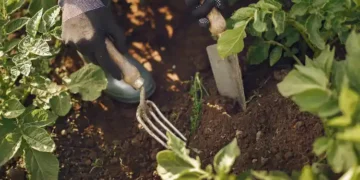
A no-dig approach involves leaving the soil as undisturbed as possible and adding organic matter to the surface instead.
Rather than digging compost deeply into a bed, I can spread a layer over the top and allow nature to do the work.
Earthworms, roots, microorganisms, rain and time all play their part.
I particularly like this approach because it takes some of the hard work out of gardening.
Less digging?
I’m definitely interested!
Grow Lots of Different Plants
One of the easiest things I can do for a regenerative garden is simply grow more variety.
A garden full of different plants is generally much more interesting than one dominated by a single species anyway.
I can include:
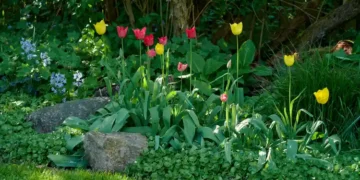
Flowering perennials
Annual flowers
Herbs
Vegetables
Fruit bushes
Trees
Native plants
Ground-cover plants
Climbers
Shrubs
Different plants provide different resources for wildlife.
Some produce nectar.
Some produce seeds.
Some produce berries.
Some offer shelter.
Others provide places for insects to hide.
And when I have a mixture of plants, I’m creating a much more diverse little ecosystem.
Native Plants Can Make a Wonderful Difference
Native plants are another subject worth exploring if you’re interested in regenerative gardening.
Native species have evolved in particular local environments and can be well adapted to local growing conditions.
They can also provide valuable resources for local wildlife.
That doesn’t mean I need to remove every non-native plant from my garden. I’m certainly not going to start digging up plants simply because they originated somewhere else!
Instead, I can gradually introduce more suitable native plants when I’m adding something new.
I think that’s a much more realistic approach.
Let’s Talk About Wildlife
One of the things I love most about gardening is watching wildlife arrive.
A garden can become so much more interesting when it starts attracting bees, butterflies, birds, hoverflies, ladybirds and other creatures.
Regenerative gardening encourages us to think about wildlife as part of the garden rather than something separate from it.
And I don’t need a huge garden to make a difference.
I can grow flowering plants for bees.
I can add plants that produce berries for birds.
I can leave a small pile of logs somewhere.
I can allow some fallen leaves to remain in suitable areas.
I can grow plants that provide shelter.
I can even create a tiny wildlife pond if I have the space.
It all adds up.
Stop Thinking Every Insect Is a Pest
This one can take a little getting used to.
We gardeners are often trained to see insects as trouble.
But not every insect munching around our plants is causing a problem.
Some insects pollinate flowers.
Some break down organic matter.
Some prey on pests.
Ladybirds, for example, can help with aphids, while many other insects play important roles in the garden ecosystem.
So before I reach for a pesticide, I try to identify what I’m dealing with.
Is the insect actually damaging the plant?
Is there enough damage to matter?
Could a natural predator take care of the problem?
Could I simply tolerate a little leaf damage?
Sometimes, a slightly chewed leaf is a perfectly reasonable price to pay for having a healthy, living garden.
Make Peace With a Few Weeds
I’ll admit that this is another area where I’ve had to change my thinking.
I still remove weeds.
I’m not suggesting we let aggressive weeds take over every flower bed!
But I don’t necessarily feel the need to eliminate every single plant that pops up somewhere I didn’t invite it.
Some so-called weeds produce flowers for insects.
Some provide seeds.
Some offer shelter.
And some can simply be left alone if they’re not causing a problem.
I think regenerative gardening has taught me to ask:
Does this really need to be removed?
If the answer is no, I can save myself a job.
That’s a win in my book.
Use Less Water Where You Can
Water is something else I try to think about more carefully.
During wet weather, it can seem like we have more water than we know what to do with. Then suddenly the weather changes and we’re dragging watering cans around the garden.
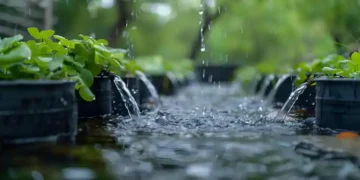
Collecting rainwater is an obvious place to start.
A water butt can capture rainfall that would otherwise disappear down the drain, giving me a useful supply of water for the garden.
Mulching can also help conserve moisture.
So can improving soil health.
I also try to choose plants that are suited to the conditions rather than constantly trying to force plants to grow somewhere they don’t really belong.
The right plant in the right place can save a surprising amount of effort.
Keep Those Roots in the Soil
Another interesting regenerative gardening principle is keeping living roots in the soil whenever possible.
Roots aren’t just there to hold plants upright.
They interact with the organisms around them and contribute to the soil ecosystem.
This is one reason cover crops can be useful in vegetable gardens.
Instead of leaving an empty bed sitting bare over winter, I can grow a suitable cover crop or winter crop.
The soil remains covered.
The roots remain active.
And eventually the plant material can return nutrients and organic matter to the garden.
Grow Your Own Food
Growing my own vegetables and herbs is one of the most satisfying things I can do in the garden.
There’s something rather lovely about stepping outside and picking ingredients for dinner.
Regenerative gardening encourages me to think beyond simply getting the biggest possible harvest.
I want my vegetable garden to remain productive year after year.
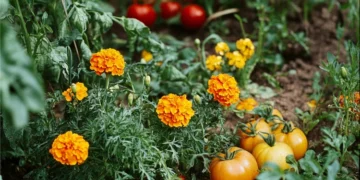
That means looking after the soil, rotating crops, adding compost, conserving water, encouraging beneficial insects and growing a variety of plants.
It becomes less about squeezing every last vegetable out of the soil and more about creating a system that can keep producing.
Save Seeds When You Can
Seed saving is another simple way to make a garden more self-sufficient.
Some plants are easier to save seed from than others, and it’s worth learning a little about the particular varieties you’re growing.
But once I get the hang of it, saving seeds can be incredibly rewarding.
I can collect suitable seeds at the end of the season and use them to grow plants the following year.
There’s something satisfying about completing that little cycle myself.
Plant.
Grow.
Harvest.
Save seed.
Plant again.
Stop Throwing So Much Garden Waste Away
I’ve started looking at garden “waste” rather differently.
A pile of leaves isn’t necessarily waste.
Neither are grass clippings, plant stems or small branches.
A lot of what we remove from the garden can actually be useful.
Leaves can become leaf mould.
Suitable plant material can go into the compost.
Branches can become wildlife habitat.
Some materials can be used as mulch.
The more organic matter I can keep within the garden’s natural cycle, the less I need to buy and the less I need to throw away.
You Don’t Need to Buy Everything
There is an enormous amount of gardening equipment and products available these days.
And believe me, I understand the temptation.
A garden centre can be a dangerous place for someone who loves plants!
But regenerative gardening has encouraged me to think before I buy.
Do I actually need another tool?
Can I repair the one I have?
Can I reuse an old container?
Could I borrow something?
Could I buy second-hand?
Could I make what I need?
Sometimes the most environmentally friendly choice is simply not buying another thing.
And that can be rather good for the bank balance too.
Can Regenerative Gardening Help With Climate Change?
Regenerative gardening isn’t going to solve climate change on its own, obviously.
But gardens are part of the bigger picture.
Plants capture carbon as they grow, while healthy soils can store organic carbon. Trees and shrubs can provide shade and habitat, while diverse planting can make gardens more resilient to changing conditions.
Regenerative practices can also help us prepare for weather extremes.
A garden with healthy soil, good organic matter, a variety of plants and sensible water management may cope better with periods of drought and heavy rainfall than a garden with compacted, bare soil.
I like the idea of making my garden more resilient while also making it a better place for wildlife.
What About Lawn?
Ah, the lawn.
This is where gardening conversations can become surprisingly passionate!
I don’t think lawns are automatically bad.
I enjoy having some open space in a garden, and lawns can be useful.
But a perfectly manicured lawn isn’t the only option.
If I want to make my garden more regenerative, I could consider reducing the amount of lawn I have or allowing some areas to become more diverse.
I could introduce suitable wildflowers, leave some grass longer, create borders, or replace an unused section with planting.
Even simply mowing less frequently in selected areas can provide more opportunities for wildlife.
There’s no rule saying the entire garden has to be one particular way.
What Are the Benefits of Regenerative Gardening?
For me, the biggest benefit is that the garden starts to feel like a living system rather than a collection of separate plants.
But there are plenty of practical benefits too.
Healthier soil
Adding organic matter and reducing unnecessary disturbance can improve the condition and structure of soil.
More wildlife
A diverse garden can provide food, shelter and breeding opportunities for insects, birds and other creatures.
Better water management
Healthy soil and mulch can help retain moisture and reduce unnecessary watering.
Less waste
Composting and reusing garden materials keeps useful resources in the garden.
Potentially lower costs
Saving seeds, making compost, collecting rainwater and reusing materials can all save money.
A more resilient garden
Diversity and healthy soil can help plants cope with changing conditions.
More enjoyment
This might sound like a small thing, but I think it’s important.
Watching a garden become more alive is incredibly rewarding.
Is Regenerative Gardening the Same as Organic Gardening?
Not quite.
Organic gardening tends to focus on gardening without certain synthetic chemicals and using organic methods and materials.
Regenerative gardening is a broader philosophy.
It considers soil health, biodiversity, water, wildlife, waste, carbon and the overall health of the garden ecosystem.
There is plenty of overlap, though.
I can absolutely have an organic garden that is also regenerative.
The important thing is to think about the bigger picture.
Is Regenerative Gardening Difficult?
Honestly?
It can be as complicated or as simple as you want it to be.
You don’t need to completely transform your garden overnight.
You don’t need to know the Latin names of every insect.
You don’t need a huge vegetable plot.
And you certainly don’t need to get everything right.
You can start with one simple change.
Make compost.
Mulch a flower bed.
Plant a few pollinator-friendly flowers.
Collect rainwater.
Leave some leaves.
Stop disturbing one area of soil.
Grow some vegetables.
Then see what happens.
My Beginner’s Regenerative Gardening Checklist
If you’re feeling inspired but aren’t sure where to start, here’s my simple checklist.
Start with the soil.
Add compost and organic matter and avoid disturbing it unnecessarily.
Keep soil covered.
Use mulch or plants to protect exposed soil.
Grow a variety of plants.
Mix flowers, herbs, vegetables, shrubs, trees and other plants where appropriate.
Make room for wildlife.
Think about food, shelter and water.
Don’t panic about every insect.
Identify pests before deciding they need controlling.
Use water carefully.
Collect rainwater and choose plants suited to your conditions.
Compost garden and kitchen waste.
Turn yesterday’s leftovers into tomorrow’s soil improver.
Save seeds.
Where practical, learn how to collect and store suitable seeds.
Reuse what you already have.
Don’t automatically buy something new.
Leave a little mess.
A perfectly tidy garden isn’t necessarily the best garden for wildlife.
Start small.
One regenerative change is better than an ambitious plan that becomes too much work.
You Don’t Need a Perfect Regenerative Garden
I think this is worth saying because gardeners can be very good at putting pressure on themselves.
There is always another thing we could be doing.
Another plant to grow.
Another pest to identify.
Another composting technique to try.
Another wildlife feature to add.
Another area to improve.
But regenerative gardening isn’t about perfection.
My garden isn’t going to be a perfect miniature ecosystem.
I’ll still pull weeds.
I’ll still lose plants.
I’ll still occasionally buy something I probably don’t need.
I’ll still have pests.
And I’m sure I’ll sometimes forget to water something!
That’s gardening.
What matters is the direction I’m heading in.
If I’m gradually improving the soil, increasing biodiversity, reducing waste, conserving water and making space for wildlife, I’m making a difference.
How I Would Start a Regenerative Garden From Scratch
If I were starting again with an empty garden, I wouldn’t rush into planting everything immediately.
I’d spend some time observing.
I’d look at where the sun falls throughout the day.
I’d notice where water collects.
I’d find the dry areas.
I’d work out what type of soil I have.
I’d see which plants and wildlife are already there.
Then I’d start building from the ground up.
I’d improve the soil with compost.
I’d add plants suited to the conditions.
I’d include plenty of flowers for pollinators.
I’d add some native species.
I’d create a mixture of heights and habitats.
I’d think about where rainwater could be collected.
And I’d leave a few areas slightly wild.
Most importantly, I’d allow the garden to develop over time.
I wouldn’t expect everything to look perfect in the first season.
A regenerative garden is something you build gradually.
Final Thoughts
The more I learn about regenerative gardening, the more I like the philosophy behind it.
It isn’t about abandoning everything we’ve learned about gardening.
It’s about looking at our gardens a little differently.
Instead of asking how we can make our plants grow faster, perhaps we can ask how we can make the soil healthier.
Instead of asking how to eliminate every insect, perhaps we can ask how to attract more beneficial wildlife.
Instead of throwing away leaves and garden waste, perhaps we can find a way to return those nutrients to the soil.
Instead of constantly fighting nature, perhaps we can work alongside it.
And I think that’s the part that appeals to me most.
A regenerative garden doesn’t have to be perfect. It simply needs to be heading in the right direction.
If I can leave my patch of earth a little healthier, more fertile and more alive than it was before, then I think I’m doing something worthwhile.
So, if you’ve been thinking about trying regenerative gardening, don’t feel that you need to completely transform your garden.
Start with one thing.
Make some compost.
Plant a few more flowers.
Leave the leaves.
Collect some rainwater.
Try no-dig gardening.
Grow a vegetable.
Put down some mulch.
Or simply sit outside for ten minutes and observe what’s already happening.
Because that’s perhaps the most important lesson of regenerative gardening:
Sometimes, the best thing I can do for my garden is to stop trying to control everything and start paying attention to what nature is already doing.