Seeing brown, crispy tips on your houseplant leaves can be frustrating, especially when the rest of the plant looks perfectly healthy. I’ve had plenty of plants develop those telltale brown edges, and thankfully, brown leaf tips are usually a sign that the plant is trying to tell you something rather than a reason to panic.
The good news is that once you work out what’s causing the problem, it’s often quite easy to correct.
Learn more about Disease and Pest Management >
You may also like: Why Are Houseplant Leaves Yellow? Fix the Cause >
Why Do Houseplant Leaves Get Brown Tips?
Brown leaf tips usually mean that the leaf has experienced some type of stress. The most common causes are underwatering, inconsistent watering, low humidity, too much fertilizer, poor-quality water, or environmental stress.
Sometimes there can be more than one cause at the same time.
Here are the most common things I check when I notice brown leaf tips.
1. Your Plant Isn’t Getting Enough Water
One of the first things I consider is whether the plant is becoming too dry.
When the soil dries out too much, the plant can struggle to move enough water to the leaves. The tips and edges are often the first areas to suffer, turning brown and crispy.
This is particularly common with plants such as:
Peace lilies
Calatheas
Ferns
Prayer plants
Tropical houseplants
Spider plants
If the soil is extremely dry and pulling away from the sides of the pot, underwatering could be responsible.
What I do
I check the soil rather than automatically watering according to a schedule. I push my finger a couple of inches into the potting mix and see whether it feels dry.
If the plant needs water, I give it a thorough drink until excess water starts draining from the bottom of the pot.
I don’t just sprinkle a little water over the surface because this can leave the deeper roots dry.
2. Inconsistent Watering
Interestingly, brown leaf tips don’t always mean that you’re simply not watering enough.
A plant that repeatedly goes from bone dry to soaking wet can also develop brown tips.
For example, you might forget to water your plant for several weeks, then give it a huge amount of water to compensate. The plant experiences repeated fluctuations in moisture, which can cause stress.
I find that a consistent watering routine is much better.
The important thing is not necessarily watering every Sunday. Instead, I check the plant and its soil regularly and water when it actually needs it.
3. Low Humidity
This is one of the biggest culprits with tropical houseplants.
Our homes can become surprisingly dry, particularly during winter when heating is running. A plant that naturally grows in a humid environment may not appreciate the dry indoor air.
You may notice:
Crispy brown tips
Brown leaf margins
Curling leaves
Leaves that feel dry
New growth struggling
Calatheas, ferns, peace lilies and some palms can be especially sensitive.
How to increase humidity
There are several things you can try:
Group plants together. Plants naturally release moisture through their leaves, so clustering several plants can create a slightly more humid microclimate.
Use a humidifier. This is one of the most reliable options if your home is consistently dry.
Move plants away from radiators. Direct heat can dry leaves surprisingly quickly.
Use a humidity tray carefully. A tray containing pebbles and water can increase humidity immediately around the plant, although it shouldn’t be relied on as a miracle solution.
I wouldn’t obsess over misting. It may provide only a temporary increase in humidity and, if leaves remain wet for long periods, can sometimes encourage fungal problems.
4. Too Much Fertilizer
I always consider fertilizer when I see brown tips.
Plants don’t necessarily grow better because we feed them more. Too much fertilizer can cause salts to build up in the potting mix, potentially damaging the roots.
This can result in brown or scorched-looking leaf tips and edges.
If you’ve recently fertilized your plant and noticed the problem afterward, excessive fertilizer could be involved.
What can you do?
If you suspect fertilizer buildup, you can flush the soil with plenty of water and allow the excess to drain freely from the pot.
Make sure the container has drainage holes.
I would also avoid fertilizing a stressed plant until you’ve figured out what’s going on.
5. Tap Water Could Be the Problem
Some houseplants are surprisingly sensitive to the water they’re given.
Tap water can contain minerals, salts, chlorine or fluoride, depending on your local water supply. Over time, certain plants may react to these substances with brown leaf tips.
Spider plants are particularly famous for developing brown tips, although there can be plenty of other reasons for the problem too.
If your plant seems to be watered correctly and has adequate humidity, water quality is something worth considering.
You could experiment with filtered water or collected rainwater where appropriate.
6. Your Plant Is Getting Too Much Sun
Light is essential, but too much intense sunlight can damage leaves.
If the brown areas appear alongside:
Bleached patches
Pale leaves
Scorch marks
Dry, crispy areas
then excessive sunlight could be contributing.
A plant sitting right beside a hot, sunny window may be receiving considerably more light than it would naturally experience indoors.
Moving it slightly farther away from the window or providing filtered light may help.
7. Cold Drafts Can Cause Brown Tips
Houseplants generally don’t enjoy sudden temperature changes.
A plant sitting beside an open window, exterior door or cold draft may become stressed, particularly during winter.
I try to keep sensitive plants away from:
Cold drafts
Radiators
Fireplaces
Air-conditioning vents
Heating vents
A stable environment is usually much kinder to houseplants.
Should I Cut Off Brown Leaf Tips?
Yes, you can.
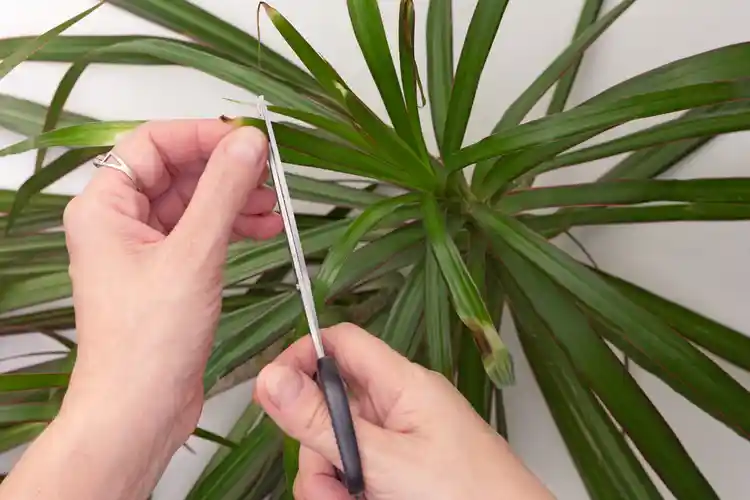
Brown tissue won’t turn green again, so removing it can make the plant look much tidier.
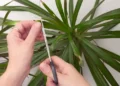
I like to use clean, sharp scissors and carefully trim around the brown area. Try to follow the natural shape of the leaf rather than cutting a straight line across it.
Don’t remove an entire leaf simply because the tip is brown. If most of the leaf is still green and healthy, there’s no reason to throw away all that perfectly good foliage.
Will Brown Tips Turn Green Again?
Unfortunately, no.
Once plant tissue has died and turned brown, it won’t recover.
However, the important thing is that you can prevent new growth from developing the same problem.
That’s why I don’t focus solely on cutting off the damaged bits. I want to figure out why they turned brown in the first place.
If I correct the underlying issue, new leaves should hopefully emerge looking healthy.
How I Troubleshoot Brown Leaf Tips
When I see brown leaf tips, I work through a simple checklist:
First, I check the soil. Is it bone dry or constantly soggy?
Next, I check the roots and pot. Is there adequate drainage? Is the plant sitting in water?
Then I look at humidity. Is the plant close to a radiator or another source of dry air?
I consider feeding. Have I recently used fertilizer?
I check the light. Is the plant getting harsh direct sunshine?
Finally, I think about water quality. If everything else looks right, I may try filtered or rainwater and see whether the new growth improves.
This approach is much more useful than immediately reaching for fertilizer or plant treatments.
Don’t Overcorrect the Problem
One mistake I’ve made with houseplants is trying to fix everything at once.
If I see brown leaf tips, it’s tempting to water more, move the plant, fertilize it, mist it and repot it all in the same afternoon!
Unfortunately, this can create even more stress.
Instead, I prefer to make sensible adjustments based on what the plant is actually telling me.
If the soil is dry, water it properly. If it’s sitting in soggy compost, improve drainage. If it’s beside a radiator, move it. If humidity is extremely low, increase it gradually.
Then give the plant some time.
Brown Leaf Tips Don’t Always Mean Your Plant Is Dying
This is probably the most reassuring thing to remember.
A few brown tips don’t necessarily mean that your houseplant is seriously ill. Plants experience stress just like everything else, and older leaves can develop imperfections over time.
What matters most is whether the problem is continuing to spread.
If only a couple of older leaves have brown tips while the plant is producing healthy new growth, I wouldn’t worry too much.
If every new leaf develops brown edges, the plant is wilting, growth has stopped, or the leaves are rapidly deteriorating, that’s when I’d investigate more carefully.
Final Thoughts
Brown tips on houseplant leaves are annoying, but they’re also useful clues. Rather than simply chopping off the damaged parts and hoping for the best, I try to look at the whole growing environment.
Watering, humidity, fertilizer, water quality, light and temperature are the main things I consider.
Once you identify the cause, make the necessary adjustment and give your plant some time to respond. The old brown leaf tips won’t disappear, but healthy new growth is a great sign that you’ve got things back on track.