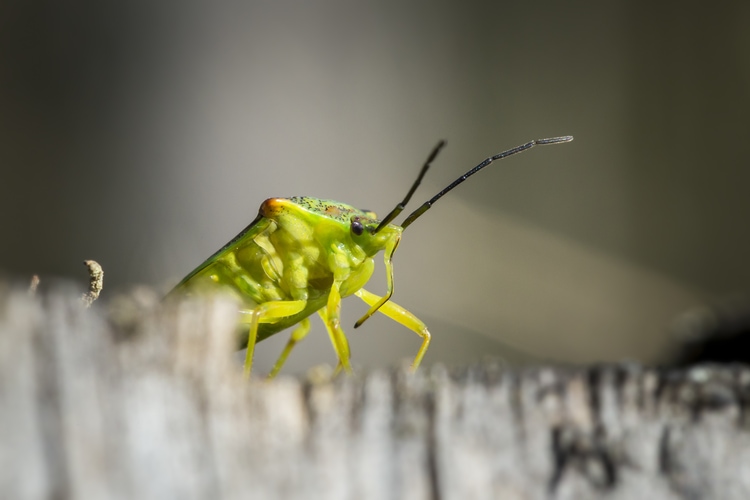
Keeping your garden free from garden pests can be a constant battle, but with the right strategies in place, you can conquer even the peskiest of invaders.
With respect to maintaining a lush and thriving garden, garden pests are a common enemy that can cause widespread destruction and stress.
From insects and slugs to rodents, these pests can be controlled and eliminated with the right strategies.
In this article, you’ll be given the know-how, and the right understanding.
Pests don’t only feed on the flowers themselves, but on the plants roots and foliage, and are harmful enough to kill your entire garden.
There is usually a good balance to strike here between not too much, and not enough. You do want to ensure that your garden is in full bloom.
So let’s explore some of the most typical garden pests and practical advice on stopping them.
Identifying Common Garden Pests
Before you can effectively combat garden pests, it’s important to know what you’re up against.
Here are some of the most common pests you may encounter in your garden:
1. Aphids
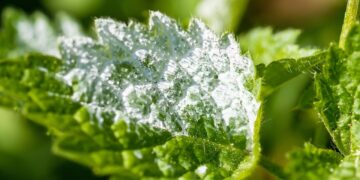
Aphids are one of the most common pests that can wreak havoc on a wide variety of species.
These small, soft-bodied insects feed on plant sap, and can cause noticeable damage, so being able to identify them is a must, to effectively protect your plants, to keep a healthy garden and also to control the infestation.
Aphids are just 1-3 mm in length and they can be any of a rainbow of colours from green to yellow, brown, red, black and even pink.
Coming out of nowhere, they’ve got pear-shaped bodies, fuzzy antennae and extremely thin outer shells, some of them have the ability to fly, especially later in the year when they go in search of new plants, but lots of them don’t. Well-known for the two little cornicles at the back of their bodies that squirt out a yucky liquid when they feel threatened.
When you notice aphids on your plants, there are a number of signs to look out for.
Twisted or shrivelled leaves, syrupy residue left behind, and colonies clustering on the underside of leaves and stems. Severe infestations can cause plants to stop growing, and cut down on flowering.
Regular checks on your plants, especially brand-new growth, are a good way to catch aphids before they can cause any real damage, and seeing ants crawling around on the leaves is also a warning sign that aphids are present, as they love to collect the sugary secretions that aphids excrete.
By being aware of the signs and symptoms of aphid infestations, you can take action, and give your plants a fighting chance at staying healthy.
2. Slugs and Snails
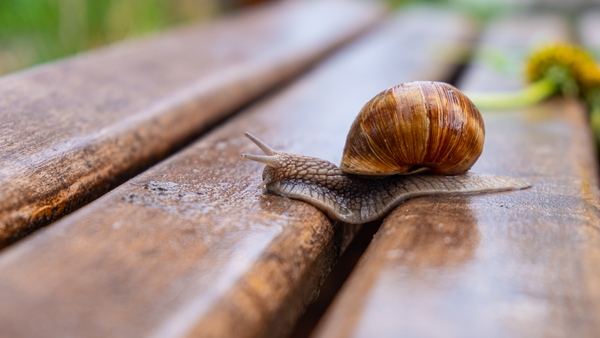
Slugs and snails are quite a common problem in many regions, causing significant damage to the crops, flowers, and ornamental plants in them.
Coming from the mollusk family, these soft-bodied creatures feed on plant tissues, and the best way to stop them is to catch them when they’re still in the initial stages of infestation.
Well-known for being elongated, slimy, and without shells, slugs can be anywhere from one to three inches long, depending on the species.
Snails, similar in body shape, come equipped with a protective, coiled shell. Although they are both slow-moving and don’t produce a lot of noise, they can be spotted in the garden quite easily. Basically by looking for the shiny, slimy trail that they leave behind.
Holes in the leaves and fruits, irregularly chewed, are a clear indicator of the feeding activity of these pests, not to mention, gardeners may see severely damaged or completely eaten seedlings. Silvery slime trails are hard to miss.
Snails are most active at night, so it’s only in the morning that you’d see the evidence of their hard night’s work.
Slugs and snails tend to prefer damp, shaded areas of the garden and will often hide under mulch, stones, or debris. If your garden is more prone to moisture, or if there’s overgrown vegetation in it, snails and slugs love it, and they’ll make a beeline for it.
3. Caterpillars
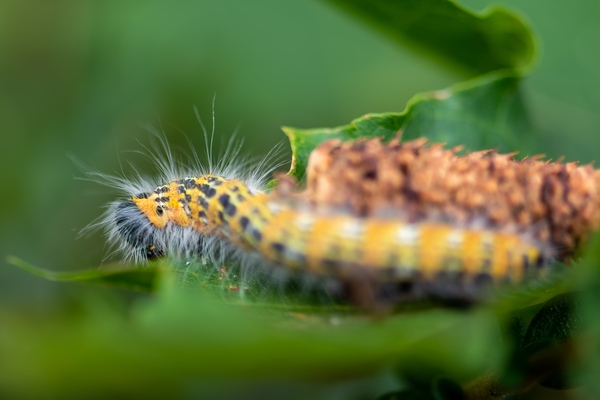
Caterpillars the larvae of butterflies and moths and can be quite destructive, feeding on vegetables, fruits and ornamental plants. Knowing how to identify caterpillar activity in its early stages is the best way to protect your garden.
These caterpillars are often soft-bodied, segmented, green, brown, black or even brightly colored, with some of them being quite large, they’ve got three pairs of real legs near their heads and also extra back legs that let them scurry along the stems of plants. Some species are covered in irritating hairs.
Well-known signs of a caterpillar infestation include chewed leaves and skeletonized foliage.
A result of the caterpillars feeding on the leaf tissue and leaving behind irregular holes, as well as bite marks on developing fruits, buds and flowers. The tiny pellets left behind by the caterpillars, called frass, can be found on the leaves or soil beneath the plants.
Some species, like the tent caterpillar, spin silken threads or webs that form a protective shield around groups of larvae. Regular inspections of new growth, the underside of leaves and the buds will allow you to detect the early stages of infestation.
4. Rodents
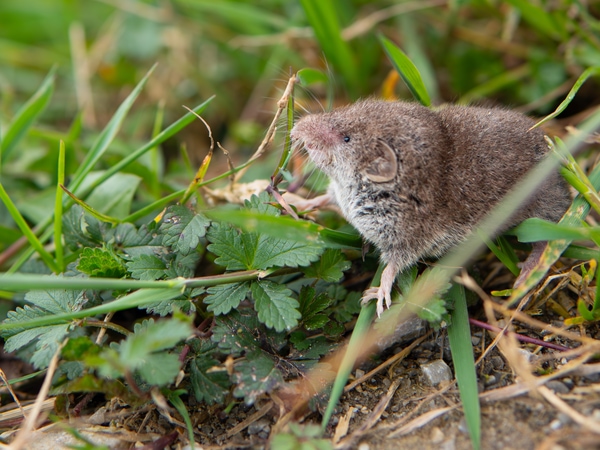
If you’re looking for signs of rodents in your home, garden, or agricultural area, you’re often better off checking for the signs they leave behind than spotting the critters themselves. Rodents including mice and rats are highly adaptable, reproduce rapidly, and can cause significant destruction to plants, food and property.
Coming in at 2 to 4 inches in length, with slender bodies and long tails, mice are the smaller of the two, and their larger cousins, rats, measure around six to nine inches in length, with thicker tails and robust bodies. Both have razor-sharp claws, whiskers and incredibly keen senses that allow them to scurry and forage through tight spaces.
Some signs of rodent activity include droppings tiny rice-shaped for mice, larger capsule-shaped for rats.
Found near food sources, along walls, or in storage areas, gnaw marks, signifying their feeding and nesting behavior, muddy or dusty footprints, shredded paper or cloth gathered for nests and unpleasant, musky odors – usually resulting from urine scapes.
It is worth mentioning that rodents tend to go for dark secluded areas around food sources such as attics, basements, sheds, or clumps of thick vegetation. They’re also enticed by accessible fruits and vegetables, in addition to compost piles.
Recognizing rodents as pests and taking action at the first signs. Which is basically the difference between disaster and success, since rodents can multiply so quickly.
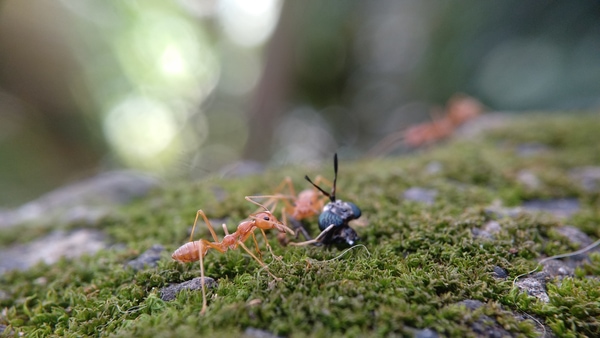
5. Ants
In the case of our homes, gardens and fields, ants are one of the most commonly encountered insects, and while some are harmless and even beneficial, others can cause serious damage to structures, crops and stored food.
Physically, ants are small, segmented creatures, typically 1-10 millimeters in length, and consist of three body parts.
The head, thorax and abdomen, along with six legs, bent antennae and a narrow waist between their thorax and abdomen, and come in a variety of colours. When you notice that your home or garden is being overrun with winged ants, it may be a sign of a mature colony nearby.
Signs of an infestation can be seen in the trails of worker ants, who often form lines along walls, floors and garden paths as they forage for food.
The discovery of small soil mounds, cracks in walls or secreted spaces is the surefire sign of an ants’ colony.
Damaged crops, stained floors are one more consequence, caused by the farming activities of some types. Food contamination in kitchens and areas where pets live can be devastating.
Given their tendency to live in colonies, the re-regular appearance of ants in one place often means there is a colony close by, and various species can be found in moist areas, in dry wood or in the soil.
Identifying the problems caused by ants can be solved once we can detect them. Allowing us to intervene in time to prevent their numbers from getting out of control.
Effective Pest Control Strategies
It’s time to take action, when you know what’s bugging your garden. .
Here are some effective strategies for controlling common garden pests:
1. Use Natural Predators
Natural predators can be an eco-friendly and sustainable way to manage garden and agricultural pests. All you need to do is invite them to the party.
Natural predators are organisms that feed on the very pests that harm your crops.
A case in point is the ladybug, which is notorious for devouring aphids, or the lacewing, that’s got a taste for caterpillars and mealybugs, and even more sinister are predatory mites who see off spider mites, and birds which snack on slugs, caterpillars, or any other insects that they find.
Some small mammals like hedgehogs and frogs can also be counted on to act as pest controllers in your garden.
Natural predators have several benefits: they are totally environmentally friendly, decimating the need for nasty chemicals, and in the process safeguarding the health of the soil, water and other creatures that call your garden home. Plus, they can be very economical, since once established, maintenance costs are next to nothing.
Well-known for boosting the number of different species in your garden, using natural predators to control pests is basically a win-win situation.
So, what can you do to entice these predators to your garden, you ask?
Well-known flowers that provide nectar, pollen and shelter are a must, like marigolds, dill and fennel, and from the garden centre you can buy in beneficial insects, such as ladybugs or predatory nematodes.
Creating a pesticide-free zone is also essential, since we don’t want to kill off our hardworking heroes.
Regular monitoring of both the pests and the predators is also a good way to avoid any new problems, and ensure the garden is in equilibrium.
2. Practice Crop Rotation
In relation to managing pests and diseases in gardens and agricultural systems, crop rotation is a traditional and highly effective strategy.
This approach involves changing the type of crops grown in a particular area each season, and can be explained in the following way.
Pests and pathogens tend to be very specialized in the plants they feed on. Root-knot nematodes, for example, target tomatoes, peppers and eggplants, while fungi prefer leafy greens, and can kill off an entire crop if they become a major presence.
As pest and disease cycles accelerate over years, if the same crop is grown over and over again in the same location, their populations multiply and the risk of infestation and crop failure is sky high.
Crop rotation, is what knocks them off track. When a different plant family that these harmful organisms don’t know much about replaces the previous crop, makes it very hard for them to adapt.
Crop rotation has multiple benefits. It knocks back pest populations, gets rid of disease hotspots, gives a much-needed boost to the soil’s fertility, and even sorts out the way water and air circulate in the soil.
When planning your rotations, grouping crops by their families is the best way to do it, so don’t plant the same family in the same spot two years in a row, put beans and peas in the mix because they add nitrogen to the soil, try a three- or four year rotation cycle.
Any less won’t be effective enough to knock back really hard-to-kill pests, and teaming up with other methods like mulching, cover crops and welcoming in beneficial insects will also give you the best results.
Crop rotation is basically free, and eco-friendly too, and by carefully planning the order in which you plant your crops, you can send pest populations packing, stop the buildup of disease, and make your soil healthier, leading to plumper, happier plants and a bigger yield.
3. Intercropping
Intercropping is an effective way to control pest problems and enhance garden productivity, this is because the diverse environment it creates disrupts the way pests move and feed, when planting multiple crops in the same space.
Many pests are highly specific in the plants they target, and when carrots and onions are planted together, carrot root flies struggle to find their preferred host, while marigolds sent off nematodes and all sorts of other pests.
Coming from one place to another is difficult for pests in a mixed planting, because the whirlwind of different scents, hues, and textures confuses them, making it less likely that they’ll wreak havoc on the garden.
Advantages of intercropping include the reduction of pest pressure, encouragement of helpful insects, maximum space and yield, and a big boost to the soil. Predatory insects such as ladybugs and lacewings thrive in diverse gardens, and devour the pests, naturally.
When implementing intercropping, look for crops that get along well together.
For example, leafy greens and herbs, or legumes and heavy feeders. Overcrowding is a no-no, because it can turn the garden into a soggy, fungal breeding ground. Rotate your intercrops each year so that pests and diseases don’t build up.
4. Apply Organic Pest Control Products
Organic products are a more environmentally friendly way to keep unwanted critters from ruining crops, all the while, leaving behind a much safer world for humans, pets and the ecosystem at large.
There are different types of organic pest control, like botanical insecticides made from neem oil, pyrethrin and garlic.
They repel or knock out the pests without any toxic leftovers. Microbial products, containing beneficial bacteria and fungi, such as Bacillus thuringiensis (Bt) specifically target caterpillars and their larvae, won’t hurt other animals though.
Insecticidal soaps take apart the protective shells of soft-bodied pests, squashing the populations of aphids, mealybugs and mites. Diatomaceous earth is essentially a dust made from fossilised algae that cuts the exoskeletons of insects, drying them out and killing them.
The main perks of using organic pest control are that it’s safe for the planet, focuses on the specific pests you want to get rid of, and is very much sustainable.
Well-known methods of organic pest control are also required to be used carefully.
Always check the label, spray in the early morning or late afternoon to avoid scaring off the bees, watch out for the pest population and adjust the treatment accordingly, and combine it with cultural techniques like crop rotation, mulching and beneficial insects to make it all work even better.
Applying organic pest control is now a practical, and responsible strategy that effectively manages pests in a way that’s environmentally friendly, and gives you a strong, healthy garden or farm.
Learn more about eco-friendly green pest control >
5. Apply Mulch
In relation to controlling pests in the garden, mulch is a versatile and natural ally that can be used to its full extent by conserving soil, suppressing weeds and even acting as a deterrent against pests.
Mulch creates a protective barrier for plant roots and creates physical and ecological habitats that are very unappealing to harmful insects.
In fact, coarse mulches, such as wood chips or straw, can disorient and starve crawling insects like slugs, snails and pests, blocking them from getting to the plant stems and delicate seedlings.
Furthermore, mulch also reduces the surface area that many pests call home.
Bare soil and exposed mulch layers are usually a place where pests love to live and procreate, so by keeping your mulch layers in place and well managed, soil-dwelling insects and weeds that harbor insects drop in numbers.
In addition to acting as a barrier and physical obstacle, organic mulches feed a healthy ecosystem, boosting earthworms, predatory beetles and even spiders, who all lend their hand in hunting and controlling the pest population.
The advantages of mulching goes beyond its effectiveness in pest control.
Eco-friendly mulch composts down over time, reconditioning soil and bettering its structure. Soil moisture retention is also secured by mulch, resulting in healthier, and more able-bodied plants.
When using mulch in your garden you must be careful to apply it in a two to four inch layer round the plants, with no contact with the stems to stop rot.
Regularly updating your organic mulch will keep it working well, and blending it with other pest control techniques such as companion planting and using natural predators, will have the best results.
6. Set Traps
When discussing controlling garden and household pests, traps are an effective and environmentally friendly option, providing a physical method of capturing and monitoring pest populations without resorting to chemical pesticides.
There are four main types of traps, each used to target different types of pests.
Sticky traps that lure flying insects, pheromone traps that draw in moths and beetles, mechanical traps that snap or capture rodents and larger pests, and pitfall traps, shallow containers for ground-dwelling slugs, snails and other ground living insects.
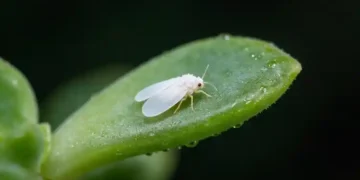
Sticky traps shine with bright colours and draw in winged pests such as whiteflies, aphids and fungus gnats that, after landing, get trapped, and serve as an early warning system for infestations.
Pheromone traps, on the other hand, use specific species-orientated chemical scents to lure moths, beetles, and similar insects. They are most useful for monitoring pest activity and planning interventions.
Mechanical traps are designed to snap or capture rats, larger rodents and other larger pests that can damage crops, stored food and building.
Barrier and pitfall traps are used to block access of slugs, snails, and ground-living insects to plants.
The advantages of using traps include, being safe and non-toxic to humans, pets and good insects, they allow you to monitor the size of your pest population and figure out when you need to take extra measures, zero in on the pests that are causing the problem and don’t hurt anything else.
When setting up traps, place them in areas where the pests are most active or along the edges of your garden. Regularly empty and clean them, and can be even used in combination with other techniques like crop rotation, companion planting and introducing natural predators, to give a holistic approach to pest control.
FAQs About Garden Pest Control
Q: How can I prevent aphids from infesting my garden?
A: To prevent aphids from infesting your garden, make sure to keep your plants healthy and well-watered. Additionally, planting flowers such as marigolds and chrysanthemums can help deter aphids.
Q: What can I do to control rodent populations in my garden?
A: To control rodent populations in your garden, make sure to remove any sources of food and shelter, such as overgrown vegetation and debris. Additionally, setting traps and sealing off entry points can help prevent rodents from invading your garden.
Q: Are there any natural ways to deter caterpillars from my garden?
A: Planting herbs such as dill, fennel, and parsley can help deter caterpillars from infesting your garden. Additionally, attracting birds and beneficial insects can help keep caterpillar populations in check.
Summary
In relation to garden pests, many of us feel at a loss, but there is a way to conquer them.
You need to know what you’re up against, have a plan to kill them off, and also be able to address any questions that come your way.
Coming to know the common pests in your area, using the right techniques and controls, you can secure a healthy and thriving garden and enjoy a long time’s worth of bountiful harvests.