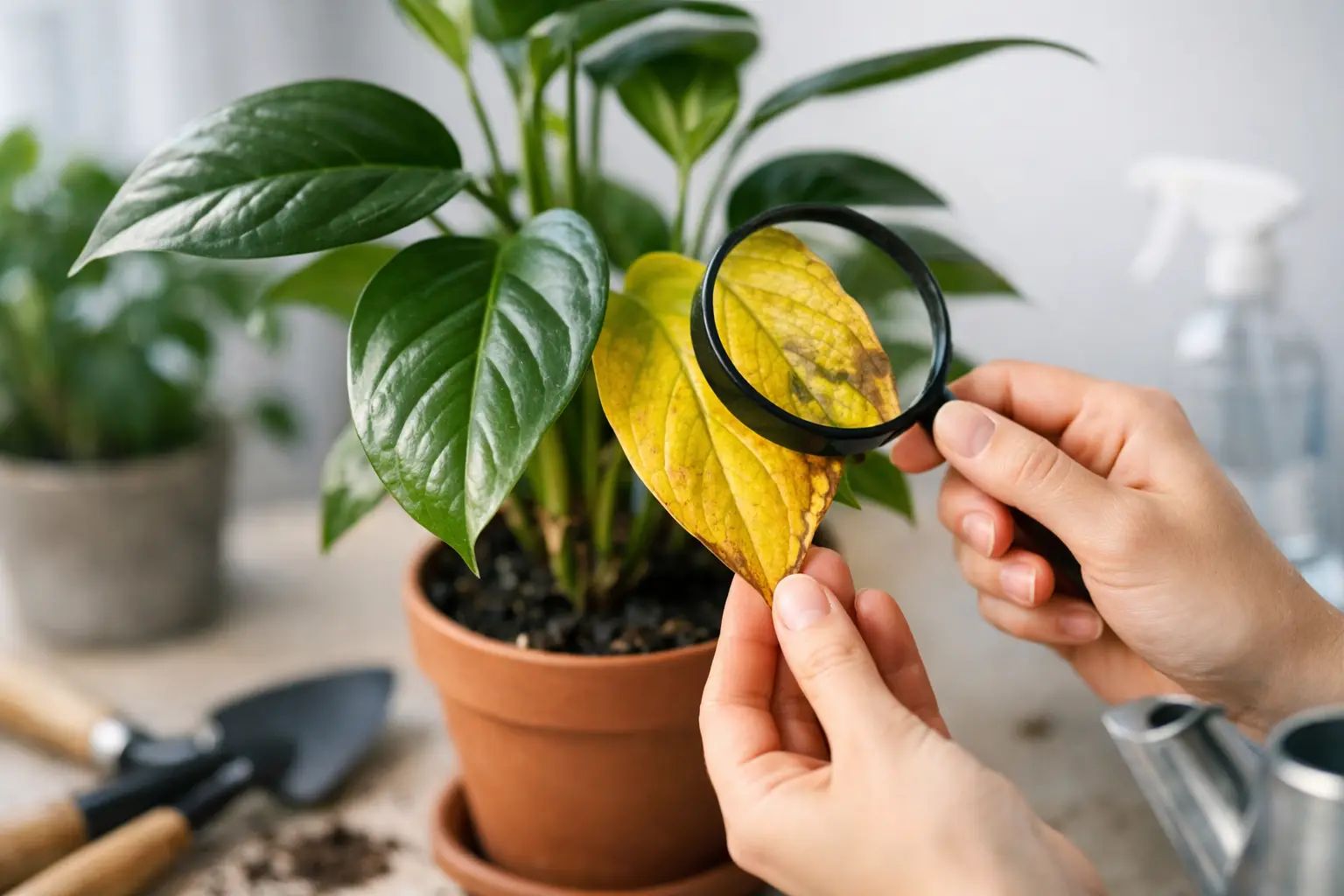
A yellow leaf can make even a thriving room feel a little less green. If you are asking, why are houseplant leaves yellow, the answer is usually not that your plant is doomed.
Yellowing is a signal – sometimes a perfectly normal one, sometimes a request for a small change in care.
The key is to look at the pattern before reaching for fertilizer, extra water, or a larger pot.
Which leaves are yellowing? Is the soil wet or bone-dry? Did the plant recently move?
A few simple clues can help you solve the problem without turning plant care into a guessing game.
Why Are Houseplant Leaves Yellow? Start With the Pattern
Not all yellow leaves mean the same thing. A single lower leaf that fades slowly is very different from a whole plant turning pale within a week.
Older leaves at the bottom of plants such as pothos, philodendron, rubber plants, and dracaena naturally age out.
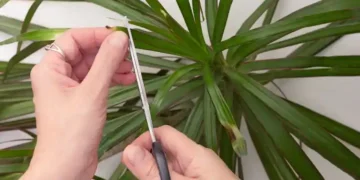
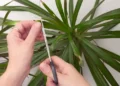
If the plant is making healthy new growth and only an occasional mature leaf turns yellow, remove it with clean scissors and keep caring for the plant as usual.
When several leaves yellow at once, look closer.
Yellow leaves with soft stems often point to too much moisture. Crisp yellow or tan edges may point to drought, low humidity, or scorching sun.
Yellowing between green veins can suggest a nutrient issue. The pattern is your plant’s first useful clue.
Too Much Water Is the Most Common Culprit
Houseplants need oxygen around their roots as much as they need water. When potting mix stays wet for too long, air pockets fill with water, roots struggle, and the leaves may turn yellow, limp, and eventually drop.
This can happen even when you water only once a week.
A plant in a low-light corner uses water slowly, while a plant in a pot without drainage has nowhere for excess moisture to go. Dense, old potting soil can also hold far more water than a plant can use.
Before watering, press a finger about an inch or two into the mix. For many common tropical houseplants, wait until that upper layer feels dry.
Succulents and cacti need a much longer dry period, while moisture-loving plants such as ferns may prefer soil that is lightly damp but never soggy.
If overwatering seems likely, pause watering and check the pot. It should have a drainage hole, and it should never sit in a saucer full of water.
If the soil smells sour, stays wet for many days, or the roots are brown and mushy, repot the plant in fresh, airy mix after trimming away dead roots.
Underwatering Can Yellow Leaves Too
It is easy to assume yellow means too much water, but thirsty plants can yellow as well. When a plant has been dry for too long, it may sacrifice older leaves to protect newer growth.
The soil may pull away from the pot’s edge, and leaves can feel thin, papery, curled, or crisp.
Give the plant a thorough drink rather than a tiny splash. Water slowly until it runs from the drainage hole, then let the pot drain fully.
If dry soil is repelling water, set the pot in a shallow bowl of water for 15 to 30 minutes, then remove it and allow excess water to drain.
A consistent routine helps, but calendars are only a starting point. Sunlight, indoor temperature, season, pot size, and the type of plant all change how quickly soil dries.
Checking the soil is more reliable than watering every Sunday just because the calendar says so.
Light Problems Often Show Up as Pale Foliage
Plants use light to make the energy that keeps leaves richly green. In dim conditions, growth slows and older leaves may turn pale yellow before falling.
A pothos may survive in a darker room, for example, but it will generally stay fuller and greener near bright, indirect light.
Move a low-light plant gradually closer to a window rather than placing it in harsh afternoon sun overnight.
Too much direct sun can bleach leaves yellow or leave dry, brown patches, especially on tropical plants that prefer filtered light.
A sheer curtain can soften intense light, while a simple grow light can make a big difference in a window-poor apartment.
Seasonal changes matter here. A plant that did well near a window in summer may receive much less usable light during winter.
Conversely, a south- or west-facing window can become surprisingly intense during the hottest months.
Check Roots, Pot Size, and Potting Mix
Roots are hidden, but they tell a big part of the story. A rootbound plant can struggle to take up water and nutrients evenly, leading to yellow leaves and slower growth. You may see roots circling inside the pot or growing through drainage holes.
Repot only when the plant needs it. Moving into a container that is just 1 to 2 inches wider than the current pot is usually enough.
A dramatically oversized pot holds extra wet soil around a small root ball, raising the risk of overwatering.
Use a mix suited to the plant. Most tropical foliage plants appreciate a loose indoor potting mix with added perlite or bark for airflow.
Cacti and succulents need an even faster-draining blend. Matching the soil to the plant is one of the easiest ways to create a healthier, greener indoor retreat.
Nutrient Issues Are Possible, but Do Not Overfeed
A nutrient shortage can cause yellow leaves, particularly when a plant has lived in the same potting mix for a long time.
Nitrogen deficiency often starts with older leaves turning evenly pale. Yellow tissue with greener veins can sometimes indicate a shortage of nutrients such as iron or magnesium.
Still, fertilizer is not a cure-all. Fertilizing a plant with soggy, damaged roots can make matters worse.
First correct watering, light, and soil issues. If the plant is actively growing and conditions look right, feed with a balanced houseplant fertilizer diluted according to the label.
During the shorter, darker days of winter, many houseplants need little or no fertilizer.
If you notice a white crust on the soil or pot rim, salts from fertilizer or tap water may be building up.
Flush the soil with water occasionally, letting it drain freely, or repot with fresh mix if buildup is severe.
Pests and Temperature Stress Can Turn Leaves Yellow
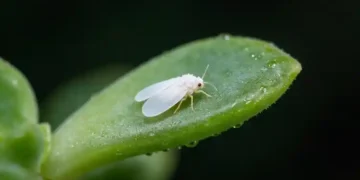
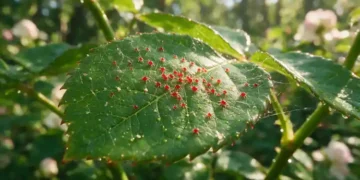
Spider mites, scale, mealybugs, and thrips can weaken a houseplant by feeding on its sap.
Look under leaves and along stems for webbing, cottony clusters, tiny bumps, sticky residue, or fine stippling.
Isolate an affected plant if possible, then rinse foliage and treat it with an appropriate insecticidal soap or horticultural oil, following the product directions carefully.
Cold drafts and sudden temperature swings can also trigger yellow leaves.
Keep tender tropical plants away from exterior doors, heating vents, air-conditioning blasts, and chilly window glass.
Most popular houseplants are happiest in the same comfortable temperature range people enjoy.
A Simple Yellow-Leaf Recovery Plan
When yellowing appears, resist the urge to change everything at once. Start by checking soil moisture, light exposure, drainage, and pests.
Then make one or two sensible adjustments and give the plant time to respond. Healthy new growth is a better measure of recovery than trying to make an already-yellow leaf turn green again.
You can remove fully yellow leaves because they will not recover, but leave partly green leaves in place unless they are badly damaged. They can still help the plant produce energy while it adjusts.
A houseplant does not need perfection to look beautiful. It needs a pot that drains, light that suits its nature, and care that responds to its actual conditions.
Pay attention to those yellow leaves, make the next small correction, and you will soon be building the lush, welcoming indoor space you hoped for.
View more: Plant Care Tips >