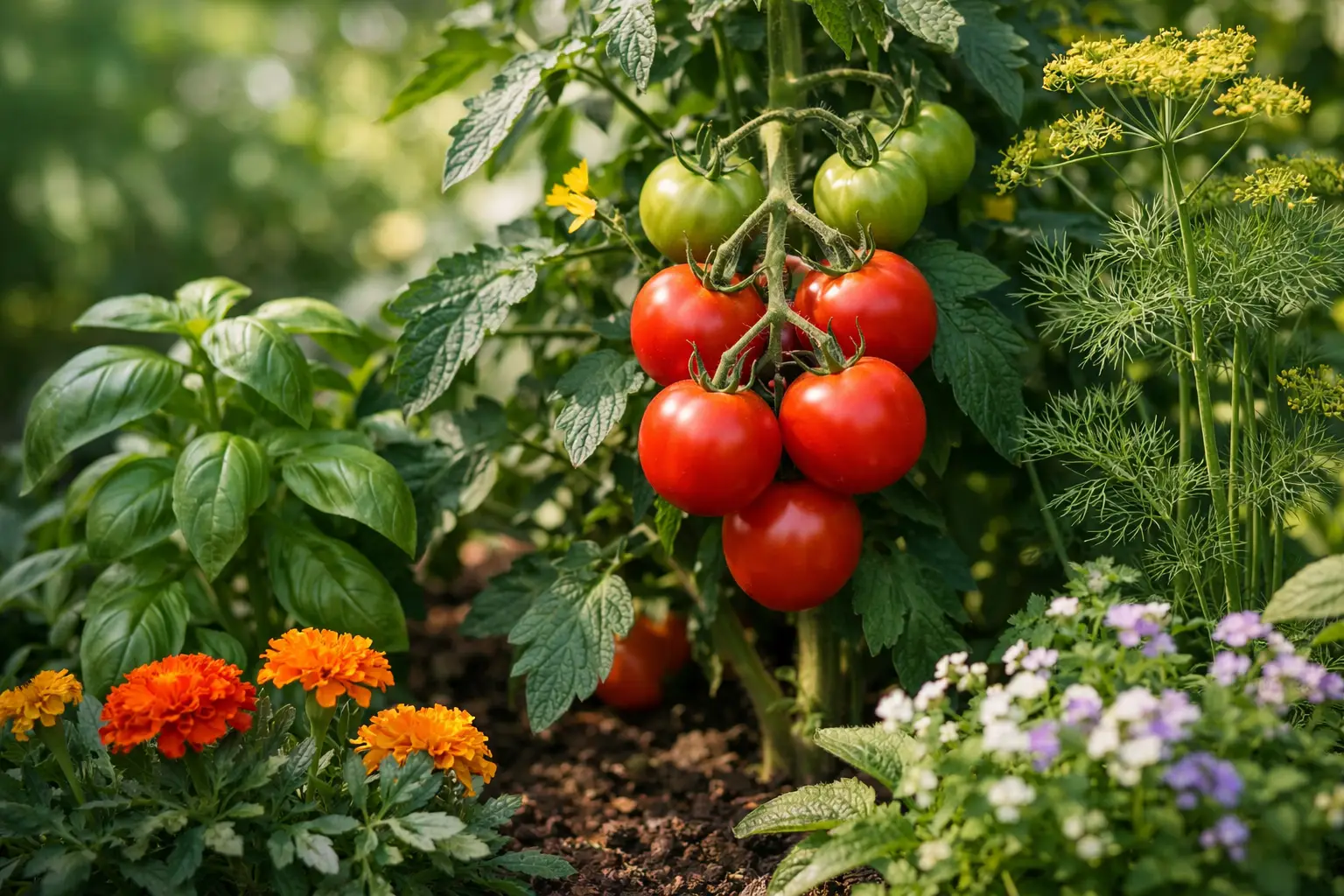
A tomato bed does not have to be a row of lonely plants standing in bare soil. Adding the best companion plants for tomatoes can turn that patch into a busier, healthier little ecosystem, with pollinators stopping by, beneficial insects finding shelter, and every inch of growing space working a bit harder.
Companion planting is not a magic fix for hornworms, blight, or weak soil.
Tomatoes still need at least six to eight hours of sun, steady moisture, room for airflow, and regular feeding. But thoughtful plant pairings can support those basics while making a raised bed, backyard plot, or container garden more productive and attractive.
Why Companion Planting Helps Tomatoes
Tomatoes are hungry, warm-season plants with a long growing season. Their broad leaves eventually shade the ground, but young plants leave plenty of exposed soil early in summer.
Low-growing companions can cover that open space, while flowering plants bring in bees and insects that feed on pests.
The biggest benefit is diversity. A bed planted with tomatoes, herbs, flowers, and a few quick vegetables offers more food and shelter for helpful insects than a single crop does.
It can also make garden care more enjoyable. You get a harvest basket that holds cherry tomatoes, basil, scallions, and edible flowers instead of tomatoes alone.
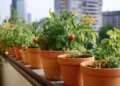
Still, match plants to your space. In a compact container, one tomato plant and one small companion may be plenty. In a roomy in-ground bed, you have more flexibility to layer plants by height and spread.
12 Best Companion Plants for Tomatoes
1. Basil
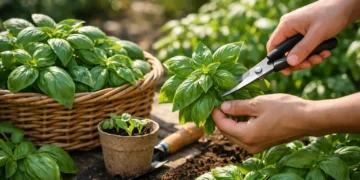
Basil is the classic tomato partner for good reason. Both plants enjoy warmth, sun, and regular watering, so they are easy to manage together.
Basil’s fragrant foliage may also help confuse pest insects, although it should not be treated as a guaranteed pest repellent.
Plant basil about 12 to 18 inches from the tomato’s main stem, where it will get sun without becoming buried under tomato branches. Harvest it frequently to keep the plant compact and leafy.
2. Marigolds
French marigolds add bright color and bring pollinators and beneficial insects into the vegetable garden.
Their roots are often associated with reducing certain soil nematodes, but that effect is most reliable when marigolds are grown as a dedicated cover crop over time, not simply tucked beside one tomato.
They are still excellent companions for edging a tomato bed. Choose compact varieties so they do not crowd young plants, and deadhead spent blooms for a longer show of color.
3. Nasturtiums
Nasturtiums are cheerful, edible flowers that can trail over the edge of a raised bed or spill from a pot.
They attract aphids, which may sound like a drawback, but that activity can draw hoverflies, lady beetles, and other beneficial predators to the garden.
Give nasturtiums a little distance from tomatoes rather than letting them climb into the tomato canopy. Their rounded leaves can hold moisture, so good spacing helps keep airflow open around both plants.
4. Borage
With star-shaped blue flowers, borage is a standout choice for attracting bees. Better pollinator traffic can be especially useful if your tomato flowers are not setting fruit well, though hot temperatures can also affect fruit set.
Borage grows larger than many gardeners expect. Place it at the edge of the bed or in a nearby sunny corner, where its fuzzy leaves will not shade or crowd tomatoes. It often reseeds, so remove flowers before seeds mature if you do not want volunteers next year.
5. Sweet Alyssum
Sweet alyssum forms a low, fragrant carpet of tiny blooms. Its flowers are particularly useful for inviting hoverflies, whose larvae are hungry aphid eaters.
It is a lovely fit along the front of a tomato bed or in gaps around cages and stakes.
In hot regions, alyssum may slow down during the peak of summer. Trim it lightly and keep it watered, and it may perk up again when temperatures ease.
6. Chives
Chives stay narrow and upright, making them a smart companion where space is limited. Their purple spring flowers attract pollinators, and their onion-scented leaves add another useful kitchen harvest.
Keep chive clumps a few inches away from tomato stems so water reaches the soil directly. Snip leaves as needed, but leave some blooms for beneficial insects if you have more than one clump.
7. Garlic
Garlic is not usually grown alongside summer tomatoes in the same season because it is commonly planted in fall and harvested by early or midsummer.
Still, it can be a useful neighbor in a rotating garden plan. Garlic’s strong scent may help create a more varied planting, and its early harvest frees space near tomatoes later in the season.
Avoid squeezing mature garlic and tomato roots into the same small container. This pairing works better in a larger bed than in a cramped setup.
8. Lettuce
Lettuce is a practical companion early in the season. It grows quickly while tomato plants are small, using space that would otherwise sit bare.
As summer heats up and tomatoes expand, harvest the lettuce before it bolts or gets heavily shaded.
This is a great pairing for gardeners who want more food from a small raised bed. Choose loose-leaf varieties for repeated harvests rather than large head lettuce that takes up more room.
9. Radishes
Radishes are another quick crop for the space between newly planted tomatoes. Most varieties are ready in about a month, long before tomatoes need the full bed.
Their fast growth can help mark planting areas and keep soil covered during spring.
Sow radishes in short rows, then pull them once roots are crisp and full-sized. Do not let them linger into summer, when they can become woody and compete for water.
10. Carrots
Carrots and tomatoes can share a bed when spacing is generous. Carrots grow mostly below ground while tomatoes reach upward, creating a useful vertical layering effect. Their feathery foliage also leaves room for air to move at soil level.
The trade-off is timing. Carrots need consistent moisture to germinate, while tomatoes do best when foliage stays dry. Water slowly at the soil line or use drip irrigation so both crops get what they need.
11. Parsley
Parsley offers a tidy, edible companion that attracts beneficial insects when allowed to flower. Swallowtail caterpillars may feed on its leaves, which can be a wonderful wildlife moment if you have enough plants to share.
Like basil, parsley works well near the front of a tomato bed. Start with nursery plants if you want quick results, since parsley seeds can be slow to sprout.
12. Calendula
Calendula brings sunny orange and yellow blooms to the vegetable garden from spring into fall in many areas.
Its open flowers draw pollinators and beneficial insects, while its petals are edible enough to brighten salads and summer drinks.
Plant calendula near, rather than directly beneath, tomatoes. It can become bushy in rich soil, so trim it back if it starts blocking airflow around the tomato base.
Plants to Keep Away From Tomatoes
Some pairings deserve extra caution.
Fennel is the clearest example because it can inhibit the growth of nearby plants and is best grown in its own corner.
Corn is another poor neighbor because it is a heavy feeder, can shade tomatoes, and may host the tomato fruitworm, also known as the corn earworm.
Potatoes are best kept separate from tomatoes because both belong to the nightshade family and can share diseases, including early blight and late blight. This does not mean one potato plant will automatically cause a problem, but separating them makes crop rotation and disease management much easier.
Avoid planting tomatoes where potatoes, peppers, or eggplants recently grew if disease has been an issue.
How to Arrange a Tomato Companion Bed
Start by giving tomatoes first priority. Most indeterminate varieties need at least 24 to 36 inches between plants, while compact determinate types can often grow closer according to their label. Install cages, stakes, or trellises at planting time so roots are not disturbed later.
Then add low growers such as alyssum, lettuce, radishes, or basil around the outer edge of each tomato’s space.
Put taller or wider companions, including borage and calendula, on the north side of the bed where they are less likely to cast shade.
Keep a clear ring of a few inches around each tomato stem for watering and airflow.
A simple bed might include two caged tomato plants, basil between their outer edges, alyssum along the front, and one borage plant at a back corner. It is colorful, useful, and manageable without turning your garden into a crowded jungle.
Watch the bed as the season changes.
Remove lower tomato leaves that touch the soil, harvest herbs often, and pull any companion plant that begins competing for light or water.
The best tomato partnerships are not fixed rules. They are small adjustments that help your garden look fuller, invite more life, and send you outside with a basket in hand.
See also:
Unlocking the Secrets of Companion Planting for a Thriving Garden >