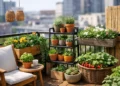

Few plants bring as much cheerful color to a container garden as fuchsias. Their delicate, dangling flowers look almost like tiny ballerinas, lanterns or jewels suspended beneath lush green foliage, and they can keep flowering for months when they are happy.
I particularly love growing fuchsias in containers because they give you so much impact without needing a huge amount of space. A single well-grown plant can transform a shady patio, brighten a porch, spill beautifully from a hanging basket or turn an ordinary doorway into a colorful focal point.
They are also far more versatile than many gardeners realize. Fuchsias come in upright, trailing and bushy varieties, with flowers ranging from soft white and pale pink to fiery red, deep purple and vivid magenta.
The secret is giving them the right combination of light, moisture, feeding and regular care.
Learn more about: Container Gardening Mastery >
If you are thinking about growing fuchsias in pots, baskets or window boxes, here is everything you need to know to keep them healthy and flowering for as long as possible.
Why Fuchsias Are Perfect for Container Gardening
Fuchsias seem almost made for containers.
Their compact root systems generally adapt well to pots, while their long flowering season makes them excellent value for the space they occupy.
Depending on the variety, they can be grown in:
Patio pots
Hanging baskets
Window boxes
Raised containers
Urns
Troughs
Wall-mounted planters
Mixed summer containers
Trailing varieties are particularly impressive in hanging baskets, where their stems can cascade over the edges and become covered with flowers.
Upright varieties work beautifully as standalone patio plants or as the centerpiece of a mixed container.
Another advantage of pots is that you can move your fuchsias around.
If the summer becomes excessively hot, you can move them somewhere cooler. If strong winds threaten delicate flowers, containers can be placed somewhere sheltered.
And if you are growing tender varieties, containers make it much easier to move the plants somewhere protected when cold weather arrives.

Understanding the Different Types of Fuchsias
Before buying plants, it helps to know that not all fuchsias behave in quite the same way.
Trailing Fuchsias
Trailing fuchsias produce flexible stems that naturally tumble downward.
They are wonderful for hanging baskets, window boxes and tall containers.
Once established, a healthy trailing fuchsia can create a waterfall of flowers that lasts throughout much of summer.
Popular trailing types often produce particularly large or double flowers.
Upright Fuchsias
Upright varieties develop a more vertical, bushy shape.
They are ideal for patio pots and large containers and can also be combined with lower-growing plants.
Pinching the growing tips when the plants are young encourages branching and produces a fuller plant.
Hardy Fuchsias
Hardy fuchsias can tolerate colder conditions than tender varieties and may survive outdoors year-round in suitable climates.
However, growing a hardy variety in a container is slightly different from growing it in the ground.
Roots in containers experience colder temperatures than roots protected by surrounding garden soil, so even hardy fuchsias may need some winter protection when pot-grown.
Tender Fuchsias
Many of the spectacular fuchsias sold for hanging baskets and summer containers are tender.
These plants generally need protection from frost.
They can either be treated as seasonal plants or overwintered somewhere protected so they can be grown again the following year.
Choosing the Best Container
You do not need a particularly complicated pot for fuchsias, but drainage is essential.
Choose a container that has plenty of drainage holes in its base.
Fuchsias like consistently moist compost, but they do not enjoy sitting permanently in saturated soil.
A medium-sized young plant can begin in a pot around 8 to 10 inches across, although larger varieties will eventually appreciate more room.
For established patio plants, containers around 12 inches or more across often work well.
Hanging baskets should also be reasonably generous. Larger baskets hold more compost, meaning they dry out more slowly during warm weather.
This can make an enormous difference to how easy the plants are to maintain.
Avoid Oversized Pots for Tiny Plants
It can be tempting to put a small fuchsia straight into an enormous container.
However, very large volumes of wet compost surrounding a small root system can stay damp for too long.
It is usually better to gradually increase container size as the plant grows.
The Best Soil for Growing Fuchsias in Containers
Fuchsias prefer rich but well-drained growing conditions.
A good-quality multipurpose potting mix works well for most container-grown fuchsias.
You can improve drainage by mixing in a little perlite, fine bark or another suitable aerating material if your potting mix feels particularly dense.
The ideal mixture should hold enough moisture to prevent roots from drying out quickly while still allowing excess water to drain away.
Avoid using heavy garden soil in containers.
Garden soil can become compacted in a pot, restricting drainage and airflow around the roots.
Where Should You Position Container Fuchsias?
Getting the light right is one of the biggest secrets to successful fuchsia growing.
Despite their vivid flowers, fuchsias are not usually plants that appreciate baking in intense sunshine all day.
Most perform best in bright conditions with some protection from the strongest afternoon sun.
Morning Sun Is Often Ideal
A location receiving gentle morning sunshine followed by afternoon shade can be perfect.
This provides enough light to encourage flowering without subjecting the plant to excessive heat.
Bright Shade Can Also Work
Fuchsias are among the more colorful flowering plants that perform surprisingly well in partial shade.
That makes them useful for:
Shady patios
East-facing entrances
Sheltered balconies
Courtyards
Partially shaded decks
Areas beneath light tree cover
Deep shade may reduce flowering, however, so aim for bright filtered light rather than a very dark position.
Protect Fuchsias From Intense Heat
Fuchsias naturally prefer relatively cool conditions.
Extreme heat can cause plants to wilt rapidly, flowers to fade and buds to drop.
Containers make plants particularly vulnerable because the roots can become surprisingly hot when pots are exposed to strong sunshine.
During hot spells, consider moving pots temporarily to a slightly shadier position.
You can also place containers where the roots remain shaded even if the upper part of the plant receives brighter light.
Watering Fuchsias in Containers
Watering is probably the most important part of container fuchsia care.
Fuchsias do not like drying out completely.
At the same time, consistently waterlogged compost can encourage root problems.
The aim is therefore to maintain relatively even moisture.
Check the Soil Frequently
Push your finger gently into the top inch or so of the compost.
If it feels dry, it is probably time to water.
During mild weather, containers may only need watering every few days.
During hot weather, particularly if you are growing plants in hanging baskets, watering may be necessary every day.
Very large flowering baskets can sometimes require even more frequent attention during exceptionally hot, windy conditions.
Water Thoroughly
When watering, give the container a proper soak rather than repeatedly sprinkling small amounts over the surface.
Continue until excess water begins escaping from the drainage holes.
This helps encourage roots to grow throughout the pot.
Why Hanging Basket Fuchsias Dry Out So Quickly
Hanging baskets are especially vulnerable to drying out because they are exposed to air on almost every side.
Wind speeds up evaporation, while the relatively small amount of potting mix limits how much moisture can be stored.
If possible, use a generously sized basket and good-quality moisture-retentive potting mix.
You can also position baskets where they receive some protection from intense afternoon sunshine and drying winds.
Feeding Container Fuchsias
Plants grown in containers have access to a limited supply of nutrients.
Regular feeding therefore makes a noticeable difference to flowering.
Once your fuchsia is actively growing, use a suitable liquid fertilizer according to the manufacturer’s directions.
A balanced fertilizer works well during the early stages of growth.
As flower buds begin forming, many gardeners switch to a fertilizer formulated for flowering plants, which generally contains a higher proportion of potassium.
The important thing is consistency rather than excessive feeding.
Overfertilizing can damage roots and may encourage lots of leafy growth at the expense of flowers.
Pinching Fuchsias for Bushier Growth
If you want a wonderfully full container rather than a plant consisting of just a few long stems, pinching can help.
When a young shoot has produced several pairs of leaves, remove the soft growing tip.
This encourages buds lower down the stem to develop into side shoots.
Once those shoots grow, they can be pinched again.
Repeating the process creates a much bushier plant with many more flowering stems.
There is one trade-off.
Pinching temporarily delays flowering because the plant needs time to produce new branches.
For that reason, stop pinching several weeks before you want flowers to appear.
Deadheading Fuchsias for More Flowers
Regular deadheading keeps container fuchsias looking tidy and can encourage continued flowering.
Once flowers fade, remove them together with any developing seed pods.
Producing seeds uses energy that could otherwise contribute to new flowers.
With regular feeding, watering and deadheading, healthy fuchsias can continue blooming for an impressively long period.
How to Create a Spectacular Fuchsia Hanging Basket
Fuchsia hanging baskets are a classic for a reason.
Few plants create such dramatic displays from a relatively small growing space.
For the best results, begin with a generous basket that can hold plenty of potting mix.
Use several trailing plants spaced evenly around the basket.
As they grow, their stems should gradually spread outward and downward.
Pinch young plants early in the season to encourage branching.
Once flowering begins, keep the basket evenly watered and feed regularly.
Position it somewhere bright but protected from scorching midday or afternoon sunshine.
By midsummer, a well-grown basket can become an impressive globe of foliage and hanging flowers.
Growing Fuchsias in Mixed Containers
Fuchsias do not have to be grown alone.
They can make beautiful centerpieces for mixed planters, particularly in partially shaded locations.
Try combining upright fuchsias with plants such as:
Begonias
Lobelia
Coleus
Bacopa
Impatiens
Ferns
Heuchera
Creeping Jenny
The key is choosing companions that enjoy similar conditions.
Avoid combining fuchsias with drought-tolerant plants that prefer very dry soil.
Your container will be much easier to maintain when every plant has roughly the same watering requirements.
Color Combinations That Work Beautifully
Because fuchsia flowers can be intensely colorful, you can take your containers in several different directions.
For a soft romantic display, combine pale pink or white fuchsias with silver or soft green foliage.
For something bold, pair bright magenta and purple flowers with dark-leaved coleus.
White fuchsias can look particularly striking in shaded areas, where pale flowers often appear to glow as evening approaches.
You can also create a more traditional cottage-style look using pink fuchsias alongside lobelia, begonias and trailing foliage.
Common Fuchsia Problems
Even healthy plants occasionally encounter problems.
Fortunately, most container fuchsia problems are relatively easy to identify.
Wilting
Wilting often suggests lack of water, particularly during warm weather.
However, permanently waterlogged roots can sometimes produce similar symptoms.
Always check the soil before adding more water.
Yellow Leaves
Yellowing foliage can have several causes, including:
Overwatering
Poor drainage
Nutrient deficiencies
Natural aging of older leaves
Root stress
Look at the overall condition of the plant rather than diagnosing the problem from a single leaf.
Few Flowers
Poor flowering may result from:
Too much shade
Excess nitrogen
Irregular watering
Lack of feeding
Extreme heat
Excessive pruning or pinching late in the season
Moving the plant somewhere slightly brighter may help if light levels are particularly low.
Watch for Fuchsia Pests
Like many tender container plants, fuchsias can attract sap-sucking insects.
Common pests can include aphids, whiteflies, spider mites and vine weevils.
Check plants regularly, particularly the undersides of leaves and the soft growing tips.
Catching an infestation early is much easier than dealing with a large population later.
Spider mites can become especially troublesome during hot, dry conditions.
Symptoms may include pale stippling on leaves and very fine webbing.
Fuchsia Gall Mite
Fuchsia gall mite is a particularly troublesome pest in some regions.
These microscopic mites feed on new growth and can cause distorted, swollen or discolored leaves and shoots.
If you notice severely distorted new growth, check whether fuchsia gall mite occurs in your area and follow current local horticultural advice.
Because treatment recommendations and pest distribution vary geographically, guidance from local extension services or plant health authorities is particularly useful.
Protect Fuchsias From Wind
Those gorgeous hanging flowers can be surprisingly delicate.
Strong winds can damage stems, tear foliage and cause containers to dry out quickly.
Choose a sheltered location wherever possible.
A protected patio, courtyard or wall can provide enough shelter without restricting airflow completely.
Training a Fuchsia Standard
If you fancy something a little different, upright fuchsias can be trained into standards.
These look like miniature trees, with a bare central stem topped by a rounded canopy of flowers.
To create one, allow a strong central stem to grow vertically and remove side shoots from the lower section while retaining leaves.
Once the stem reaches the desired height, pinch out the top.
This encourages branching at the crown.
The resulting side shoots can then be pinched repeatedly to create a dense head.
It takes patience, but the result can make a spectacular patio centerpiece.
Overwintering Container Fuchsias
If you live somewhere with freezing winters, tender fuchsias will need protection.
You do not necessarily have to throw them away at the end of summer.
With the right treatment, many plants can survive until the following year.
Before severe cold arrives, move containers to a protected frost-free location.
Possible locations include:
A cool greenhouse
Enclosed porch
Frost-free garage
Conservatory
Protected shed with adequate conditions
Reduce watering considerably once plants become dormant or semi-dormant.
They will need far less moisture during winter than during active summer growth.
However, do not allow the root ball to become bone dry for months at a time.
Cutting Fuchsias Back for Winter
Tender fuchsias can usually be reduced in size before or during overwintering.
Remove dead or damaged growth and shorten excessively long stems.
Exactly how much pruning is appropriate depends partly on how and where you are overwintering the plant.
Some gardeners prune heavily in fall, while others wait until spring.
Either approach can work when plants are kept protected.
Bringing Fuchsias Back Into Growth
As spring approaches and temperatures begin rising, increase watering gradually.
Remove obviously dead stems and prune the remaining growth to encourage a good shape.
Repot the plant if necessary using fresh potting mix.
Once vigorous new growth appears, regular feeding can resume.
Do not move tender plants permanently outdoors until the danger of frost has passed.
Taking Fuchsia Cuttings
Fuchsias are wonderfully easy plants to propagate.
Taking cuttings means you can preserve favorite varieties or create additional plants for next season.
Choose healthy, non-flowering shoots and take short cuttings just below a leaf joint.
Remove the lower leaves and insert the cuttings into moist propagation mix.
Keep them somewhere bright but out of strong direct sunshine.
Once roots develop, the young plants can gradually be moved into individual pots.
This is a particularly useful technique if storing large mature plants over winter is inconvenient.
How Many Fuchsias Should You Put in One Container?
The answer depends on the container size and plant variety.
A single strong upright fuchsia can eventually fill a medium patio container.
For hanging baskets, several smaller trailing plants are generally used to produce a full display more quickly.
Avoid cramming too many plants together.
Crowded roots compete for moisture and nutrients, while dense foliage can reduce airflow.
Remember that those modest little plants you buy in spring can grow dramatically once summer arrives.
Should You Repot Fuchsias?
If roots completely fill the container or begin circling densely around the root ball, repotting can improve growth.
Move the plant into a container only slightly larger than the previous one.
Use fresh potting mix and water thoroughly after repotting.
Mature plants that remain in the same container for several years may also benefit from replacing some of the old compost.
What to Do When Your Fuchsia Stops Flowering
Do not panic if flowering slows temporarily.
Check the basics first.
Ask yourself:
Is the plant getting enough light?
Has the container dried out repeatedly?
Is the plant being fed?
Has it been exposed to very high temperatures?
Are old flowers and seed pods being removed?
Could roots be overcrowded?
Are pests present?
Often, correcting one or two simple problems gets the plant flowering again.
A Simple Fuchsia Container Care Routine
Fuchsias are much easier to grow when you make their care part of a regular routine.
Every Day or Two
During warm weather:
Check the soil moisture.
Look for wilting.
Inspect hanging baskets particularly carefully because they dry quickly.
Once a Week
Deadhead faded flowers.
Check leaves for pests.
Remove damaged foliage.
Feed if your fertilizer schedule requires it.
Every Few Weeks
Turn containers if one side receives considerably more light than the other.
Check drainage holes.
Inspect overall growth and shape.
Trim excessively long or damaged shoots where necessary.
How to Keep Fuchsias Flowering for Months
The longest-lasting displays tend to come from plants whose conditions remain relatively stable.
Fuchsias dislike extremes.
Repeatedly allowing the pot to become completely dry and then soaking it, for example, creates unnecessary stress.
Similarly, moving a plant from deep shade into intense midday sunshine can scorch foliage.
For continuous flowering, concentrate on five things:
Bright but protected light.
Consistent moisture.
Regular feeding.
Frequent deadheading.
Protection from excessive heat.
Get those five basics right and your fuchsias will usually reward you generously.
Are Fuchsias Good for Small Gardens?
Absolutely.
In fact, I think they are one of the best flowering plants for gardeners who have limited space.
Hanging baskets make use of vertical space that would otherwise remain empty.
A single tall container can provide an impressive display without taking up much ground.
Window boxes can bring color to balconies and apartments.
And because fuchsias tolerate partial shade better than many summer flowering plants, they can brighten areas where sun-loving container flowers struggle.
Are Fuchsias Good for Pollinators?
Fuchsia flowers can attract pollinators, including hummingbirds in regions where hummingbirds occur.
Their hanging tubular flowers contain nectar, making them particularly appealing to long-tongued visitors.
If wildlife gardening matters to you, consider growing a mixture of flowering plants around your fuchsias so that nectar and pollen remain available throughout the season.
Choosing Fuchsias at the Garden Center
When buying fuchsias, look for compact plants with healthy green foliage and plenty of new growth.
A plant covered in flowers may seem irresistible, but a smaller plant with lots of healthy shoots and unopened buds can sometimes establish more successfully after planting.
Avoid plants showing:
Severe wilting
Yellowing throughout the plant
Sticky foliage
Obvious pest infestations
Blackened stems
Badly distorted new growth
Also check whether the variety is trailing, upright, hardy or tender before buying.
That one piece of information makes it much easier to choose the right container and location.
Frequently Asked Questions About Growing Fuchsias in Containers
1. Do fuchsias prefer sun or shade?
Most fuchsias prefer partial shade or bright filtered light rather than intense all-day sunshine.
Morning sun followed by afternoon shade is often ideal.
2. How often should I water potted fuchsias?
Water whenever the upper layer of potting mix begins to dry.
During hot summer weather this may mean daily watering, particularly for hanging baskets.
3. Can fuchsias grow in full shade?
They can tolerate considerable shade, but flowering may decrease if conditions are too dark.
Bright partial shade generally produces better results.
4. Should I deadhead fuchsias?
Yes.
Removing faded flowers and seed pods helps keep plants tidy and can encourage continued blooming.
5. Can fuchsias survive winter in containers?
Hardy varieties may survive outdoors in some climates, although container roots are more exposed to cold.
Tender varieties generally require frost protection.
6. Why is my fuchsia dropping its buds?
Bud drop can result from heat stress, irregular watering, sudden environmental changes or other forms of plant stress.
7. How long do fuchsias flower?
With suitable care, many container fuchsias can flower from late spring or early summer well into fall, depending on climate and variety.
8. Can I grow fuchsias indoors?
Fuchsias are generally happier outdoors during the growing season because they enjoy bright light, cool conditions and good airflow.
They can be kept indoors temporarily or overwintered in protected locations, but ordinary heated living rooms may be too warm and dry for long-term growth.
My Favorite Thing About Container Fuchsias
What I enjoy most about fuchsias is the amount of personality they bring to a small space.
Some container plants simply provide color.
Fuchsias provide movement, shape, texture and detail too.
Their flowers hang beneath the foliage and sway gently whenever there is a breeze. Look closely and the individual blooms are remarkably intricate, with contrasting sepals, petals and stamens creating combinations that sometimes look almost too exotic to be real.
And yet they are surprisingly achievable plants for ordinary gardeners.
You do not need acres of space or sophisticated equipment.
A good pot, decent potting mix, the right position and a watering can can be enough to produce months of spectacular flowers.
Final Thoughts
Container gardening with fuchsias is one of the easiest ways to introduce dramatic summer color into patios, balconies, porches and small gardens.
Choose a variety suited to your container, give it bright but sheltered conditions and keep the compost consistently moist without leaving it waterlogged.
Add regular feeding and deadheading, and you have the foundations of a fantastic display.
The biggest mistake is usually treating fuchsias like sun-loving, drought-tolerant summer bedding plants. They prefer a gentler approach: cooler roots, consistent moisture, shelter from extreme heat and plenty of indirect or morning light.
Give them those conditions and they can become extraordinarily generous plants.
Whether you grow one elegant upright specimen beside your door or fill a hanging basket with cascading blooms, a well-cared-for fuchsia can provide color for month after month — and may very quickly become one of your favorite container plants.
Useful Links
Homes & Gardens – How to Grow Fuchsias in Pots
A very relevant guide covering container choice, positioning, watering and ongoing care for pot-grown fuchsias.
https://www.homesandgardens.com/gardens/how-to-grow-fuchsias-in-pots
Gardeners’ World – How to Grow and Care for Fuchsias
Useful advice on growing fuchsias in pots and hanging baskets, choosing a sheltered position and caring for different types.
https://www.gardenersworld.com/how-to/grow-plants/how-to-grow-fuchsias/
Horticulture.co.uk – Growing Fuchsias in Containers
A detailed gardening guide specifically focused on container size, compost, positioning, varieties and care for potted fuchsias.
https://horticulture.co.uk/blogs/growing/fuchsia-containers