Hyacinths can turn your day around, and their heavenly scent is often what gets you to notice them, when the March gloom is getting you down.
Coming across a pot or border that smells like perfume is a pretty good indication that a hyacinth is nearby, and if you have ever walked past one and thought, “what is that heavenly scent”, there’s a good chance it was the work of these lovely spring flowers.
This in-depth, friendly guide to growing hyacinths will cover exactly what they are, the best way to plant, care for and use them in your garden, and in no time, you’ll be snatching up bulbs like a pro, planting them with confidence, sorting out any problems that arise, and placing them in your garden in a way that is nothing short of beautiful.
The no-nonsense, all-pleasure companion to hyacinths, from Good Garden Ideas, is now yours to turn to, to lift your spirits and fill your home and garden with the heavenly perfume of the hyacinths.
What are Hyacinths?
The quintessential spring bulb that thrusts its thick, fleshy stem into the air and explodes into a dense, bottlebrush-like cluster of star-shaped flowers, when gardeners refer to hyacinths they’re nearly always talking about Hyacinthus orientalis.
Each one of these flower spikes is a serious fragrance factory, which is why you’ll find hyacinths in such prominent locations as porch pots, in front of entrances, and under kitchen windows announcing the arrival of spring with its vibrant colour and intoxicating perfume.
Hyacinths are bulbous perennials, they’re able to grow from a tunicate bulb that sends them through the summer and winter months into the soil, only to pop back up in the spring.
They’re originally from the eastern Mediterranean and western Asia, but have been adored and bred in Europe for centuries, leading to the kaleidoscope of colours that we see today.
One reason gardeners love hyacinths is their powerful perfume. You only need one or two pots to perfume an entire patio.
Colours can be bold but blue is not as vibrant as in some species yet they’re prized in a spectrum of hues that go from the most delicate creams to soft apricot, near black tones and all the shades of purple and pink. The fleshy stems have got that stunning architectural structure that can be admired from up close in smaller spaces.
Hyacinths usually flower in the early spring and bring about the time between winter’s quietness and the riotous colour of late spring.
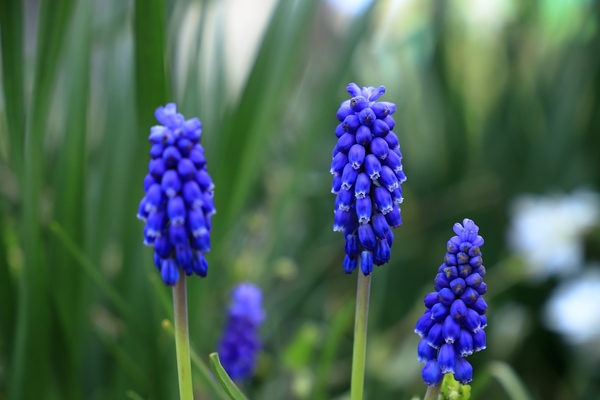
You’ll often find grape hyacinths or Muscari being sold near hyacinths and they, in themselves, are beautiful. But belong to a different genus with minute, bead-like flowers and shouldn’t be mistaken for hyacinths.
Hyacinth Colours
You’re mixing art with the right hues and forms, when choosing the perfect hyacinth colour scheme for your space.
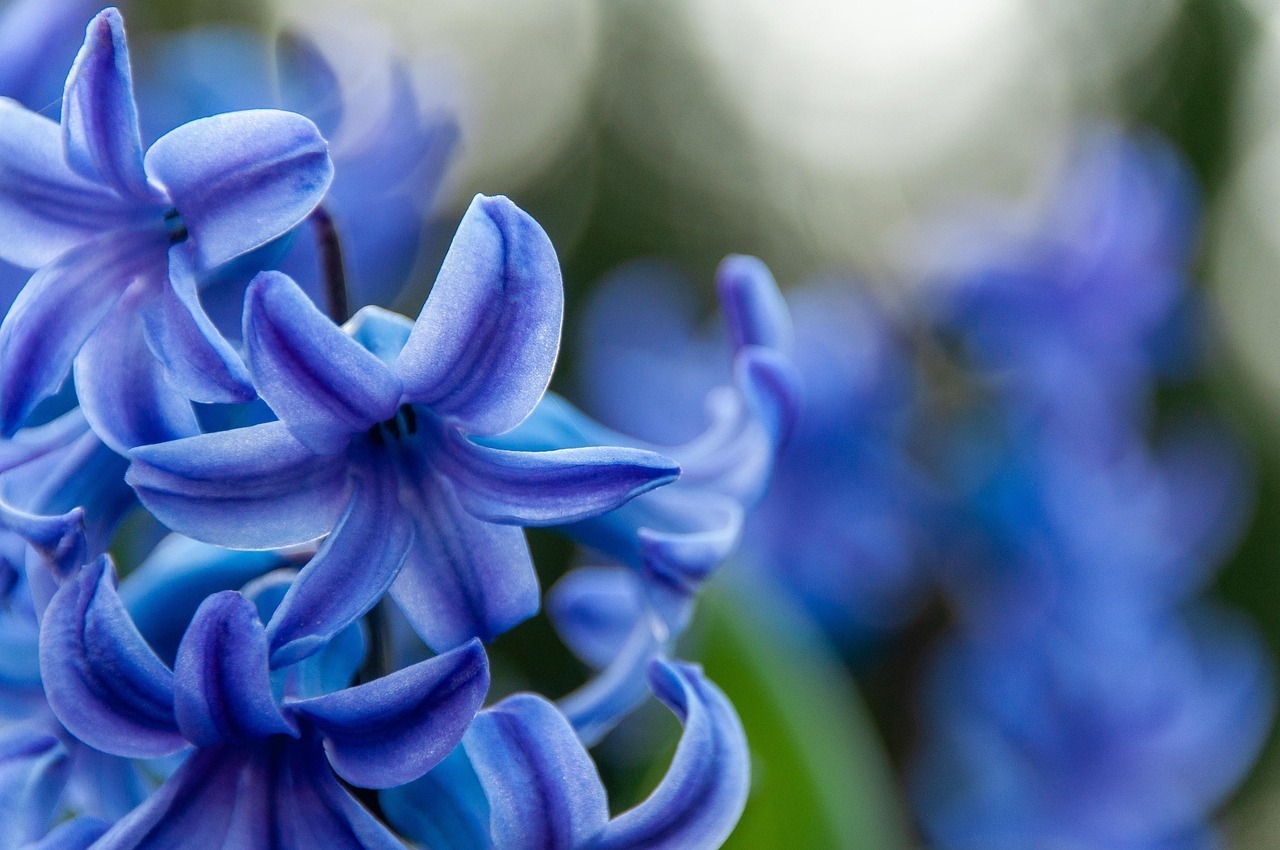
Coming in shades from the truest sky blue to inky indigo, blue hyacinths are basically iconic, and look lovely in either sunlight or shade, their beauty never fading.
Sweet, pretty pinks are very romantic and adaptable, making them suitable for cottage borders, window boxes and cut arrangements, and have a wonderful ability to pair with anything.
For something more dramatic and striking, consider the deep purples and near blacks that are available, and look stunning when combined with pale tulips or white primroses.
Hyacinths in pure white or cream tones are clean, bright and can add a luminous glow to the most shaded of corners and night time patios.
Apricot, salmon and yellow are the softer, rarer tones, that can really light up the early spring days.
Classic, full-bodied hyacinths have got the capability to stand out in any beds and borders.
Compact, miniature forms are however, the go-to for containers, small courtyards, balcony rails or tight spaces right at the front of borders
Forcing cultivars have been specifically chosen to bloom indoors with a mock winter, and double-flowered types are basically extra frilly and showy, giving off a formal elegance in pots and front-door urns.
Now, combining your palette with these different types is key to getting a harmonious scheme.
For a calm and collected ambiance, think white, pale blue and delicate pink.
For a bold and modern appearance, go for deep purples, near blacks and icy white and for a cheerful cottage look you can’t go past pink, blue and lemon.
Monochromatic looks that are all-blue or all-white can be really expensive and stylish, especially if arranged in rows of matching terracotta pots.

Different Species of Hyacinths
1. (The Common Hyacinth)
If you’re looking for a striking, celebrity-like hyacinth, the Common Hyacinth, Hyacinthus orientalis is the one that you’ll see in garden beds, sprucing up spring displays and starring in supermarket bulb packs. Coming from the wilds of Turkey and the eastern Mediterranean, this species has become the parent to our modern, cultivated hyacinths.
It’s the scent and tightly packed flower spikes of H. orientalis that gardeners fall in love with and over the centuries, hundreds of cultivars have been developed to present us with colors that go from deep violet to peachy pink, cotton-candy pastel hues, butter yellow, pure white, peach and even nearly black shades.
If you’ve ever forced bulbs indoors for winter blooms, then you’re no stranger to this species. Well-known for its formal, poised appearance, it’s basically the classiest hyacinth in town.
2. Hyacinthus litwinovii (The Wild-Hearted Hyacinth)
Coming from the wild steppes of Turkmenistan and Iran, Hyacinthus litwinovii is the free-spirited, more laid-back cousin.
It’s got an airier cluster of blooms that aren’t all tightly packed like its sibling’s, which gives it a very natural and less formal look.
Cooler-toned colours such as soft blues, bluish-lavenders and pale violets are its calling cards and the perfume isn’t anywhere near as overpowering. People love the understated elegance and effortless ability of H. litwinovii to grow well in rock gardens and unplanned plantings.
3. Hyacinthus transcaspicus (The Delicate Beauty)
Hyacinthus transcaspicus, is the minimalist representative. It’s got a delicate charm all over it and is not afraid to show it.
Hyacinthus transcaspicus, a Central Asian native, stands out with its elegant, slender stems and dainty, star-shaped flowers that are far more delicate and spaced out than those of traditional hyacinths.
The pale blue to icy lavender blooms that top its stems are stunning and silky sheen coated and give rise to stunning displays of grace in the early dawn light. Their refined beauty has made this plant to be highly sought after by collectors of rare bulbs and people who are in search of a more natural garden appearance.
4. Muscari Species (Often Mistaken for “Mini Hyacinths”)
Muscari Species, often referred to as “mini hyacinths” technically aren’t true hyacinths, yet they’re often mistaken for them.
Plants within this genus, such as grape hyacinths, pump out charming, grape-shaped clusters of small flowers in hues of blue, purple, and white.
They don’t have the same robust perfume as the true hyacinths, but their wild spreading habit makes them perfect for mass planting and woodland edges.
In order to determine whether a plant is a Muscari or a true hyacinth, you can take a look at the shape of the flowers, as Muscari flowers are tiny bubbles and true hyacinths have curled, star-shaped petals.
Which Hyacinth Should You Grow?
The choice of hyacinth you can grow is basically a matter of your personal style.
Want something that knocks out the competition with its fragrance and vibrant colours? Then go with the classic H. orientalis.
If you prefer something more laid-back and natural, try the H. litwinovii.
If you love rare, delicate species, then H. transcaspicus will steal your heart.
Need an easy-to-maintain carpeting groundcover? Muscari species are difficult to beat.
Most hyacinths, no matter the species, like sun to partial shade, well-drained soil, and planting in autumn.
Choosing the Right Hyacinth Bulbs
Think of them as batteries for your spring show, the more energy packed in the bulb, the more vibrant the display, when choosing hyacinth bulbs.
A quality bulb will be firm to the touch, weighty, and has a dense papery skin. A bit of flaking is acceptable, but you’ll want to avoid bulbs with deep wounds, or persistent patches of mould.
Good sized bulbs will produce larger spikes. If you’re buying by mail, make sure they are labeled as “top-sized”.
Early in the bulb season, usually late summer through autumn, is when you’ll find the best variety of bulbs. Make sure to match the one you choose to your plans, as varieties meant for pots and forcing, won’t thrive on the borders.
Hyacinths produce quite a statement, as such, think in clusters when buying.
For a 30-40 centimeter pot, seven bulbs make the clump lush. On borders five to fifteen bulbs work well for mass plantings.
There is no middle road when it comes to price and quality either. If you have the budget, then go all out, but know that less expensive mixed bags can make for fine mass planting.
Coming from a garden enthusiast to someone who’s new to bulb buying, you can’t go wrong with one high-end colourful block and a budget mixed lot for the background.
Best Planting Time to Grow Hyacinths
Coming from the garden centre in autumn is a great way to give them a head start on the real winter, when planting hyacinths.
Generally, September to November are the months to plant them in temperate climates, which is when they need the cooler soil and a good dose of winter cold to form their flower buds.
Even if you miss the autumn window, don’t let the bulbs sit around, because cold, dry storage isn’t very kind to them. Planting them in the ground is still better. You might need to improve the drainage if your soil is too heavy.
Containers can be used for planting hyacinths too. They’re great at cooling down but dry out and freeze faster, so pick a deeper pot and move them to a sheltered spot if the weather gets really cold.
If you want to force bulbs to bloom indoors, you’ll need to plant them in pots, chuck them into a cool, dark place for a few weeks, then bring them into warmth and light. Count back from your desired bloom date to figure out the best time to do so, and check the ‘Planting and ‘Care’ section for more.
Ideal Conditions to Grow Hyacinths
Hyacinths don’t ask for much, but they’ll be very generous if you provide the basics.
Hyacinths love sunlight, and coming from a cooler region, they’ll thank you for even more sun, while in hotter areas they’ll need a bit of afternoon shade to keep their blooms pristine.
Well-draining soil is what they’re looking for, because rot is a major problem for hyacinths that sit in wet clay over the winter.
If you have heavy soil, building up the bed, adding grit or sharp sand to the planting hole, or growing them in pots will sort out the problem.
After planting, water the soil well to settle the bulbs, then you can pretty much rely on rain, which should be all they need through the winter.
In the spring, keep the soil consistently moist, but not soaked, and when the foliage turns yellow it’s time to cut back on the watering, as dormant bulbs don’t need much water.
Hyacinths require a period of chill to bloom, so in the UK and similar countries this isn’t an issue, but in very mild climates you can chill bulbs in a paper bag in the fridge for a few weeks before planting, away from fruit to stop ethylene production.
A rough rule of thumb for depth is to plant hyacinths to about 2-3 times the height of the bulb.
Around ten to fifteen centimetres deep for the standard variety. Space them seven to fifteen centimetres apart in beds and nearly shoulder-to-shoulder in pots as long as the potting mix drains well.

Planting Your Hyacinths
Now that you have selected your bulbs and are aware of their ideal growing conditions, it is time to plant them.
Start by loosening the soil to a depth of about a spade’s depth, clearing out weeds and stones, and if drainage isn’t great, you’ll want to mix in some grit or plant on a slight mound, when planting bulbs.
You’ll want to lay out the bulbs in clusters, not in stiff rows, visualising tiny islands of colour that you’ll be able to repeat through the border.
Each bulb goes into its hole, pointy end up, and around 10 to 15 centimetres deep, going deeper in colder zones or where the soil is sandy.
Fill with a gentle touch, tapping the pot to get rid of air pockets, and then have a good soaking to settle it all in.
It’s always a good idea to label your bulbs, you’ll be glad you did when the garden is bare in January and you’re planning for spring pots.
Mulch is optional, but a light layer will help regulate temperature and prevent weeds, but don’t smother the shoots.
If you’re planting the show-stopper in containers, you’ll want a pot that’s got good drainage and use a well-draining mix. Plant them densely to make an impact, tops of the bulbs just clearing the surface, shoulders almost touching.
Water once to settle, then pop the pots outside into the cool. If you live in a freezing area, you’ll need to tuck them away against a wall or in a cold frame.
If you want to force the bulbs indoors you’ll be planting them in shallow bowls or standard pots with drainage, packing them in tightly as hyacinths don’t mind close company, and chilling them in a dark cool space for ten to fourteen weeks.
When the shoots have reached 3 to five centimetres high, you’ll move the pots to a spot with bright cool light, then into your chosen room. Don’t overheat them, floppy stems are the last thing you want.
Supports are optional, but if the stems do stretch, a delicate twig ring or mini stake will give them a touch of elegance.

Caring for Hyacinths
As you’ve planted your bulbs you can now look forward to the flowers blooming and the bulbs being happy for the next year.
When they’re in the flowering stage, you’ll want to keep the soil or compost consistently moist, and make sure there aren’t any waterlogged saucers under indoor pots, because that’s when roots rot starts to set in.
Coming over to feeding, if the soil is very poor, a light sprinkle of balanced fertiliser as the shoots start to grow is all that’s needed.
In pots you can get away with a single feed when the buds are just starting to form, don’t overdo anything.
Well-known for their sturdy stems, hyacinths don’t usually need staking and sheltered sunlit spots produce the best results. Indoors a tiny hoop or twig support is often sufficient.
Well-known as “deadheading”, cut back the spent flower spike so the plant doesn’t waste energy on seed production, that’s basically it.
Don’t, however, cut back the leaves, they’re absolutely essential for the bulb to recharge for next year’s bloom, and won’t turn yellow until then, at which point you can remove them.
As the foliage starts to wither, you should reduce watering too, especially in containers.
Hyacinths can re-flower for three years or more in borders, although the spikes might get progressively smaller. If the clumps become congested, it’s time to lift and divide them, and top up your display with a few new bulbs each autumn, and that’s the way to go for repeat blooms.
For forced indoor bulbs, you won’t be seeing another show-stopping performance the following winter, but you can plant them out in the garden in autumn, and they may well recover in a year or two.
Hyacinths contain irritating compounds that can cause skin irritation, may be fatal to pets, dogs, in particular, if they nibble on them.
So wear gloves when handling them, and keep them well out of reach of the kids and the dog.

Common Hyacinth Problems and Solutions
Coming across bulbs that rot or don’t even show up is often because the soil is waterlogged or doesn’t drain well.
Well-known fixes are to add grit, plant in raised beds, or use containers and don’t plant them any deeper than two to three times the height of the bulb.
Floppy stems can be a result of not enough light or too much heat, especially in indoor setups, a diet that’s too rich in nitrogen, or bulbs planted too shallowly.
A brighter spot, cooler indoor displays, less feeding, and planting the bulbs at the correct depth will sort out the problem. Gentle stakes can be used to prop up a few floppy stems in a pinch.
Weak and shrinking flowers over time could be because the bulbs are splitting apart into smaller parts, running low on nutrients, or overcrowding out.
Every few years, take out the bulbs, separate them, replant the biggest ones and sprinkle in a few fresh, top-sized bulbs in autumn.
When leaves turn yellow, it’s a sign that the bulb is getting stressed, rot is starting, or there’s been damage to the foliage. Check the drainage, make sure the soil is getting even moisture in the spring and don’t cut back the leaves too early, but if the bulb is really badly affected, you should get rid of it and sort out the problem site.
If there isn’t a single flower but lots of leaves, it might be because the bulbs haven’t got enough winter chill, they’re in too much shade, or they’re exhausted after being forced to grow.
To fix this you need to make sure they get a proper cold period, move them to a sunnier spot and, every few years, give the bulbs a refreshment.
Rodents may dig up the bulbs, snails and slugs love to chew on the tender leaves, so a good way to combat this is to plant them in a wire mesh or bulb basket in high-rodent areas, clean up the mulch, and throw out your preferred deterrents at the beginning of the season.
When storing bulbs, keep them cool, dry and airy in paper, and avoid plastic.
Using Hyacinths in Landscape Design
Regarding making hyacinths look absolutely sensational in your space you’ll want to try these ideas.
Two large urns filled with matching hyacinths either side of the entrance of your house add an air of elegance and playfulness if done in one or two different colours.
A row of low terracotta bowls planted with tightly packed hyacinths are perfect for a patio perfume bar and a combination of blues and whites gives a Mediterranean vibe, and all-pink is an irresistible springtime treat.
Tiny clusters of five to seven bulbs planted along a path or edging will perfume your steps.
Hyacinths can be interwoven through a border with primroses, violas, wallflowers, and early tulips, with the weft and warp of the new season cloaking the old gracefully.
The hyacinth color scheme, “Moonlight” has a soothing effect. It’s best to place whites and palest creams in areas where you sit, for it will be luminous in the evening, and the sweet scent is heavenly.
The design name “Jewel box” is guaranteed to add lots of drama. Hyacinths, tulips and a cascade of forget-me-nots go hand-in-hand here.
Well-known for delicate beauty, hyacinths can add soft pink tones to your garden along with buttery narcissus, and sky blue muscari, it’s an uplifting combination that’s just lovely.
When it comes to monochrome you can repeat the same colour right across your garden and it’s a look that’s designer-tidy, take hyacinths, tulips, violas and perennials for example. These all work together to create a stunning look.
Because hyacinths are flowering in late winter and early spring we should be planning for the before and after stages.
Coming up first are the snowdrops, crocuses and other early bulbs that are basically laying the groundwork, and then the hyacinths take centre stage.
Well-known perennials, tulips, violas, and the like start arriving just as the hyacinth foliage begins to fade, and hardy geraniums, creeping thyme, heuchera and the like are ideal for covering up the old foliage.
Hyacinths can do well in containers if the pots are deep enough. At least 25-30 cm is the rule of thumb to protect them from freezing temperatures and steady moisture levels, but drainage is the first thing you want to consider too. You need one good drainage hole to avoid waterlogged soil and if the patio collects water then pot feet are a good idea. The bulbs need to be planted fairly close to the surface but in a gritty mixture, so that water runs through easily.
Hyacinths can add loads to even the smallest gardens and balconies. They pack an incredible amount of scent into a tiny space. A single bowl on a bistro table will perfume the whole balcony. Team this with a trailing ivy or heuchera for contrasting foliage and it’s a perfect way to make a tiny space shine.
Hyacinths are also stunning cut flowers and as a compromise you could grow plenty of them, snip a few spikes when the lower florets open, and place them in a small jug in the hallway, giving you a.
Hyacinth Year-Round Calendar
- Late summer–autumn: Buy bulbs; choose sites/containers; plant in autumn.
- Autumn–winter: Outdoor bulbs root and chill. Forced bulbs chill in a cool, dark place.
- Late winter–early spring: Shoots emerge. Keep evenly moist. For indoor pots, bring into light when shoots are 3–5 cm.
- Spring bloom: Enjoy! Deadhead spent spikes but keep foliage.
- Late spring–early summer: Foliage yellows; reduce water and tidy once leaves die back.
- Summer: Bulbs rest. Plan next autumn’s top-ups and colour schemes.
FAQs
Q: Can I plant hyacinths in spring?
A: They’re autumn-planted bulbs. If you find pots in spring already in growth, you can plant those, but dry bulbs want autumn planting.
Q: How long do they bloom?
A: Typically two to three weeks per spike, depending on weather. Cooler temperatures make flowers last longer.
Q: Do hyacinths come back every year?
A: Yes, many will—especially in well-drained soil and good light—but flower spikes can get smaller over time. Top up with fresh bulbs every couple of years for consistent drama.
Q: Can I keep forced hyacinths and get them to bloom indoors again?
A: Don’t count on a repeat indoors. After forcing, let foliage die back, rest the bulbs, and plant them outdoors in autumn. Some will re-establish and bloom again in the garden.
Q: Are hyacinths safe around pets?
A: The bulbs can irritate and may cause tummy upsets if ingested. Keep bulbs out of reach, wear gloves when handling, and supervise curious pets.
Q: Why did my stems flop?
A: Usually low light or high warmth (especially indoors), or very rich soil. Keep displays cool and bright; plant deeper outdoors; reduce nitrogen-heavy feeds.
Q: Can I plant them in shade?
A: Light shade is fine, deep shade means fewer and floppier flowers. Morning sun + afternoon shade is a great compromise in warmer areas.
Q: How many bulbs do I need for a pot?
A: As a guide, a 30–35 cm bowl looks lush with 5–7 standard bulbs planted close but not touching.
Summary
A single hyacinth in a bowl is all it takes to lift the spirits, and for us here at Good Garden Ideas, hyacinths are basically synonymous with spring, when you step out the back door.
They’re so beloved that they’re sure to bring a beaming smile to your face and every year you plant them you’ll be sniffing the air and grinning from ear to ear, knowing that they’re back.