This beginner’s guide has everything you need to know about how to make your own compost. It covers everything from how things break down to tips for making compost that works.
Turning your trash into compost that is full of nutrients is good for the environment, good for your garden, and good for the planet. In today’s world, where sustainability is more important than ever, this is a great way to do all three.
You take things you would normally throw away — vegetable peelings, fallen leaves, tea bags, grass clippings — and transform them into rich, crumbly, sweet-smelling soil that plants absolutely love. It’s recycling at its most satisfying, turning waste into life.
For beginner gardeners, composting can seem mysterious or even slightly intimidating. Will it smell? Do you need fancy equipment? What if it goes wrong?
The good news is this: composting is incredibly forgiving. Nature has been doing it perfectly for millions of years. Your role is simply to help the process along.
Learn more about Sustainable Gardening >
This guide will walk you through everything you need to know to start composting confidently, successfully, and with real enjoyment.
What Is Compost, Really?
Compost is decomposed organic matter — material that was once alive and has broken down into a nutrient-rich substance sometimes called black gold by gardeners.
In forests, composting happens naturally. Leaves fall, plants die back, insects and microorganisms get to work, and eventually everything returns to the soil, feeding new growth.
When we compost at home, we’re recreating that natural cycle in our own gardens.
Instead of sending organic waste to landfill, where it produces methane and pollution, composting allows those materials to nourish your soil instead.
Why Every Garden Benefits from Compost
Once you start using homemade compost, you’ll wonder how you ever gardened without it.
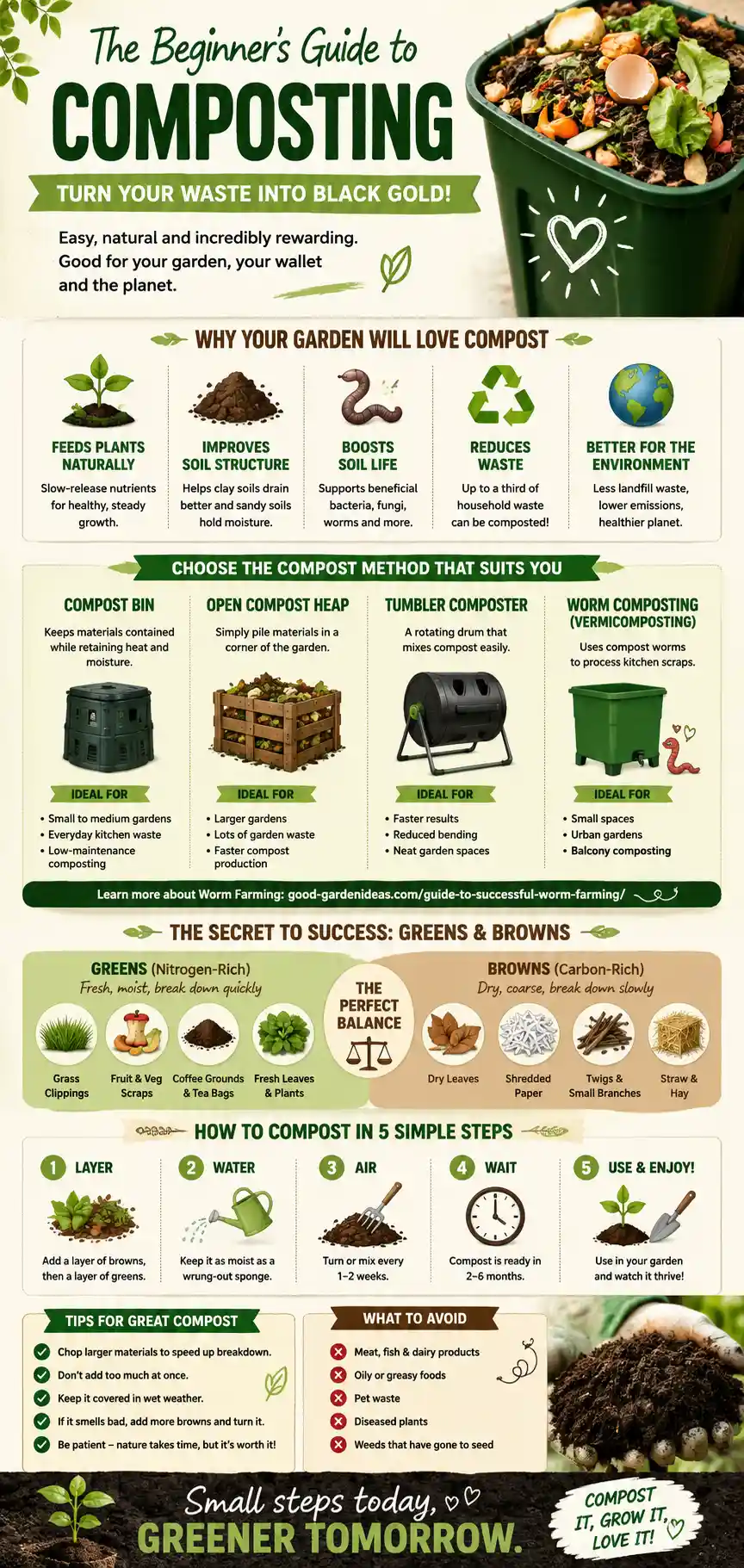
Compost improves soil in several powerful ways:
1. Feeds Your Plants Naturally
Compost contains essential nutrients released slowly over time, supporting steady plant growth without artificial fertilisers.
2. Improves Soil Structure
Clay soil becomes lighter and drains better.
Sandy soil holds moisture longer.
Poor soil becomes richer and more workable.
3. Boosts Soil Life
Healthy soil is alive with bacteria, fungi, worms, and microorganisms. Compost feeds this underground ecosystem, creating stronger plants.
4. Reduces Waste
Up to a third of household waste can be composted. That’s less rubbish, fewer bin collections, and a smaller environmental footprint.
Composting Myths (Let’s Clear These Up!)
Before starting, many beginners worry unnecessarily.
Myth: Compost smells bad
Good compost smells earthy and fresh. Bad smells usually mean too much moisture or not enough airflow — both easily fixed.
Myth: Composting is complicated
In reality, composting succeeds even when it isn’t perfect.
Myth: You need a big garden
You can compost in small gardens, patios, or even balconies.
Myth: You must follow strict rules
Guidelines help, but nature is flexible.
Choosing Your Compost Method
There’s no single “correct” way to compost. Choose what fits your space and lifestyle.
Compost Bin
The most common option.
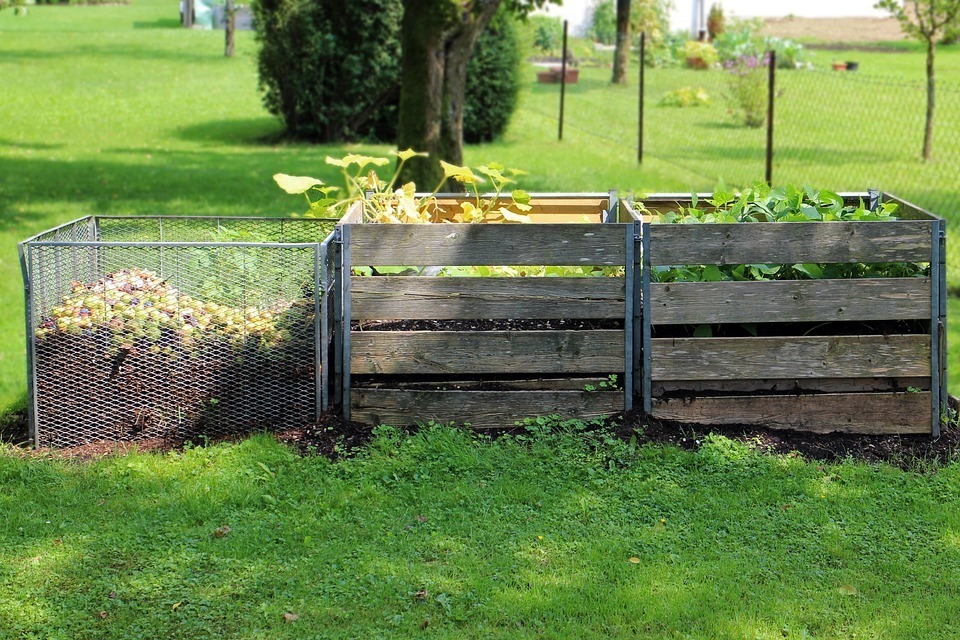
A garden compost bin keeps materials contained while retaining heat and moisture. Plastic bins work well for beginners because they’re tidy and efficient.
Ideal for:
- Small to medium gardens
- Everyday kitchen waste
- Low-maintenance composting
Open Compost Heap
Simply pile materials in a corner of the garden.
Ideal for:
- Larger gardens
- Lots of garden waste
- Faster compost production
Tumbler Composter
A rotating drum that mixes compost easily.
Ideal for:
- Faster results
- Reduced bending
- Neat garden spaces
Worm Composting (Vermicomposting)
Uses compost worms to process kitchen scraps.
Ideal for:
- Small spaces
- Urban gardens
- Balcony composting
Learn more about Transforming Waste into Wealth: The Ultimate Guide to Successful Worm Farming >
The Secret to Successful Compost: Greens and Browns
Here’s the single most important concept in composting.
Compost works best when you balance two types of materials:
Greens (Nitrogen-Rich)
These provide moisture and fuel microbial activity.
Examples:
- Vegetable peelings
- Fruit scraps
- Grass clippings
- Coffee grounds
- Tea bags
- Fresh plant trimmings
Browns (Carbon-Rich)
These provide structure and airflow.
Examples:
- Dry leaves
- Cardboard
- Paper
- Straw
- Twigs
- Wood chips
The Simple Rule
Aim for roughly:
50% greens + 50% browns
It doesn’t need to be exact. Think balance, not perfection.
Too many greens = soggy compost.
Too many browns = slow compost.
What You CAN Compost
Beginners often underestimate how much can go into compost.
Safe additions include:
- Fruit and vegetable scraps
- Eggshells
- Tea leaves and coffee grounds
- Garden weeds (before seeding)
- Grass clippings
- Fallen leaves
- Shredded newspaper
- Cardboard tubes
- Plant cuttings
- Houseplant trimmings
- Sawdust from untreated wood
Chop larger materials when possible — smaller pieces break down faster.
What NOT to Compost (At Least at First)
Avoid these in basic compost systems:
- Meat or fish scraps
- Dairy products
- Cooked food
- Oily foods
- Pet waste
- Diseased plants
- Perennial weeds with strong roots
- Glossy or plastic-coated paper
These items can attract pests or slow decomposition.
Step-by-Step: Starting Your First Compost Bin
Let’s build compost together.
Step 1: Choose a Location
Pick a spot that is:
- Well-drained
- Partially shaded
- Easy to access year-round
Convenience matters — you’ll compost more if it’s nearby.
Step 2: Create a Base Layer
Start with coarse materials such as:
- Twigs
- Small branches
- Straw
This allows airflow from below.
Step 3: Add Greens and Browns
Alternate layers:
- Kitchen scraps
- Dry leaves or cardboard
- Grass clippings
- Paper or straw
Layering helps prevent compaction.
Step 4: Add Moisture
Compost should feel like a wrung-out sponge — moist but not dripping.
If dry, add water.
If wet, add browns.
Step 5: Let Nature Work
Microorganisms, fungi, and worms begin decomposition immediately.
Your compost is alive.
Turning Compost: Do You Really Need To?
Turning mixes materials and introduces oxygen, speeding decomposition.
But here’s the truth:
- Turning weekly = faster compost
- Turning occasionally = good compost
- Never turning = slower compost (still works!)
Use a fork or compost aerator if you want quicker results.
Understanding the Composting Process
Composting happens in stages.
1. Active Stage
Microbes break down fresh material, generating heat. A healthy pile may become surprisingly warm.
2. Breakdown Stage
Materials soften and shrink as organisms consume them.
3. Maturation Stage
The pile cools, stabilises, and becomes dark and crumbly.
This final stage produces finished compost ready for the garden.
How Long Does Compost Take?
Time varies depending on conditions.
Typical timelines:
- Hot, well-managed compost: 2–4 months
- Average home compost: 6–12 months
- Low-maintenance heap: up to 18 months
Patience pays off.
Signs Your Compost Is Working
Good signs include:
- Earthy smell
- Gradual shrinking of materials
- Presence of worms and insects
- Warm centre (early stages)
You’re creating living soil.
Troubleshooting Common Compost Problems
Smelly Compost
Cause: Too many greens or excess moisture.
Fix: Add cardboard, dry leaves, or turn pile.
Compost Too Dry
Cause: Lack of greens or water.
Fix: Add kitchen scraps or lightly water.
Compost Not Breaking Down
Cause: Too much carbon or large pieces.
Fix: Add greens and chop materials smaller.
Pests Visiting
Usually caused by food waste exposure.
Fix by:
- Burying kitchen scraps
- Avoiding cooked foods
- Covering with browns
Composting Through the Seasons
Spring
Restart activity. Add fresh garden clippings and kitchen scraps.
Summer
Peak decomposition time. Keep pile moist during dry weather.
Autumn
Prime composting season. Fallen leaves are compost gold.
Winter
Decomposition slows but continues quietly. Keep adding materials.
Using Finished Compost in Your Garden
When compost looks dark, crumbly, and soil-like, it’s ready.
Use it to:
- Improve garden beds
- Mulch around plants
- Feed vegetables
- Refresh containers
- Start seeds (mixed with soil)
Even partially finished compost benefits soil structure.
Compost and Soil Health: The Bigger Picture
Healthy soil isn’t just dirt — it’s an ecosystem.
Compost introduces:
- Beneficial microbes
- Organic matter
- Water retention
- Nutrient cycling
Over time, compost reduces reliance on fertilisers and improves resilience against drought and disease.
Composting for Small Spaces
No garden? No problem.
Try:
- Worm bins indoors or on balconies
- Bokashi systems for kitchen waste
- Community compost schemes
Even small households can make a big difference.
Advanced Tips for Better Compost
Once you’re comfortable, try:
- Shredding cardboard for faster breakdown
- Mixing different leaf types
- Adding crushed eggshells for minerals
- Keeping a second bin for maturing compost
Composting becomes easier with experience.
The Environmental Impact of Composting
Home composting reduces:
- Landfill waste
- Methane emissions
- Synthetic fertiliser use
- Transportation pollution
Every compost bin contributes to healthier ecosystems beyond your garden fence.
Teaching Children to Compost
Composting is a wonderful hands-on lesson in nature.
Children love:
- Adding scraps
- Watching worms work
- Seeing waste transform into soil
It builds awareness of sustainability and natural cycles.
Composting Mistakes Beginners Make (And Why They’re Okay)
Everyone makes compost mistakes:
- Adding too much grass
- Forgetting to turn the pile
- Worrying it’s not working
The beautiful truth is that composting almost always corrects itself.
Nature is patient.
Building a Composting Habit
The easiest way to succeed is routine.
Keep a small kitchen caddy for scraps.
Empty it regularly.
Add browns frequently.
Check moisture occasionally.
Soon composting becomes second nature.
Composting and the Joy of Gardening
There’s something deeply satisfying about closing the loop between kitchen and garden.
You grow vegetables.
You eat them.
The leftovers return to the soil.
The soil grows more food.
Composting reconnects us with natural cycles often hidden in modern life.
Instead of waste, you see resources.
Instead of disposal, you see renewal.
Composting FAQs
It’s exciting to start composting, but it’s normal to have questions before you do. These are the most common questions that beginners have about composting, along with clear and simple answers to help you get started with confidence.
1. What is compost?
Compost is made up of things that were once living, like vegetable scraps, leaves, grass clippings, and paper.
Microorganisms break these things down over time into a dark, crumbly substance that is full of nutrients and helps plants grow and the soil stay healthy.
You can think of compost as both plant food and soil conditioner that you make yourself.
2. Do I need a compost bin to begin?
No, a bin is helpful but not necessary.
You can use the following to compost:
- A bin for compost
- A pile of things in the garden
- A tumbler for compost
- A worm bin that fits in small spaces
Beginners often find bins easier because they just keep things neat, keep heat in, and speed up the process of breaking down.
3. What can people who are just starting out safely compost?
Start with easy things:
- Trash from the kitchen
- Peels from fruits and vegetables
- Ground coffee
- Bags of tea
- Shells of eggs
- Waste from the garden
- Cutting grass
- Leaves that have fallen
- Cuttings from plants
- Things around the house
- Cardboard that has been shredded
- Newspaper that isn’t shiny
If it came from plants, it should go in the compost.
4. What should I NOT put in my compost?
When you’re just starting out, don’t do these:
- Fish or meat
- Dairy items
- Food that has been cooked
- Leftovers that are oily or greasy
- Animal waste
- Plants that are sick
These things can bring in bugs or make bad smells in new compost systems.
5. What are “greens” and “browns” in compost?
Balance is important for compost to work.
Greens (high in nitrogen): kitchen scraps, fresh grass, and green plants
Brown things, like dry leaves, cardboard, paper, and straw, have a lot of carbon in them.
Greens feed tiny living things, and browns give the structure and air flow.
A simple rule for beginners is to have about half greens and half browns.
6. How long does it take to make compost?
It depends on the situation and how much work you put in:
Composting quickly (turning it over often): 2 to 4 months
Average time for composting at home: 6 to 12 months
Low-maintenance pile: up to 18 months
You just have to be patient because even slow compost eventually works.
7. Does compost have to smell bad?
No. Good compost smells like dirt from the woods.
Usually, bad smells mean:
- Too many wet greens
- There isn’t enough air flow
- Too much water
Add dry things like cardboard or leaves and mix the pile to fix it.
8. Do I need to turn my compost?
Adding oxygen by turning speeds things up, but it’s not strictly necessary.
Turn the compost every week to make it faster.
For best results, turn it every so often.
If you want, you can leave it alone. Nature will still compost.
Even if you don’t do much, beginner composting works.
9. Is it possible to compost in a small garden or apartment?
Of course.
You have the following options:
- Worm compost bins are great for use indoors or on balconies.
- Little compost bins
- Bokashi systems for composting in the kitchen
- Composting programs in the community
You don’t need a big garden to make good compost.
10. How can I tell when compost is ready to use?
This is what finished compost looks like:
- Black or dark brown
- Like dirt and crumbly
- Smells like dirt
- Mostly unrecognizable from the original materials
You can use it to add nutrients to beds, mulch plants, or mix it into potting soil.
Extra Tip for Beginners
What is the most important thing to know about composting?
Don’t think too much about it.
It is natural for composting to happen. Begin with the basics, add more materials as you go, and learn as you go. You are just helping nature do most of the work.
Final Thoughts: From Waste to Wonder
Starting your first compost pile might feel like a small step, but it changes how you garden forever.
You begin noticing seasonal rhythms. You value fallen leaves. Kitchen scraps become opportunities rather than rubbish.
Composting transforms not just waste — but perspective.
At Good Garden Ideas, we believe the best gardens grow from healthy soil, and healthy soil begins with compost. Whether you have a sprawling garden or a tiny outdoor space, you can participate in one of nature’s most powerful processes.
So start today.
Save those peelings. Gather those leaves. Build your pile.
Because hidden inside yesterday’s waste is tomorrow’s garden.