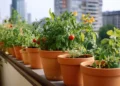
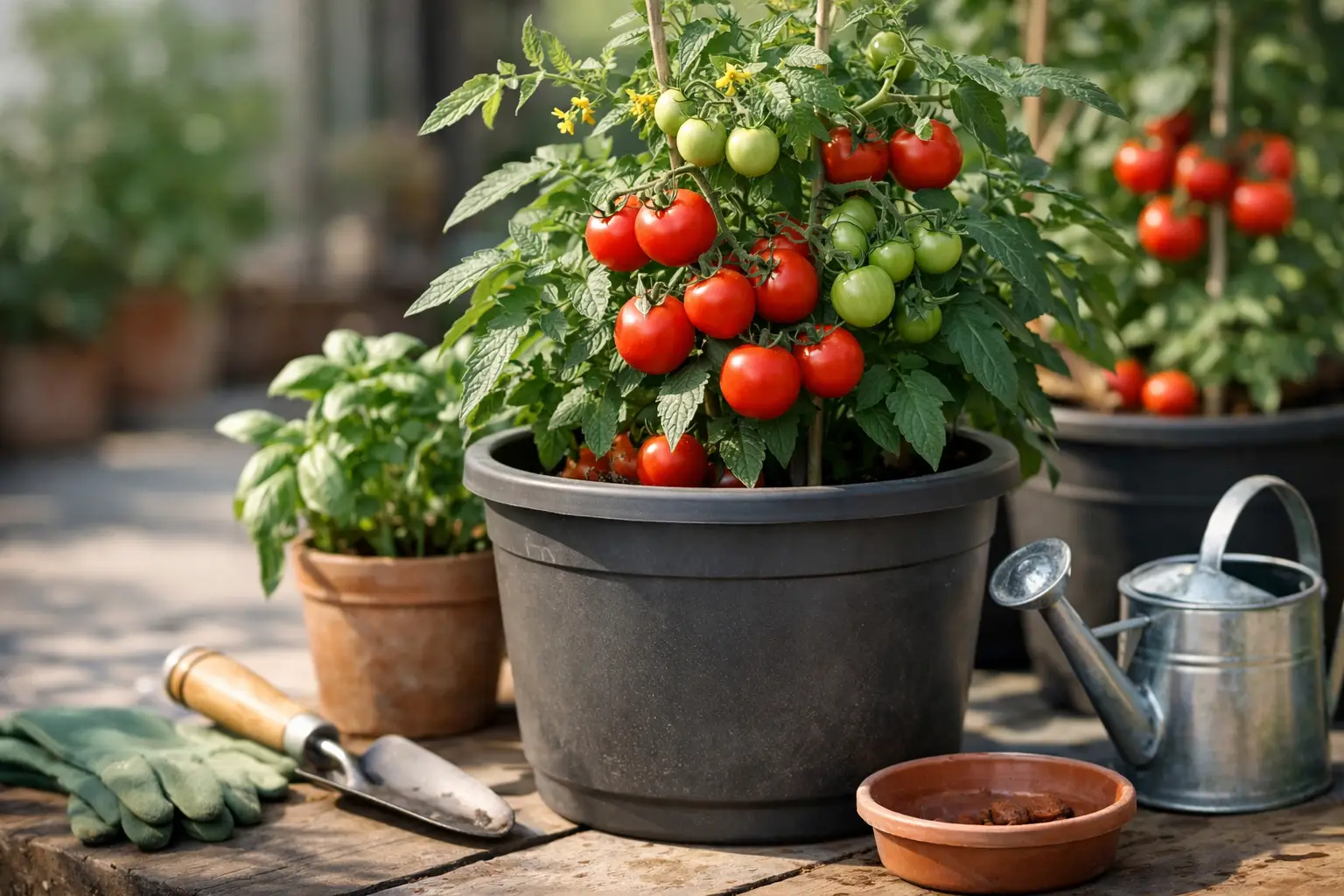
A single tomato plant can turn a sunny patio, apartment balcony, or front-step corner into a productive little food garden.
The trick to learning how to grow tomatoes in containers is not finding a magic variety or buying the biggest pot you can carry.
It is giving the plant a roomy root zone, steady moisture, plenty of sunlight, and support before it starts sprawling.
Container tomatoes are wonderfully practical for renters, small-space gardeners, and anyone tired of fighting poor native soil.
They also bring the harvest close to the kitchen. A few ripe cherry tomatoes picked while dinner is on the grill can make a small garden feel downright luxurious.
Start With the Right Tomato for Your Space
Tomatoes fall into two broad growth habits: determinate and indeterminate.
Determinate tomatoes grow to a more predictable size, set much of their fruit over a shorter period, and work especially well in containers. They are a smart choice when you want a tidy plant and a concentrated harvest for salads, sauce, or canning.
Indeterminate tomatoes keep growing, flowering, and producing until frost. They can be incredibly rewarding, but they need taller, sturdier support and more frequent pruning in a container. If you have a large sunny patio and enjoy tending plants throughout summer, they are worth the effort.
For smaller spaces, look for compact, patio, bush, dwarf, or container varieties. Cherry and grape tomatoes are often dependable choices because they produce heavily and ripen quickly.
Larger slicers and beefsteak types can grow in pots too, but they need a bigger container, strong staking, and consistent care to avoid cracked or undersized fruit.
Choose a Container That Gives Roots Room
Tomatoes have vigorous root systems, and undersized pots dry out fast. One plant needs at least a 5-gallon container, but a 10-gallon pot is a much more forgiving option for most full-size tomatoes.
Bigger containers hold moisture longer, provide more nutrients, and help buffer roots from hot summer weather.
Use a pot with several drainage holes. Water must be able to leave the container freely, because soggy roots invite disease and slow growth.
Fabric grow bags, plastic nursery pots, glazed ceramic containers, and large buckets can all work well.
If you repurpose a bucket, drill drainage holes into the bottom before planting.
Dark containers warm quickly in spring, which can be useful in cooler regions.
In areas with intense summer heat, however, they may overheat the root zone.
A light-colored pot, shade around the container itself, or a larger outer planter can help keep roots more comfortable.
Avoid placing gravel, rocks, or broken pottery in the bottom.
This does not improve drainage and takes away valuable soil space.
Good drainage comes from holes in the pot and a light, well-aerated growing mix.
Use Potting Mix, Not Garden Soil
Garden soil is usually too dense for containers. It can compact, drain poorly, and carry weed seeds or soilborne diseases.
Fill your container with a quality potting mix formulated for vegetables or containers. These blends are designed to hold moisture while still allowing air to reach the roots.
For an extra nutrient boost, mix in a small amount of finished compost – roughly one part compost to three or four parts potting mix is plenty.
Compost supports healthy soil life and helps the mix retain moisture, but too much can make a container heavy and slow-draining.
If your potting mix does not include fertilizer, add a slow-release vegetable fertilizer at planting time according to the package directions.
Tomatoes are hungry plants, but more fertilizer is not always better.
Too much nitrogen can create a huge, leafy plant with fewer flowers and tomatoes.
Once flowers appear, choose a fertilizer intended for tomatoes or vegetables and follow the label carefully.
Plant Deeply for Stronger Tomato Plants
Wait to plant outdoors until nighttime temperatures are reliably above 50 degrees Fahrenheit and the danger of frost has passed.
Tomatoes love warmth. A cold spell can stall young plants, even if it does not kill them.
Remove the lower leaves from your transplant and plant the stem deeper than it sat in its nursery pot.
Bury it so only the top cluster of leaves remains above the soil. Tiny hairs along the buried stem can develop into additional roots, creating a stronger, more resilient plant.
Water deeply after planting to settle the mix around the roots.
Then add a 1- to 2-inch layer of mulch, such as shredded leaves, clean straw, or untreated grass clippings.
Mulch is especially helpful in containers because it slows evaporation and reduces soil splashing onto leaves during watering.
Give Container Tomatoes Full Sun and Early Support
Tomatoes need at least six hours of direct sun each day, and eight or more hours is even better for a generous harvest.
Watch your space for a day before committing to a location. A balcony that looks bright may receive only filtered light, while a driveway corner may be the true sunniest spot.
Install a tomato cage, stake, or trellis at planting time.
Trying to wrestle support around a plant loaded with stems and green fruit later is frustrating for both gardener and tomato.
A sturdy cage works well for determinate plants. Indeterminate varieties often benefit from a tall stake, heavy-duty cage, or trellis system that can handle their height and weight.
As stems grow, tie them gently with soft garden ties or strips of old cotton fabric. Do not use thin wire or tight string, which can cut into expanding stems.
Good support improves air circulation, keeps fruit off the soil, and makes harvest easier.
Water Consistently, Not Constantly
Uneven watering is behind many container tomato problems. Letting the pot dry out completely, then soaking it heavily, can lead to split fruit and blossom-end rot.
Blossom-end rot appears as a dark, sunken patch on the bottom of a tomato. Although calcium is involved, the root cause is often irregular moisture that prevents the plant from taking up calcium steadily.
Check containers every morning in warm weather. Push a finger about an inch into the potting mix.
If it feels dry at that depth, water slowly and thoroughly until water runs from the drainage holes.
During heat waves, large fruiting plants may need water every day, sometimes twice a day in very small pots or exposed locations.
Aim water at the soil rather than showering the leaves. Wet foliage does not automatically cause disease, but consistently damp leaves can encourage fungal issues.
A watering can with a long spout, a drip line, or a simple self-watering container can make this job easier for busy gardeners.
Prune With Purpose, Especially on Large Plants
Container tomatoes do not need aggressive pruning, but a little cleanup helps. Remove leaves that touch the soil, turn yellow, or show clear signs of disease.
This improves airflow and keeps foliage from sitting in damp potting mix.
For indeterminate tomatoes, you can pinch out some suckers – the small shoots that appear in the angle between a main stem and leaf branch.
Removing every sucker is optional.
In a container, thinning a few of the lowest or most crowded ones can keep the plant manageable and direct energy toward fruit.
Determinate tomatoes should be pruned lightly, if at all. Heavy pruning can reduce the number of tomatoes they produce because much of their fruit forms on the plant’s outer growth.
Watch for Pests and Problems Before They Spread
Check your plants a few times each week, especially underneath leaves.
Aphids, spider mites, hornworms, and whiteflies can appear quickly.
Hand-pick large hornworms, rinse small aphid clusters off with a firm stream of water, and remove badly damaged leaves.
Healthy plants can handle a little insect activity, so there is no need to react to every chewed leaf.
Brown spots, yellowing, or curling can come from several causes, including nutrient stress, heat, inconsistent watering, or disease.
Start by checking the basics: sunlight, moisture, drainage, and fertilizer use. If you see leaves with spreading spots, remove them promptly and avoid splashing water from pot to pot.
Rotate where you place tomatoes from year to year when possible, especially if a plant struggled with disease.
Fresh potting mix each season is a simple way to reduce recurring soilborne problems in containers.
FAQs
1. How big of a container do I need for tomatoes?
A 20-30 litre (5-10 gallon) container is usually suitable for most tomato varieties.
Larger containers will hold moisture better and allow for healthy root growth. Indeterminate (vining) tomatoes do best in the largest containers possible while determinate (bush) tomatoes can be grown in somewhat smaller containers.
2. What varieties of tomatoes grow well in containers?
Compact and dwarf varieties do well in containers.
Popular picks include:
- Cherry tomatoes
- Patio tomatoes
- Roma tomatoes
- Bush Early Girl
- Tiny Tim
- Tumbler
- Balcony varieties
These produce well without requiring excessive space.
3. What kind of soil should I use?
Use a good potting mix that drains well, rather than garden soil.
A good combination is:
- Drain excess water easily
- Hold adequate moisture
- Contain organic matter such as compost
- Have a slightly acidic pH (6.0–6.8)
Avoid heavy soil that can compact and limit root development.
4. How much sun do container tomatoes need?
Tomatoes need to get 6 to 8 hours of direct sunlight a day, but 8 to 10 hours a day is best if you want the most fruit.
Place containers in the sunniest spot you have, turning them now and then for even growth.
5. How often should I water tomatoes in pots?
Water when the top 1 inch (2.5 cm) of soil is dry. In hot weather, containers may need watering once or twice a day.
Keep the soil moist but not soggy, as irregular watering can cause fruit cracking and blossom-end rot.
6. Do tomatoes in containers require fertilizer?
Yes. Feed your plants regularly with a balanced tomato fertilizer, as nutrients will leach out of the container over time.
Start fertilizing when the flowers appear and continue every 1-2 weeks following product directions. Fertilizers with higher phosphorus and potassium contents promote flowering and fruiting .
7. Should container tomatoes be staked or caged?
Yes. Support is needed even for compact varieties. Usage:
- omato cages
- Bamboo stakes
- Trellises
It is good to support the plant so the fruit does not touch the ground. This also increases air circulation and decreases the chance of disease.
8. Why aren’t my container tomatoes producing fruit?
Typical reasons are:
- Insufficient sunlight
- Too much nitrogen fertilizer
- Inconsistent watering
- Extreme temperatures
- Poor pollination
Generally, good care and stable growing conditions are good for fruit production.
9. Prevention of diseases and pests?
How to keep plants healthy:
Water to the base rather than the leaves.
Make sure there is good air circulation.
Remove yellow or diseased leaves as soon as you see them.
Inspect plants regularly for aphids, whiteflies and hornworms.
Maintain clean containers and tools.
The best defense against common tomato problems is good growing conditions.
10. When do I harvest my tomatoes?
Harvest tomatoes when they are fully colored and slightly firm with a little softness.
Pick fruit often to keep the production going throughout the growing season.
Choose ripe green tomatoes if frost is forecast and allow to ripen indoors.
Success Tips You Can Use
- Water at the base instead of wetting leaves.
- Ensure good air circulation.
- Remove yellow or diseased leaves promptly.
- Inspect plants regularly for aphids, whiteflies, and hornworms.
- Keep containers and tools clean.
Healthy growing conditions are the best defense against common tomato problems.
Harvest Often and Enjoy the Momentum
Pick tomatoes when they have reached their full color and feel slightly soft when gently squeezed.
Frequent harvesting encourages many varieties to keep producing. If cool weather arrives before every fruit ripens, pick mature green tomatoes and let them finish indoors on the counter.
The most satisfying part of container gardening is how quickly a small routine becomes a daily pleasure: a morning check for dry soil, a new flower cluster, a tomato turning from pale green to red.
Give your plants consistent care, and even a modest sunny corner can grow into a delicious, productive retreat.
See also:
The Ultimate Guide to Growing Luscious Tomatoes
How to Grow High-Yield Tomatoes at Home (Most Ignore This)