A climbing plant without support has a way of turning a promising garden bed into a leafy tangle. A well-chosen trellis changes that picture fast: vines grow upward, fruit stays cleaner, flowers become more visible, and even a small patio can feel like a gorgeous green retreat.
This guide to garden trellises will help you choose a support that suits your plants, space, budget, and gardening goals.
Why Garden Trellises Do More Than Save Space
Trellises are often treated as decorative accessories, but they are hardworking garden tools.
They give climbing plants a structure to follow, which improves air circulation around leaves and makes watering, pruning, and harvesting much easier.
For vegetables such as cucumbers, pole beans, peas, and indeterminate tomatoes, lifting growth off the soil can also reduce problems with rot and some soil-borne diseases.
Vertical growing is especially valuable in compact yards, raised beds, balconies, and rental gardens. Instead of letting a squash or flowering vine spread across several feet of ground, you can use the open air above a bed.
That leaves more room at soil level for herbs, lettuce, marigolds, or other companion plants.
A trellis also brings shape to the garden. A simple wood panel behind a row of beans can make a vegetable patch feel more organized.
An arch covered in fragrant jasmine or climbing roses can turn a plain path into a destination. The best choice balances looks with the real weight and growing habits of the plant.
Choose the Right Type of Garden Trellis
Before shopping or building, start with the plant. A lightweight sweet pea has very different needs than a mature cucumber vine loaded with fruit.
The strongest, prettiest trellis in the world will not help much if its openings are too wide for tendrils to grab or its frame cannot carry a heavy crop.
1. Flat Panels and Lattice
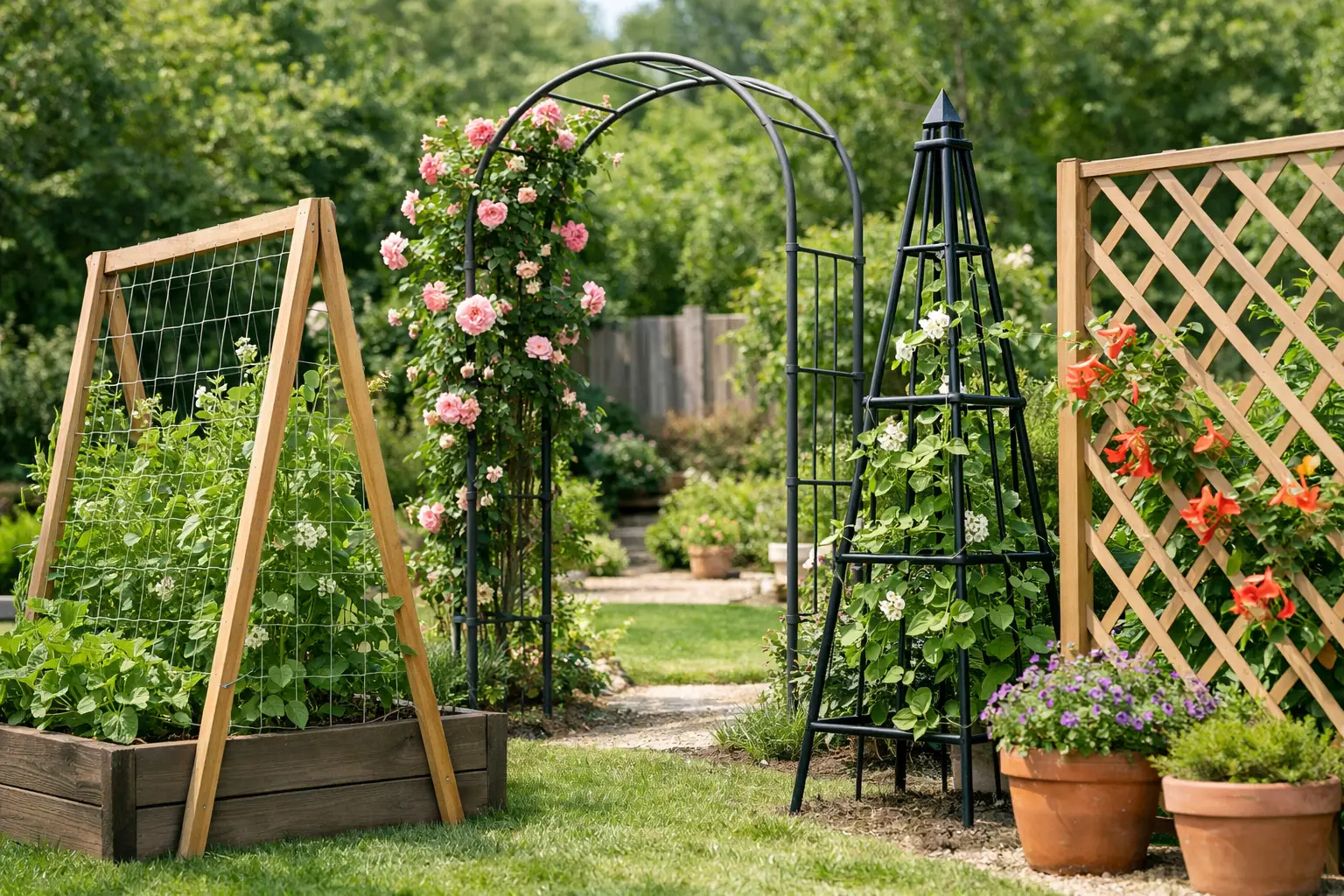
Flat trellises are among the most flexible options. They can stand against a fence, attach to a wall with a small gap for airflow, or sit at the back of a raised bed.
Wooden lattice, welded-wire panels, and sturdy garden netting all work well for peas, beans, clematis, morning glories, and smaller cucumbers.
Choose a panel with openings that match the plant. Peas and young bean vines can grab narrow mesh easily.
Larger openings are useful for tomatoes or cucumbers because you can reach through them to harvest fruit and guide stems as they grow.
2. A-Frame Trellises
An A-frame trellis creates two climbing sides and a shaded space below. It is a smart option for a raised bed because it stays stable when anchored properly and gives you plenty of growing room without blocking the entire bed.
Cucumbers, small melons, pole beans, and vining squash can all work on a strong A-frame.
Keep in mind that the space beneath an A-frame may become noticeably cooler and dimmer in summer. That can be helpful for heat-sensitive greens, but it is not the best spot for sun-loving basil or peppers.
3. Arches and Arbors
An arch or arbor is more structural than a basic trellis, and it can make a beautiful entrance to a vegetable garden or backyard seating area.
These supports are excellent for lightweight flowering vines, climbing roses, grapes, and vigorous beans. A wide, strong metal or wood arch may also support certain squash varieties, provided the frame is securely installed.
Do not underestimate plant weight. A pumpkin vine can look charming on an arch in June and become surprisingly heavy by late summer. Large fruit may need individual slings made from soft fabric to keep it from pulling stems loose.
4. Cages, Obelisks, and Teepees
Cages and obelisks work particularly well in beds where a flat panel would feel too bulky. A tomato cage supports one plant from all sides, while a tall obelisk gives flowering vines a neat focal point in a container or border.
A simple teepee made from bamboo poles is inexpensive, easy for kids to help build, and ideal for pole beans.
These vertical supports are practical in containers, too. Just make sure the pot is wide and heavy enough that it will not tip once the plant catches wind.
Pick a Material That Matches the Job
Wood, metal, bamboo, and plastic-coated supports each have a place in the garden.
Untreated cedar and naturally rot-resistant woods offer a warm, classic look, though they cost more than basic lumber.
Avoid using old pressure-treated wood if you are unsure of its age or treatment type, especially around edible crops.
Powder-coated steel, galvanized wire, and cattle panels are durable choices for heavy vegetables and permanent structures. They can last for years, but metal gets hot in direct sun, which can stress tender stems that rest against it.
Bamboo is affordable and wonderfully natural-looking, but it is best for annual crops or lighter vines because it gradually breaks down outdoors.
Plastic garden netting is useful for peas and lightweight beans, but it can sag, tear, and become difficult to remove at season’s end. If you use it, pull it tight and check it regularly. Birds, beneficial insects, and small wildlife can become tangled in loose netting.
Size and Place Your Trellis Before You Plant
Installing a trellis after plants have taken off is possible, but it often means disturbing roots or wrestling with tangled stems.
Place supports first whenever you can. In a vegetable bed, position a tall trellis on the north side so it does not shade shorter crops for much of the day.
In the Southern Hemisphere that advice changes, but for most US gardens, north-side placement is the reliable rule.
Height matters as much as location.
Peas may be happy on a 4- to 6-foot support, while pole beans often need 6 to 8 feet.
Indeterminate tomatoes can outgrow a short cage quickly, and cucumbers benefit from at least 5 feet of climbing room.
Check the seed packet or plant tag, then give the plant a little more height than it claims to need.
The support must be anchored for the mature plant, not the tiny seedling.
Drive stakes deeply into the ground, secure panels to sturdy posts, and use weather-resistant ties.
In raised beds, attach posts to the outside of the bed frame or sink them deep enough to resist wind.
A trellis that leans after a storm can damage plants and create a frustrating midseason repair.
Help Plants Climb Without Forcing Them
Not every plant climbs in the same way. Peas, grapes, and many passionflowers use tendrils that curl around narrow supports.
Beans and morning glories twine their stems around a pole or string.
Cucumbers often need a little guidance at first, while tomatoes do not truly climb and must be tied to their support as they grow.
Check young plants every few days during their fastest growth period. Gently tuck stems into a panel or loosely tie them with soft plant ties, strips of old cotton T-shirts, or reusable garden tape.
Leave room for stems to expand.
Tight string, wire, and twist ties can cut into plant tissue and create openings for disease.
For tomatoes, prune only according to the type you are growing. Indeterminate varieties are commonly trained to one or two main stems for easier trellising and harvests.
Determinate tomatoes usually need less pruning and are often happiest in sturdy cages.
There is no single best method, so let the variety and your available time guide the decision.
Keep Your Trellis Productive Through the Season
A quick weekly check keeps small problems from becoming a collapsed structure. Look for loose ties, sagging netting, cracked wood, rusted connections, and stems pinched against the frame.
Harvest cucumbers, beans, and peas regularly to encourage more production and keep vines from becoming overloaded.
At the end of the season, remove dead vines and plant debris from the trellis. This simple cleanup helps limit overwintering pests and disease spores.
Wash reusable supports with a brush and mild soapy water, then let them dry before storing.
If a wooden trellis stays outdoors year-round, inspect it each spring and replace weakened pieces before the garden is full.
A garden trellis is one of those simple additions that makes plants easier to grow and the whole space more enjoyable to use.
Start with one strong support for one crop or favorite flowering vine, then let the results inspire the next vertical layer of your garden.
FAQs
A garden trellis is one of those simple additions that can transform an outdoor space. Whether I am growing climbing roses, sweet peas, cucumbers or beans, a well-placed trellis adds height, saves space and makes a beautiful focal point. It keeps plants healthier by improving air circulation and makes harvesting much easier.
Thinking of adding a trellis to your garden? Here are the answers to the questions I hear most often.
1. What is a garden trellis?
A garden trellis is a structure used to support climbing plants and vines. It can be made from wood, metal, bamboo, plastic or wire and comes in many shapes and sizes.
Trellises may be:
Free Standing
Fixed to walls or fences
On raised beds
Used in planters
For making arches or garden screens
They not only support plants but also add structure, interest and vertical beauty to the garden.
2. Which plants are best grown on a trellis?
A trellis makes good support for many flowers, vegetables and fruits.
Some of my favourites are:
Flowers
- Sweet peas
- Clematis
- Climbing roses
- Morning glory
- Jasmine
- Honeysuckle
- Black-eyed Susan vine
Vegetables
- Runner beans
- French beans
- Cucumbers
- Peas
- Tomatoes (with support)
- Malabar spinach
Fruits
- Grapes
- Passion fruit
- Kiwi
- Blackberries
- Raspberries
Choose the right plant for your climate and for the strength of your trellis.
3. Why a trellis?
There are many benefits to growing vertically.
A trellis helps to:
Save precious garden space
Enhance the air circulation in the plant
Reduce fungus diseases
Fruit cleanser
Facilitate collection
Get more sunlight exposure
Make attractive garden features
Cover unsightly walls or fences
When plants grow up instead of out all over the place even a small garden can seem much larger.
4. Which is the best material for a garden trellis
Every material has its pros and cons.
Wooden trellises
- Natural appearance
- Great for cottage gardens
- Easy to customise
- May require occasional treatment
Metal trellises
- Extremely durable
- Perfect for heavy climbing plants
- Modern appearance
- Usually lasts many years
Bamboo trellises
- Affordable
- Eco-friendly
- Lightweight
- Excellent for vegetables
Plastic or vinyl
- Low maintenance
- Doesn’t rot
- Weather resistant
- Easy to clean
The best material will depend on your budget, garden style, and the types of plants you’re hoping to grow.
5. How high should a garden trellis be?
Height is all about the plants.
Standard guidelines are:
Peas 3-5 feet (1-1.5 metres)
Cucumbers 5–6 feet (1.5–1.8 metres)
Beans: 6-8 ft (1.8-2.4 m) high
Clematis: 6–10 feet (2–3 meters)
Climbing roses: 2-3.5m (6-12ft)
Grapevines: 6-8 feet (2-2.5 metres)
Best to go a little higher than you think you’ll need.
6. How to fasten a trellis?
Make sure you have a good solid trellis, particularly in windy gardens.
You can obtain one by:
- Driving posts into the ground
- Using metal stakes
- Fixing it to a wall
- Attaching it firmly to a fence
- Anchoring freestanding models with ground spikes
When they are fully grown, large plants can get surprisingly heavy, especially after rain.
7. Will climbing plants naturally grow up a trellis?
Not always.
Some plants need a bit of encouragement at first.
What I normally help with:
- Gently tying young stems using soft garden ties
- Weaving shoots through the framework
- Regularly checking new growth
- Removing damaged stems
Once established most climbers find their way up quickly.
8. Can I make my own garden trellis?
Yes, of course.
Creating your own trellis is a rewarding weekend project.
Typical materials are:
Battens, plank
Bamboo sticks
Wire-mesh
Livestock panels
Tree pruning branch
Reclaimed wood
You can often tailor homemade trellises to suit your garden to a T, and they cost a lot less than buying ones that are ready-made.
9. Where is the best location for a trellis?
Location is really important.
Consider:
Sunlight needs of your plants
Protection against strong winds
Soil health
Water accessibility
Easy to harvest
Landscape Design
A trellis can also help create attractive ‘garden rooms’, define outdoor spaces or add privacy to patios and seating areas.
10. How do I care for garden trellis?
Maintenance is fortunately usually very simple.
Each year I attempt to:
Look for loose fasteners
Tight screw or bolt
Repair damaged areas
Treat wooden trellises if necessary
Remove dead vines after growing season
Remove clean algae or dirt
Inspect metal structures for rust
A simple annual inspection can help keep your trellis going strong for many years to come.
Summary
Garden trellis is one of the most hardworking things you can add to your outdoor space. It supports climbing plants, makes the most of growing space, improves the health of plants and adds height, beauty and character to any garden.
Whether you are growing fragrant flowers, productive vegetables, or delicious fruit, the right trellis makes gardening easier and more rewarding.
There are so many designs and materials to choose from, there’s a perfect option for every garden from the smallest patio to the largest backyard.
Once you use one, you’ll probably wonder how you ever gardened without it.