Plant lights can be scary for people who garden indoors. People often think that only serious growers need them because they are full of technical terms, strange purple glows, and confusing claims.
The truth is much nicer: plant lights are just tools to help your plants get the light they need, especially when your home can’t give it to them naturally.
You may have seen the effects of not enough light if you’ve ever seen a houseplant stretch awkwardly toward a window, lean to one side, or slowly lose its bright color.
Plants need light to grow. Even the best soil, pots, and watering habits won’t help them if they don’t have enough of it.
This guide will show you everything you need to know to pick the best plant light for your home. No jargon overload or lab-coat energy—just clear, useful tips to help your plants grow and make your home feel brighter and more alive.
Why Light Is the Biggest Indoor Gardening Challenge
Plants outside evolved with the sun as their only reliable source of light. That certainty is gone when you’re inside. Windows let in light, walls block it, and the angle changes with the seasons.
Artificial light is often not enough for plants.
To a plant, a room that looks “bright” to people can actually be dark.
Some common problems with indoor lights are:
- Windows facing north with low light
- Days are short in the winter
- Buildings or trees that are tall and block the sun
- Houses with deep layouts and not many windows
Plant lights come in to fill these gaps. They don’t completely replace the sun, but they can get pretty close.
What Is a Plant Light, Exactly?
A plant light, also known as a grow light, is a type of light that gives plants the light they need to photosynthesize.
Standard household bulbs are designed to make light look good to people, while plant lights are designed to make light that plants can actually use.
Plants react to:
- How bright the light is
- Length of time the light is on
- The light spectrum is the range of colors in the light.
A good plant light balances all three of these things so that the plants grow well, have strong roots, and bright leaves.
Understanding the Light Spectrum (Without Getting a Headache)
A lot of the time, you’ll hear people talk about “full spectrum,” “blue light,” and “red light.” Let’s make things easier.
Blue Light
Blue light makes things happen:
- Compact growth
- Stems that are strong
- Growing leaves
It’s very important for seedlings and houseplants with leaves.
Red Light
Red light helps:
- Blooming
- Fruiting
- The overall maturity of the plant
It is more important for flowering plants and herbs.
Full Spectrum Light
Full spectrum lights have a balanced mix of wavelengths that look like natural sunlight.
Why people like them:
- Good for most houseplants
- Nice to look at
- You don’t have to change the lights as the plants grow.
Most indoor gardeners find that full spectrum lights are the easiest and most useful option.
Different kinds of plant lights and which one works best in your space
There are differences between plant lights. It depends on your plants, your space, and how much work you want to do on them.
Grow Lights with LEDs
LEDs are the most popular right now, and for good reason.
Pros:
- Good for the environment
- Long life
- Low heat output
- Comes in a lot of different styles
Cons:
- Cost more up front (but usually worth it)
- LED grow lights are good for anything from a shelf of plants to a whole indoor garden.
Fluorescent Lights
This is something you often see in older setups or places where seeds are started.
Pros:
- Not too expensive
- Works well for plants that don’t need a lot of light
- Even coverage of light
Cons:
- Not as energy-efficient as LEDs
- You have to change bulbs more often.
They are still a good choice for beginners or short-term use.
Lights with incandescent and halogen bulbs
These are not recommended for plants.
Why you shouldn’t use them:
- Too hot
- Not effective
- Bad light spectrum
- They can hurt plants and make energy costs go up.
Making sure the plant light is strong enough for your plants
Different plants need different amounts of light. Picking the right strength stops both weak growth and light stress.
Plants That Don’t Need Much Light
Snake plants, ZZ plants, and pothos are some examples.
Needs for light:
- Moderate intensity
- 10–12 hours of light per day
A small LED or fluorescent light that is far away is usually enough.
Plants that need a medium amount of light
This group has philodendrons, monsteras, and peace lilies in it.
Light needs:
- Moderate strength
- 10 to 12 hours of light every day
A standard full-spectrum LED light above or next to the plant works well.
Plants that need a lot of light
Think about flowering plants, citrus trees, herbs, and succulents.
What kind of light do you need?
- Light that is bright and direct
- 12 to 16 hours a day
You might need stronger LED panels or more than one light source.
Distance for your plant light is more important than you think.
Lights for plants don’t work the same way as ceiling lights. Distance is very important.
- Too far away: growth that is weak and leggy
- Too close: leaves that are burned or stressed
Overall rules:
- Small LEDs: 6 to 12 inches away from plants
- Panels that are 12 to 24 inches thick are stronger.
Always keep an eye on your plants. If the leaves are curling, bleaching, or spotting, the light may be too strong.
How long should plant lights stay on?
Plants also need darkness. Light that stays on all the time can mess up growth cycles.
General Guidelines for Timing
- Most houseplants need 10 to 12 hours of light a day.
- Plants that need a lot of light need 12 to 16 hours of light a day.
- Seedlings: as much as 16 hours a day
Using a timer takes the guesswork out of things and keeps schedules on track, which is better for plants than being perfect.
How to Pick the Right Type of Plant Light
Instead of saying “indoor greenhouse,” plant lights now come in styles that fit in with your home.
Plant lights that clip on
Great for:
- Single plants
- Desks and shelves
- Small areas
They’re easy to move, cheap, and flexible.
Plant lights that hang and pendants
These look great and work well together.
Best for:
- Statement plants
- Dining tables or corners
- Rooms with an open floor plan
For a natural look, pick full-spectrum bulbs that look like warm daylight.
Panels and Light Bars
Perfect for:
- Shelves for plants
- Cabinets
- More than one plant at a time
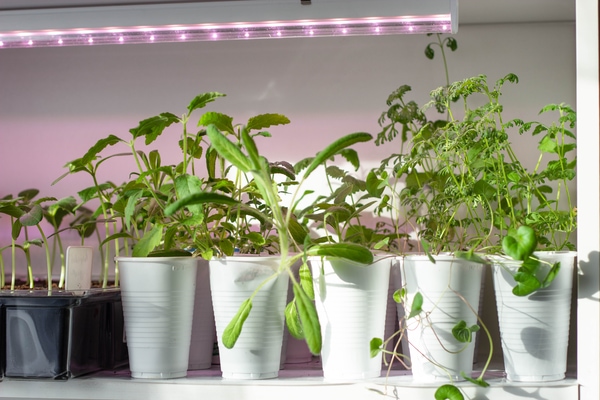
They cover everything evenly and look clean and modern.
Grow bulbs for floor and table lamps
One of the most fashionable choices out there.
Why they work:
- Decorate with plant lights that look like other things.
- Simple to add to living areas
- Good for plants on the floor
Just swap out regular bulbs for grow bulbs.
How to Blend Plant Lights Into Your Home Decor
A plant light doesn’t have to look harsh or technical.
How to Make Plant Light Integration Go Smoothly
- Pick full-spectrum lights that are warm white
- Put fixtures above shelves or behind plants to hide them.
- Use lampshades to make the light less harsh.
- Make sure the finishes match the decor you already have.
If you do it right, guests might not even notice that your plants are getting light from a lamp.
Things to think about when it comes to energy use and cost
Your electric bill doesn’t have to go up because of plant lights.
- What to Look For:
LED technology - Energy ratings
- Appropriate size for your setup
It usually costs less than a cup of coffee a month to run a small LED grow light for 12 hours a day.
Common Mistakes to Avoid
Even good lights can break if you don’t use them right.
Be careful of:
- Too much light on plants that don’t need it
- Not following distance guidelines
- Not remembering to change things as plants grow
- Not going through dark periods
Plants talk to each other through their leaves. Pay attention and make small changes.
Changes in Light Throughout the Year
The amount of light your plants need may change with the seasons.
- Winter: More light for a longer time, closer to the source
- Summer: less time, more distance
- Spring and fall: some changes that aren’t too big
Plant lights are tools, not things you can just set and forget.
Do you really need a light for your plants?
Not every home needs them, but a lot of them do.
If you do these things, plant lights will probably help you:
- You have a few small windows.
- You grow herbs or flowering plants inside.
- Your plants are having a hard time even though you take good care of them.
- You want growth that stays the same all year long
A single well-placed light can make a big difference.
Final Thoughts: Light Is a Kindness
It’s not about getting the most powerful plant light or following specs when you choose one. It’s about knowing your plants, your home, and how light moves through it.
A good plant light helps plants grow steadily and quietly. It helps plants feel at home, keeps leaves green, and colors bright, even when the sun isn’t shining.
We think that indoor gardening shouldn’t be hard; it should be fun. Not only are you lighting up a room with the right plant light, but you’re also giving your plants the energy they need to grow strong, balanced, and beautiful.
Start with a little bit, watch it happen, and let the light do its thing.