

This complete guide will walk you through everything you need to know about growing lilacs—from choosing the right spot and planting techniques to pruning, propagation, pest management, and choosing standout varieties that will fill your garden with perfume every spring.
There are few more charming sights in the garden than a lilac bush in full bloom.
As spring comes on and the days warm up, clusters of delicate flowers open to fill the air with one of the most familiar and beloved fragrances in the gardening world.
The common lilac (Syringa vulgaris) is a classic, elegant plant that brings spectacular colour and unforgettable fragrance to any outdoor space, whether grown as a stand-alone specimen, incorporated into a mixed border or trained into a flowering hedge.
For generations, lilacs have been a favourite of gardeners in Europe and further afield.
Their old-fashioned charm is reminiscent of traditional cottage gardens, country lanes and historic estates, but they are equally at home in contemporary landscapes.
With hundreds of cultivars, and shades ranging from pure white and soft lavender to rich violet and deep magenta, a lilac is sure to fit in just about any garden style.
Best of all, lilacs are remarkably long-lived once they are established. It is not unusual to find healthy specimens that have been flowering faithfully for over a century, which makes them one of the most rewarding investments you can make in your garden.
Why You Should Grow Lilacs
Few flowering shrubs can match the combination of qualities that lilacs offer.
Their glorious spring show coincides with the time when many gardens are waking from winter and need masses of colourful blooms most. Often you will smell them before you see them, as their rich perfume floats across the garden on mild spring breezes.
Lilacs are not only beautiful, but surprisingly easy to grow. Once established they tolerate periods of drought, cope well with cold winters and need relatively little maintenance compared to many flowering shrubs.
Their flowers are also attractive to a range of beneficial pollinators such as bees, butterflies and hoverflies, and so are valuable additions to wildlife-friendly gardens.
Lilacs have something that is hard to put into words but which is immediately recognisable. Character, perhaps most importantly. There are few ornamental shrubs that can match their romantic, nostalgic appeal.
Understanding Syringa vulgaris
The common lilac belongs to the olive family (Oleaceae), which also includes jasmine, ash trees and privet.
Native to the Balkan Peninsula, it has been grown throughout Europe since the 16th century and is a valued feature of both formal landscapes and cottage gardens.
Mature shrubs are generally 3 to 5 metres high and wide with a graceful vase-shaped habit and multiple woody stems rising from the base.
Attractive green heart-shaped leaves make a good summer background before they fall in autumn to reveal the elegant branching structure of the shrub during winter.
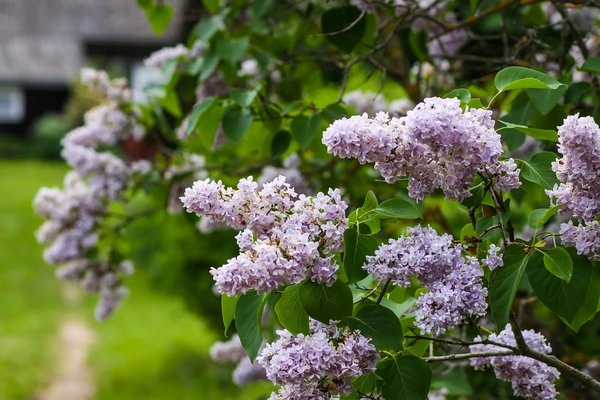
The real show is late spring when dense panicles of flowers, often 15 to 20 centimetres long, drape the shrub in a breathtaking display.

Selecting the Right Lilac Variety
One of the joys of growing lilacs is the incredible diversity out there.
Some produce huge double blooms while others produce unusual colours or a compact growth suitable for smaller gardens.
Typical choices include:
‘Charles Joly’
A classic variety producing rich crimson-purple double flowers with an exceptionally strong fragrance.
Ideal for traditional cottage gardens.
‘Madame Lemoine’
One of the finest white lilacs available.
Its double flowers are pure white and wonderfully scented, making them superb for moon gardens and evening planting schemes.
‘Sensation’
Instantly recognisable thanks to its purple flowers edged with crisp white margins.
This unusual colouring creates a striking display every spring.
‘Primrose’
A rare yellow-flowering lilac.
Although the blooms are more creamy yellow than bright gold, they provide a unique twist on this classic shrub.
‘Beauty of Moscow’
Frequently regarded as one of the world’s finest lilacs.
Its pink buds open into double white flowers flushed with soft blush tones, creating an elegant and romantic appearance.
Dwarf Lilacs
Gardeners with limited space should consider compact varieties such as ‘Palibin’ or dwarf Korean lilacs, which produce abundant flowers while remaining manageable in size.
Choosing the Right Spot to Plant
Lilacs are remarkably forgiving, but getting the site right from the start will reward you with decades of reliable bloom.
But sunshine is the main requirement.
Aim for at least 6 hours of direct sun each day.
Lilacs will tolerate light shade, but they generally bloom less, become leggy and have more disease problems if they get too little sun.
Good air circulation is equally important.
Don’t plant where shrubs will be crowded or boxed in by walls that restrict air circulation.
Air circulation prevents fungal disease and promotes healthy foliage.
Soil Needs
Lilacs like fertile, well-drained soil.
Heavy clay is not necessarily a problem if drainage is improved before planting.
Dig in plenty of garden compost or well rotted organic matter to improve soil structure.
Lilacs, unlike many ornamental shrubs, prefer neutral to slightly alkaline soils.
If your soil is quite acidic, adding garden lime might aid growing conditions, but it is always a good idea to do a simple soil pH test before you take any action.
Avoid waterlogged sites at all costs.
Roots that are constantly wet will lead to poor growth and decline.
Learn more with Discovering the Best Soil Types for Thriving Plants >
When to Plant a Lilac
Container-grown lilacs can be planted anytime of the year as long as the ground isn’t frozen or water-logged.
But the best times are in autumn and early spring.
Plant in the fall to give roots time to become established while the soil remains warm and the shrub will have a good head start for the next growing season.
Spring planting does well too if watering is kept up regularly through the first summer.
How To Plant Right
Start by digging a hole about twice as wide as the root ball, but not any deeper.
Plant the shrub so that the top of the root ball is level with the surrounding soil.
Backfill and pack in, pressing down gently to remove air pockets.
Water well after planting.
Finally, make a generous mulch around the base with compost, leaf mould or well rotted bark.
Leave a few centimetres of space between the mulch and the stems to avoid rot.
Feeding and Watering
Mature lilacs are fairly drought tolerant, but young plants need regular watering during the first two growing seasons.
Water deeply, not a little at a time.
This encourages roots to grow down to find moisture, making for stronger, tougher shrubs.
The feeding requirements are modest.
A balanced fertiliser in early spring will usually provide all that is needed for healthy growth.
Avoid excessive nitrogen-rich fertiliser which encourages leaf growth at the expense of flowers.
Learn more about watering cans >
The Secret to Spectacular Lilac Flowers
Many gardeners get frustrated when mature lilacs have a ton of leaves and not much flower.
But the reasons are usually easy to find.
Some of the reasons are:
Too much shadow
Over pruning
Surplus nitrogen
Young plants
Frost injury to flower buds
Lilacs begin to set the flower buds for next spring soon after they have finished blooming.
Timing is everything when it comes to pruning.
Pruning Lilacs Correctly
One of the worst mistakes that gardeners make is to prune in the autumn or winter.
This will rid you of any flower buds already formed for next spring.
Pruning should be done right after flowering.
Start by removing faded flower heads.
Then open up congested branches to allow better air flow.
Cut back one or two of the oldest stems to ground level every few years.
This rejuvenates the shrub, encouraging strong new growth to replace older wood.
Even older, unkempt lilacs can be rejuvenated by cutting out about one-third of the oldest stems each year for three seasons.
Be patient and your plants will be healthier and more productive.
Learn more about pruning >
Lilacs and Small Gardens
Old-fashioned lilacs can become large bushes, but there are many ways to enjoy them in tight spaces.
Opt for naturally dwarf types.
Train them as standards.
Grow up fences to save space with their vertical growth.
Regular pruning after the flowering period also helps to keep a neat framework without compromising on blooms.
Are you able to grow lilacs in containers?
Yes, but pick your poison.
Dwarf varieties do best in large containers with good drainage.
Use a good loam-based compost mixed with grit to aid drainage.
Container plants need to be watered and fed more often than those grown in open ground.
Repot into fresh compost or root-prune every few years to keep plant vigour.
Lilac Propagation
It is inexpensive and rewarding to propagate new lilacs from existing plants.
There are a number of methods.
Suckers
Many common lilacs will naturally throw up shoots from the base.
They can be carefully separated in autumn or early spring, each with its own root attached.
Softwood Cuttings
Young shoots taken in late spring or early summer sometimes root well in humid conditions.
It is slower than sucker division, but it allows for the production of several new plants.
Layering
Low branches can be easily bent to the ground, slightly wounded, and buried while still attached to the parent shrub.
The new plant is then separated after roots develop over the next year.
Troubleshooting
The good news is that lilacs are typically hardy shrubs.
But sometimes there are problems.
Powdery Mildew
The white coating is typical for late summer.
It’s ugly but rarely does lasting harm.
Improve air circulation, avoid watering from above and remove badly affected leaves.
Lilac Borer
Less common in the UK, but can damage weakened shrubs.
Healthy, vigorous plants have considerably less risk.
Poor Blossoming
This is often the result of bad pruning or insufficient light.
The solution lies in reviewing the conditions of growth.
Good Companion Plants for Growing Lilac
Lilacs are ideal partnered with other spring-flowering favourites.
Think about planting with:
- Peonies
- Alliums
- Bearded irises
- Catmint
- Hardy geraniums
- Salvia
- Roses
- Lavender
These companions provide seasonal interest long after the lilac flowers have faded.
Their contrasting textures also create attractive planting combinations all through the growing season.
Bringing Growing Lilac Inside
Lilac flowers are excellent cut flowers.
Harvest in the early morning when buds are just beginning to open.
Immediately cut off any leaves that will be under water.
Trim the stems at an angle and place in tepid water.
Changing the water every couple of days helps to maximize vase life.
Freshly cut lilacs in a vase can perfume a whole room.
Lilacs Seasonal Care Calendar
Spring
- Feed established shrubs.
- Water young plants.
- Enjoy flowering.
- Watch for late frosts.
Early Summer
- Prune immediately after flowering.
- Remove faded blooms.
- Mulch if needed.
Summer
- Water during prolonged dry spells.
- Monitor for mildew.
Autumn
- Plant new shrubs.
- Divide suckers.
- Apply compost mulch.
Winter
- Inspect overall structure.
- Remove damaged branches.
- Avoid heavy pruning.
Lilacs in Design
Lilacs are adaptable.
Plant one specimen as a focal point in a lawn.
Plant several together for a scented border in spring.
Grow them as informal hedges for privacy and for wildlife.
They are at home in cottage gardens where they look good with roses, foxgloves and delphiniums.
For bigger gardens, make a growing lilac walk where different cultivars are planted together to create a spectacular scented display.
For an unforgettable seasonal combination you can underplant with spring bulbs like daffodils, tulips and grape hyacinths.
Wildlife Support
Lilacs are not only beautiful, they are good for you.
The flowers are full of nectar and in spring they attract bees, butterflies and other beneficial pollinating insects.
Mature dense shrubs also provide shelter for nesting birds and garden wildlife that is useful.
Lilacs are a great addition to your planting plan for a healthier, more biodiverse garden.
FAQs
1. Why doesn’t my growing lilac bloom?
The most common causes are too much shade, improper pruning, too much nitrogen fertilizer or an immature plant. Give your shrub plenty of sun and prune just after it flowers.
2. LILACS: How long do they live?
Many lilacs, with proper care, will live for 50 or more years, sometimes over 100 years, and often become treasured heirlooms.
3. Do lilacs require a lot of upkeep?
No, not at all. Once established they need only the occasional watering in long dry spells, an annual feed and light pruning after flowering.
4. Are lilacs difficult to grow?
Sure. They are hardy, forgiving and relatively pest-free, an excellent choice for gardeners of all experience levels.
5. Can I grow lilacs near a patio?
Yes. The truth is that the best place to plant a lilac is near a seat on which to enjoy its unforgettable fragrance in late spring. Just make sure it has room to grow to its mature size without crowding.
Summary
Few shrubs capture the magic of spring like the common lilac. It’s easy to see why this plant has been cherished in gardens for centuries.
It’s a real delight with its intoxicating perfume, elegant flower clusters and remarkable longevity.
Whether you inherit a venerable specimen that’s been around for generations, or plant your very first young shrub, you’re investing in a feature that will reward you year after year with beauty, scent and seasonal charm.
The secret of success is quite simple: give your lilac plenty of sunshine, plant in well-drained soil, don’t overfeed, and remember to prune after flowering. Follow these simple guidelines and your shrub will reward you with clouds of fragrant flowers every spring.
Here at Good Garden Ideas we believe that every garden deserves plants that delight the senses as well as the eye.
A thriving lilac does just that, perfuming the air, attracting pollinators and giving us those indelible spring moments that remind us why gardening is such a satisfying pastime.
Whether you have a sprawling country garden or a small suburban space, you can always make room for the timeless beauty of a lilac.