A north-facing apartment corner, a desk far from the window, or a room shaded by a neighboring building can feel like a tough place for greenery.
So, can houseplants survive low light?
Many can, but “survive” and “thrive” are not quite the same thing. The right plant, placed thoughtfully and cared for with a lighter hand, can turn a dim spot into a calm, green retreat.
Can Houseplants Survive Low Light for the Long Term?
Yes, certain houseplants can live for years in low-light conditions. They have adapted to growing beneath tree canopies or in naturally shaded environments, where direct sun is rare. Their growth may be slower, their leaves may be smaller, and they may need less water and fertilizer than the same plant growing near a bright window.
The catch is that low light does not mean no light. Every plant needs enough light to make energy through photosynthesis.
A room where you can comfortably read during the day without switching on a lamp often provides low to moderate natural light.
A hallway with no windows, a closed bathroom, or a basement corner that stays dark all day does not provide usable plant light for long.
If a space has almost no daylight, a simple grow light can make the difference between a plant merely hanging on and one that looks genuinely healthy.
Know What “Low Light” Looks Like in Your Home
Light labels can be confusing because a bright room is not always a bright spot for a plant. The amount of light drops quickly as you move away from a window.
A table directly beside an east-facing window may receive gentle, useful light, while a shelf 8 feet back in the same room may be much dimmer.
For most homes, low light means indirect light several feet from a window, filtered light through sheer curtains, or light from a small north-facing window. These spots are not pitch black, but they do not receive direct sunbeams.
Take a few minutes to observe each location before choosing a plant. Notice where sunlight lands, how long it lasts, and whether nearby buildings, porches, or large trees block the view of the sky.
This simple check prevents a common indoor gardening disappointment: buying a sun-loving plant because it looks beautiful, then asking it to live in conditions it cannot use.
The Best Houseplants for Dim Rooms
Low-light-tolerant plants are often sold as “easy” plants, and many are forgiving. Still, each has preferences. A plant that handles low light well may not tolerate soggy soil, cold drafts, or constant rearranging.
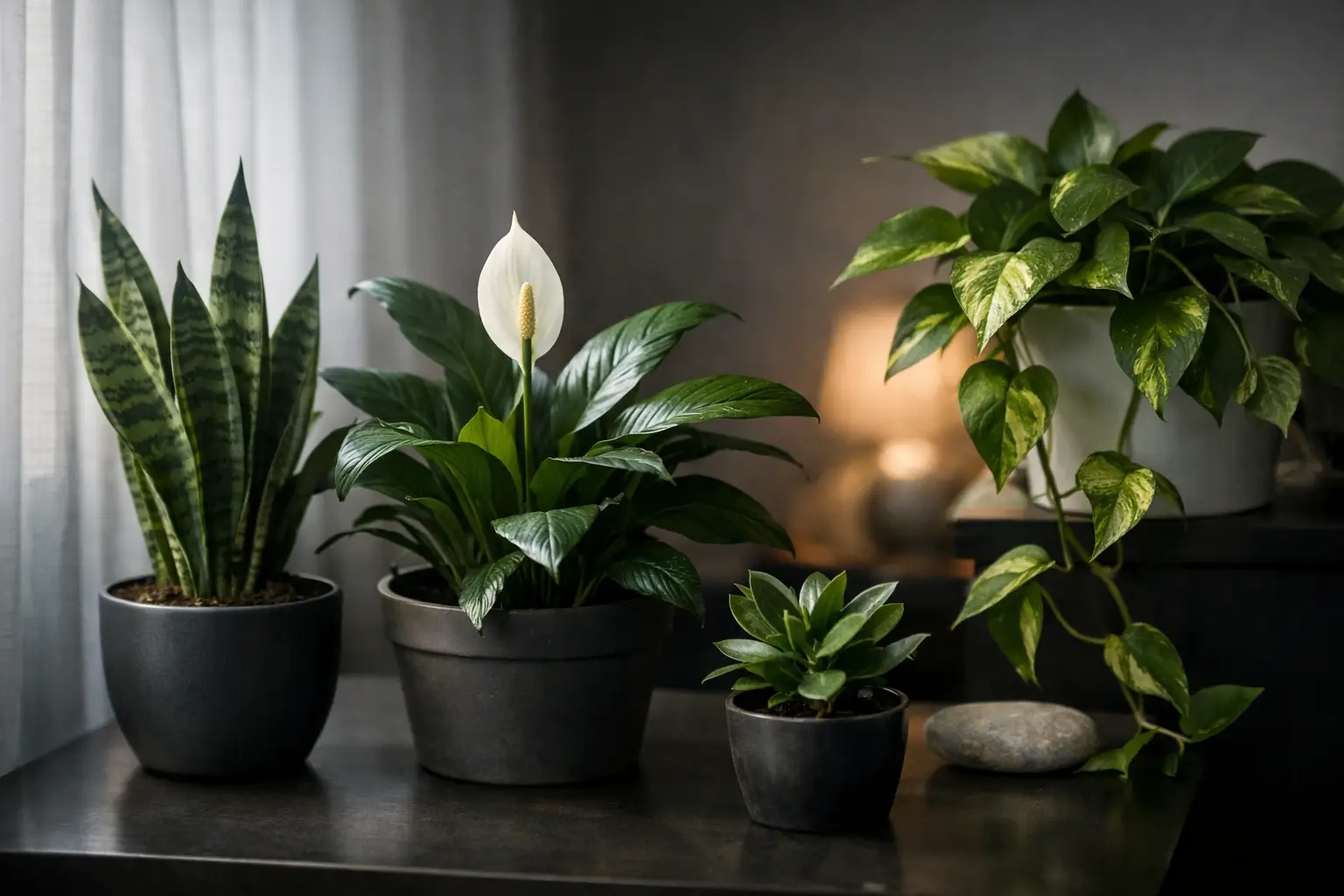
Snake plants are among the most dependable choices. Their upright, architectural leaves fit neatly into bedrooms, offices, and small apartments. They tolerate low light, but they are especially sensitive to overwatering. Let their potting mix dry thoroughly before watering again.
ZZ plants are another excellent option for busy plant owners. Their glossy leaves and thick underground rhizomes store moisture, allowing them to handle occasional neglect. Keep them out of harsh direct afternoon sun, and do not water on a rigid weekly schedule.
Cast iron plants earned their name for good reason. Their broad, deep-green leaves cope with shade, fluctuating temperatures, and less-than-perfect care. They are a smart pick for cooler rooms and entryways with limited natural light.
Pothos, heartleaf philodendron, and Chinese evergreen bring a softer, lusher look. These plants can adapt to lower light, though variegated varieties usually need more brightness to keep their cream, yellow, or pink markings. In a dim room, choose a mostly green variety for the best results.
Peace lilies are often recommended for low light because they tolerate it well, but they generally flower more reliably in medium indirect light. If yours stays leafy but produces few blooms, it may be healthy enough, just not receiving the light needed for its best show.
Adjust Watering Before You Do Anything Else
The biggest danger in low-light plant care is not usually too little water. It is too much. In dim conditions, plants grow more slowly and use water at a slower pace. Soil stays wet longer, and roots can struggle for oxygen if watered too often.
Instead of watering every Saturday, check the potting mix first.
For many low-light plants, wait until the top 1 to 2 inches of soil feels dry.
Snake plants and ZZ plants should dry much more deeply. Use a pot with a drainage hole and empty any saucer that holds standing water after watering.
Yellow leaves can signal overwatering, especially when the soil is still wet. A few yellow leaves near the base of an older plant can be normal, but widespread yellowing, soft stems, or a sour smell from the pot means it is time to inspect the roots and let the mix dry.
Give Low-Light Plants a Few Helpful Advantages
A dim location does not require complicated care, but small improvements can make a visible difference. Wipe dust from leaves every few weeks with a soft, damp cloth. Dust blocks light and can make even a healthy plant look dull.
Rotate the pot a quarter turn every week or two if light comes mostly from one side. This helps plants grow more evenly instead of leaning dramatically toward the window.
Keep foliage away from cold glass in winter and away from heating vents, which can dry out leaves and create stressful temperature swings.
Fertilizer should be used sparingly.
A plant growing slowly in low light does not need frequent feeding. During spring and summer, a diluted houseplant fertilizer every month or two is usually plenty for actively growing plants.
Skip fertilizer when a plant is stressed, newly repotted, or barely growing through winter.
Signs Your Plant Needs More Light
Plants communicate with their growth habits. A low-light-tolerant plant may survive in a dim location, but it will show you when the spot is too dark for long-term health.
Watch for stretched, sparse growth, sometimes called legginess.
Stems may become long and thin, with wide gaps between leaves, as the plant reaches toward available light.
New leaves may emerge smaller than older ones, and variegated foliage may fade to plain green. Flowering plants may stop blooming altogether.
Slow growth alone is not always a problem. Many houseplants naturally pause during winter, and some varieties are slow growers by nature. The concern is a steady decline: leaf drop, weak new stems, pale foliage, or a plant that seems to dry very slowly because it is not actively using water.
When these signs appear, move the plant closer to the window rather than placing it in direct sun immediately. A few feet closer can be enough.
If your room has no better natural-light option, set up a small LED grow light above the plant for several hours a day. Keep the light at the manufacturer’s recommended distance so leaves do not scorch.
Avoid the “Dark Corner” Sales Pitch
It is tempting to believe a plant labeled “low light” can live anywhere. Garden centers use that phrase to mean tolerant of less light than many houseplants, not content in a windowless space. Even famously hardy plants benefit from some daylight.
Be cautious with plants advertised for dark bathrooms. Bathrooms can be wonderful for plants when they have a window and warm, humid air. Without a window or grow light, however, humidity cannot replace light. A plant may look fine for several months while using stored energy, then slowly decline.
Artificial greenery is a perfectly practical choice for truly dark corners. Save live plants for places where they can grow, and let them bring their best color and texture to the rooms you use most.
Build a Better Low-Light Plant Collection
A successful low-light collection is less about finding one magic plant and more about matching plants to real conditions.
Put the toughest choices, such as snake plants, ZZ plants, and cast iron plants, in your dimmest usable spots. Reserve brighter windows for plants that flower, fruit, or carry bold variegation.
Start with one plant, learn how quickly its soil dries in that room, and watch its new growth over a season.
That small experiment builds confidence faster than any care tag. With realistic expectations and a little observation, even a modestly lit home can grow into a gorgeous, green retreat.