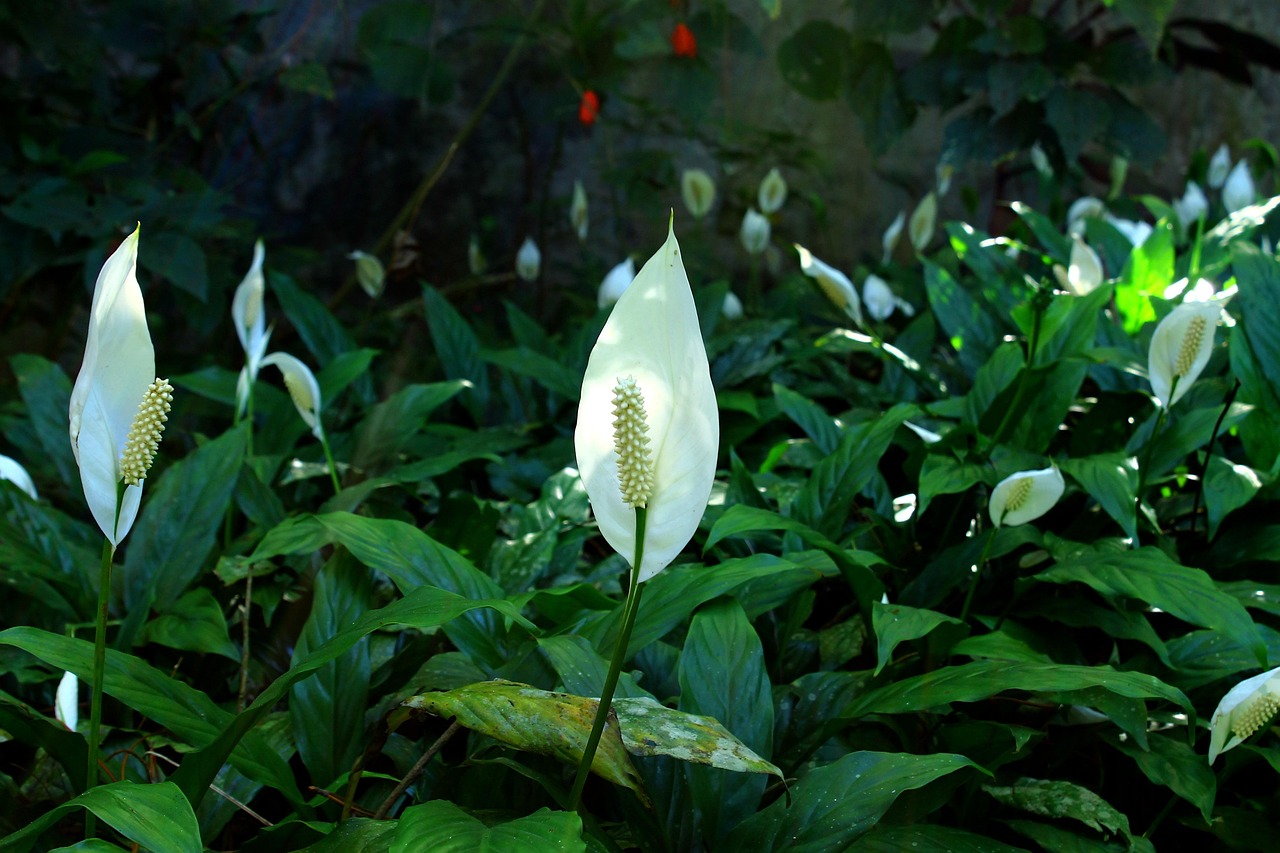
There is something wonderfully calming about a Peace Lily. I love the way its deep green leaves can instantly make a room feel fresher and more inviting, and when those elegant white flowers appear, it feels like a little reward for getting the care right.
The botanical name for the Peace Lily is Spathiphyllum, and although it has a reputation for being an easy houseplant, I have found that it does best when I pay attention to a few simple details. It is not particularly fussy, but it does have preferences — especially when it comes to watering, light and humidity.
If you have recently brought home a Peace Lily, or yours is looking a little unhappy, here are the care tips I rely on to keep mine healthy and looking its best.
Finding the Right Spot for a Peace Lily
The first thing I consider is where to put my Peace Lily. These plants naturally grow in tropical forest environments, where they are protected from intense direct sunlight by the canopy above.
That means I don’t put mine right next to a sunny south-facing window where strong sunlight can scorch the leaves. Instead, I look for a spot with bright, indirect light.
A position near a window where the plant receives plenty of daylight without being blasted by direct sun is usually ideal.
I’ve also found that Peace Lilies can tolerate lower-light conditions, which is one reason they are so popular as houseplants. However, there is a difference between tolerating low light and thriving in it.
If my Peace Lily isn’t getting enough light, I may notice slower growth and fewer flowers.
On the other hand, too much direct sunlight can cause the leaves to develop brown or bleached-looking patches.
My rule of thumb is simple: bright but gentle light is best.
How Much Water Does a Peace Lily Need?
Watering is probably the area where I have had to pay the most attention with Peace Lilies.
These plants like consistent moisture, but they don’t want to sit in a pot full of soggy compost. I try to keep the soil lightly and evenly moist without turning it into a swamp.
I usually check the top of the compost with my finger before watering. If the surface feels dry, I know it is probably time to check more deeply and see whether the plant needs a drink.
One thing I really appreciate about Peace Lilies is that they can be rather dramatic when they are thirsty.
You might walk past your plant one morning and think, “Oh dear, what happened?”
The leaves can droop dramatically when the plant is short of water.
The good news is that a Peace Lily that has simply become thirsty will often perk up again after a thorough watering.
However, I don’t rely on wilting as a regular watering schedule. Constantly allowing the plant to become extremely dry can put unnecessary stress on it.
I also make sure excess water can drain away from the pot. If water collects around the roots for prolonged periods, root problems can develop.
Don’t Overwater It
It’s easy to see a droopy Peace Lily and assume it needs water immediately. I’ve learned to check the soil first.
Drooping doesn’t always mean thirst.
If the compost is already wet, adding more water could make matters worse.
Overwatering can lead to yellowing leaves and, more seriously, root rot. A Peace Lily sitting in permanently waterlogged soil is much more likely to struggle than one that is allowed a little time to dry between waterings.
I always use a container with drainage holes and empty excess water from an outer pot or saucer rather than letting the roots sit in it.
It’s one of those small habits that can make a surprisingly big difference.
What Type of Water Should I Use?
Peace Lilies can sometimes be sensitive to the minerals and chemicals found in tap water.
I’ve found that if my plant develops brown tips despite otherwise reasonable care, the water it’s receiving is something worth considering.
Depending on the quality of your tap water, you could try filtered water or rainwater instead.
I don’t automatically assume brown leaf tips mean something is seriously wrong, though. Brown tips can have several causes, including dry air, inconsistent watering, excess fertilizer and mineral buildup.
I look at the plant as a whole rather than trying to diagnose one symptom in isolation.
Peace Lilies Love Humidity
Because Peace Lilies originate from tropical environments, they appreciate humidity.
This is particularly important during winter when indoor heating can make the air surprisingly dry.
If my Peace Lily is looking a little crispy around the edges, I consider whether the surrounding air is too dry.
There are several ways to increase humidity. I can group houseplants together, use a humidifier or place the plant somewhere naturally more humid, such as a bright bathroom.
I don’t consider misting the leaves a magic solution. While it may temporarily add moisture to the leaf surfaces, it doesn’t necessarily provide the consistent humidity the plant needs.
A humidifier is generally a much more reliable option if the air in your home is particularly dry.
Keep Your Peace Lily Warm
Peace Lilies like warmth and generally don’t appreciate cold draughts.
I try to keep mine away from particularly chilly windows, exterior doors and cold draughty corners.
Normal indoor temperatures are usually suitable, but sudden changes can be stressful.
I also avoid putting a Peace Lily directly beside a radiator or heater. While the plant appreciates warmth, hot, dry air blowing directly onto the leaves isn’t what I would call ideal.
Give the Leaves a Little Attention
One of my favourite Peace Lily jobs is cleaning the leaves.
Those large leaves are excellent at collecting dust, and a layer of dust can make an otherwise healthy plant look rather dull.
Every so often, I gently wipe the leaves with a clean, damp cloth.
I do this carefully rather than rubbing aggressively. The goal is simply to remove dust and keep the foliage looking fresh.
I also take the opportunity to inspect the plant for pests, damaged leaves or anything else that looks unusual.
It’s a very easy way to combine plant care with a little bit of observation.
Should You Fertilize a Peace Lily?
Peace Lilies don’t need constant feeding.
During active growth, I may use a balanced houseplant fertilizer according to the product’s instructions. I avoid the temptation to add extra fertilizer thinking it will make my plant grow faster.
More fertilizer isn’t necessarily better.
Overfertilizing can result in salt buildup in the soil and can damage the roots. If my Peace Lily is growing happily, producing healthy leaves and generally looking good, I don’t feel the need to bombard it with plant food.
A light feeding routine during the growing season is generally enough.
Why Are My Peace Lily Leaves Turning Yellow?
Yellow leaves are one of those things that immediately make me wonder what I’ve done wrong.
There are several possible explanations.
Older leaves naturally turn yellow and eventually die, so one or two yellow leaves aren’t necessarily cause for alarm.
However, if lots of leaves are turning yellow at once, I look at the watering routine first.
Too much water is a common culprit, particularly if the compost remains wet for long periods.
I also consider whether the plant is receiving suitable light and whether it has been exposed to a sudden change in its environment.
Rather than immediately changing everything, I work through the basics: light, water, drainage, temperature and humidity.
What About Brown Leaf Tips?
Brown tips can be particularly frustrating because they can make an otherwise healthy Peace Lily look untidy.
Dry air is one possibility, especially in centrally heated homes.
Inconsistent watering, underwatering, mineral buildup and too much fertilizer can also contribute.
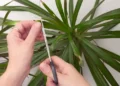
I don’t automatically cut off the entire leaf when I see a brown tip. If most of the leaf is healthy, I can simply trim away the damaged section with clean scissors.
I make the cut neatly, following the natural shape of the leaf.
The damaged section won’t turn green again, but trimming it can improve the overall appearance while I work out what caused the problem.
How Do I Encourage My Peace Lily to Flower?
Those beautiful white blooms are one of the main reasons I love Peace Lilies.
If mine isn’t flowering, I first look at its light.
A plant can survive in a dim corner but may not have enough energy to produce flowers. Moving it somewhere with brighter indirect light can sometimes make a noticeable difference.
I also make sure I’m not overwatering, underwatering or overfertilizing.
And there is another possibility: the plant may simply need time.
Not every Peace Lily flowers constantly, and indoor conditions vary throughout the year. I try not to become obsessed with forcing flowers. Healthy foliage is a good sign in its own right.
Pruning a Peace Lily
Pruning is wonderfully straightforward.
If a leaf has turned completely yellow or brown, I remove it by cutting the stem close to the base of the plant with clean, sharp scissors.
I also remove spent flowers once they have faded.
There’s no need to aggressively prune a healthy Peace Lily. I prefer to remove individual damaged or dying parts while leaving healthy leaves alone.
This keeps the plant looking tidy and allows it to concentrate its resources on healthy growth.
Repotting Your Peace Lily
Eventually, a Peace Lily may outgrow its container.
I know it’s time to consider repotting when the plant becomes very root-bound, dries out unusually quickly or appears to have outgrown its current pot.
I don’t rush to move it into a huge container, though.
A pot that’s only slightly larger than the existing one is usually more sensible. An enormous pot can hold a lot of unused compost, which may remain wet for too long after watering.
When repotting, I use a good-quality, free-draining houseplant potting mix and make sure the new container has drainage holes.
I handle the roots gently and avoid unnecessarily disturbing them.
Can I Propagate a Peace Lily?
Peace Lilies are generally propagated by division rather than by taking traditional stem cuttings.
When a mature plant has developed several clumps, I can sometimes separate the plant carefully into smaller sections, making sure each division has roots and healthy growth.
I then pot the divisions separately.
I think this is a lovely way to rejuvenate a crowded plant while creating new Peace Lilies to keep elsewhere in the home or give to friends.
Common Peace Lily Problems
Over time, I’ve learned that most Peace Lily problems can be traced back to a relatively small number of issues.
Drooping Leaves
First, I check the soil.
If it is dry, the plant may simply need water. If it’s already saturated, I don’t automatically water it again.
Yellow Leaves
I look at the watering routine, drainage and overall growing conditions. A single old yellow leaf isn’t necessarily concerning.
Brown Leaf Tips
I consider humidity, watering consistency, fertilizer and water quality.
No Flowers
I check the light first. Too little light can mean healthy-looking foliage but fewer flowers.
Wilting Despite Wet Soil
This is a situation where I become particularly cautious. A plant with waterlogged soil can develop root problems, which can interfere with its ability to take up water properly.
A Simple Peace Lily Care Routine
I’ve found that Peace Lily care doesn’t have to be complicated.
My basic routine is:
Check the soil before watering.
Water thoroughly when the plant needs it.
Make sure excess water can drain away.
Provide bright, indirect light.
Keep the plant away from cold draughts.
Avoid placing it directly beside a radiator.
Provide reasonable humidity.
Wipe dusty leaves occasionally.
Remove yellow or dead foliage.
Feed lightly during active growth if needed.
Repot when the plant becomes genuinely root-bound.
That’s really the heart of it.
One Important Safety Note
There is one thing I wouldn’t overlook if you have children or pets at home.
Peace Lilies contain calcium oxalate crystals and can cause irritation if chewed or swallowed. For that reason, I keep mine somewhere that curious children and pets can’t get to it.
It’s a beautiful houseplant, but it’s not one I would encourage anyone to nibble!
FAQs
Peace Lilies are wonderfully rewarding houseplants, but they can sometimes be a little dramatic! If yours is suddenly drooping, developing brown tips or refusing to flower, you’re certainly not alone. Here are some of the questions I hear most often about caring for Spathiphyllum Peace Lilies.
1. How often should I water my Peace Lily?
I don’t follow a strict watering schedule because the plant’s needs change with the season, temperature, light and humidity. Instead, I check the compost regularly. When the surface has started to dry out, I check the soil and water thoroughly if needed.
I always make sure excess water can drain away rather than allowing the roots to sit in soggy compost.
2. Why is my Peace Lily drooping?
A drooping Peace Lily is often thirsty, and this is one of the plant’s most obvious ways of telling me it needs attention.
I check the soil first. If it feels dry, I give the plant a thorough watering and usually see it perk up again.
However, drooping can also happen when the roots are struggling because the soil is excessively wet. If the compost is already soggy, I don’t automatically add more water.
3. How much sunlight does a Peace Lily need?
Peace Lilies prefer bright, indirect light. I find that a position near a window where the plant gets plenty of daylight but isn’t exposed to harsh direct sunshine works well.
They can tolerate lower light, but very dim conditions may reduce growth and flowering.
4. Can Peace Lilies grow in low light?
Yes, but there’s an important distinction between surviving and thriving.
A Peace Lily can tolerate relatively low-light conditions, which makes it a popular houseplant for rooms that aren’t particularly sunny. However, I find mine performs better with bright, filtered or indirect light.
If flowering is a priority, I pay particular attention to providing adequate light.
5. Why are my Peace Lily leaves turning yellow?
Yellow leaves can have several causes. I first consider watering, especially if several leaves are turning yellow at the same time.
Overwatering and poor drainage can cause problems, but an occasional yellowing older leaf can simply be part of the plant’s natural growth cycle.
I also check the plant’s light, temperature and general condition before making any major changes.
6. Why are the tips of my Peace Lily leaves turning brown?
Brown tips can be caused by several things, including dry indoor air, inconsistent watering, mineral buildup in the soil or excessive fertilizer.
I look at the overall growing conditions rather than assuming there is one particular cause.
If my home is very dry, I increase humidity where practical. I also make sure I’m not overfertilizing and that the plant is being watered consistently.
7. How do I make my Peace Lily flower?
Light is one of the first things I check when my Peace Lily isn’t flowering.
Although Peace Lilies can tolerate lower light, they generally need suitable light to produce flowers. I move mine to a brighter location with indirect light rather than putting it directly into strong sunshine.
Good watering, appropriate temperatures and general plant health also matter.
8. Does a Peace Lily need direct sunlight?
Not usually. In fact, I avoid strong direct sunlight because it can scorch those beautiful leaves.
Bright, indirect light is generally a better choice. If sunlight is particularly intense through a window, I use a sheer curtain or move the plant farther away from the glass.
9. Do Peace Lilies like humidity?
Yes. Peace Lilies originate from tropical environments and generally appreciate higher humidity.
I find they can benefit from being placed in a naturally humid room, grouped with other plants or kept near a humidifier.
This can be especially useful during winter when indoor heating makes the air much drier.
10. Should I mist my Peace Lily?
You can mist the foliage, but I don’t rely on misting as the main way of increasing humidity.
Misting only provides temporary moisture, while a humidifier or naturally humid environment can provide more consistent conditions.
I also avoid leaving the foliage constantly wet.
11. What temperature does a Peace Lily need?
Peace Lilies prefer warm indoor conditions and don’t appreciate cold draughts or sudden temperature changes.
I keep mine away from chilly windows, exterior doors and very cold areas. At the same time, I avoid placing it directly next to a radiator or heater because hot, dry air can stress the foliage.
12. Should I fertilize my Peace Lily?
I generally use fertilizer sparingly.
During active growth, a balanced houseplant fertilizer used according to the manufacturer’s instructions can provide useful nutrients.
I don’t think more fertilizer means a healthier plant. Too much can lead to salt buildup and potentially damage the roots.
13. When should I repot my Peace Lily?
I consider repotting when the plant has become noticeably root-bound, dries out unusually quickly or has clearly outgrown its container.
I don’t automatically move a Peace Lily into a huge pot. I prefer a container that’s only moderately larger than its current one and has good drainage.
14. What type of soil does a Peace Lily need?
I use a good-quality, well-draining houseplant potting mix.
The important thing for me is finding a balance between moisture retention and drainage. Peace Lilies like moisture, but their roots shouldn’t remain submerged in constantly wet compost.
15. Why isn’t my Peace Lily growing?
If growth has slowed, I look at the basics first: light, watering, temperature, humidity and nutrients.
Low light is a common thing to consider. Seasonal changes can also naturally slow growth, particularly during the cooler and darker months.
Rather than immediately feeding the plant more, I make sure the growing conditions are suitable first.
16. Can I cut the brown leaves off my Peace Lily?
Absolutely. I regularly remove leaves that are completely dead or badly damaged.
I use clean, sharp scissors and cut the leaf stem close to the base of the plant.
If only the tip is brown, I can trim away the damaged section while leaving the healthy green portion intact.
17. How do I clean Peace Lily leaves?
I like to gently wipe the large leaves with a clean, damp cloth.
This removes dust and helps the foliage look much healthier and shinier. It’s also a great opportunity to inspect the leaves for pests or other problems.
I avoid harsh cleaning products or anything that could damage the leaf surface.
18. Can I propagate a Peace Lily?
Yes. Peace Lilies are usually propagated by division rather than traditional cuttings.
When a mature plant has developed several sections or clumps, I can carefully divide it, ensuring that each section has roots and healthy growth.
The divisions can then be planted separately.
19. Are Peace Lilies toxic to pets?
Yes. Peace Lilies contain insoluble calcium oxalate crystals, which can cause irritation if chewed or swallowed.
Because of this, I keep Peace Lilies somewhere inaccessible to pets and young children. If a pet or child has chewed or swallowed part of the plant, it’s sensible to seek appropriate professional medical or veterinary advice.
20. How long do Peace Lilies live?
With suitable care, Peace Lilies can live for many years indoors.
Their lifespan depends on factors such as growing conditions, watering, light, temperature, pests and general care.
I find that consistent, relatively simple care is much more useful than constantly changing the plant’s environment.
21. Can a Peace Lily live in a bathroom?
It can be a great choice for a bathroom if there is enough natural light.
Bathrooms can provide the humidity Peace Lilies enjoy, but I wouldn’t put one in a completely dark bathroom and expect it to thrive.
A bright bathroom with indirect natural light can make an excellent home for one.
22. Why are my Peace Lily flowers turning green?
This can be completely normal.
What we commonly call Peace Lily flowers are actually specialized leaves called spathes. As they mature and age, they can naturally change from white to green.
So if an otherwise healthy Peace Lily develops green spathes, I don’t immediately assume something is wrong.
23. How do I know if my Peace Lily is overwatered?
I look for clues such as persistently wet compost, yellowing leaves, wilting despite wet soil and a generally declining appearance.
The key is to look at the soil rather than watering automatically whenever the plant droops.
A pot with drainage holes is particularly important because it allows excess water to escape.
24. Can I revive a drooping Peace Lily?
Often, yes — particularly if the cause is simple underwatering.
I check the compost. If it’s dry, I water the plant thoroughly and allow the excess to drain away.
If the soil is already very wet, I don’t water again. Instead, I investigate drainage and the possibility of root problems.
The sooner I identify the cause, the better the chance of getting the plant back to looking healthy.
25. Are Peace Lilies easy to care for?
I’d say yes, provided I understand their basic preferences.
They like bright, indirect light, consistent moisture, good drainage, warmth and reasonable humidity.
They’re also quite expressive plants. When they need water, they often let me know by dramatically drooping!
Once I get into a routine of checking the soil and paying attention to the leaves, Peace Lily care becomes pleasantly straightforward.
My Final Peace Lily Care Tips
I think Peace Lilies are wonderful plants for anyone who wants plenty of greenery without needing an enormous amount of gardening experience.
What I like most is that they tend to communicate with me. When they need water, they can droop dramatically. When the leaves look dusty, I can see it. When they’re happy, fresh green growth and those lovely white flowers are a pretty good indication that I’m doing something right.
The trick, in my experience, is not to fuss over them too much.
I give my Spathiphyllum plenty of indirect light, keep an eye on the soil, avoid leaving it sitting in water and pay attention to humidity and temperature. I don’t drown it with fertilizer or constantly move it from one place to another.
Once I understand what my Peace Lily likes, caring for it becomes remarkably easy.
And honestly, that’s one of the things I love about it. A healthy Peace Lily can bring a beautiful splash of tropical greenery into the home, and with a little consistent care, it can stay looking lush and happy for years.