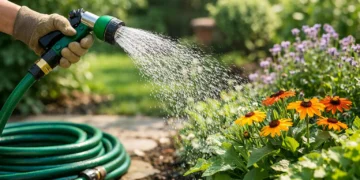
One of the most important tools you’ll need is a reliable garden hose, when you’re in the process of revamping your garden.
A good garden hose makes watering your plants and cleaning your outdoor space a piece of cake.
There are lots of options to choose from in the garden hose market and finding the right one for your yard is basically a daunting task.
This article will take you through all the things you should consider when selecting the perfect hose for your needs.
Types of Garden Hoses
Before we dive into other factors to consider when choosing a garden hose, let’s first discuss the different types of garden hoses available.
There are three main types of garden hoses: rubber, vinyl, and reinforced hoses.
Rubber Hoses
Rubber hoses are considered a cut above the rest.
Their ability to withstand heavy-duty use is basically unmatched – they don’t kink or twist easily, making them perfect for tasks that require a lot of force, such as heavy watering.
From freezing temperatures to baking summers, rubber hoses won’t crack or break, and can handle the pressure of the job. However, they can be heavy, and come with a price tag that’s higher than other options.
Vinyl Hoses
Vinyl is a popular option because it is so lightweight and budget-friendly, when choosing a hose for gardening.
They’re simple to move around and store, but they are more prone to getting kinked and twisted.
Compared to rubber hoses, vinyl hoses don’t hold up too well to very high or very low temperatures either.
Reinforced Hoses
If you’re looking for a hose that can handle heavy-duty tasks, a reinforced hose is the way to go, and its combination of rubber and vinyl is basically the best of both worlds.
Coming in a kink-resistant design, these hoses can withstand extreme temperatures and will outlast regular rubber or vinyl hoses.
However, reinforced hoses tend to be pricier than those made of just rubber or vinyl.
Length and Diameter
It’s best to consider the length and the diameter of the hose that will meet your needs, when shopping for a garden hose.
The length will determine how far you can reach, and garden hoses can range from 25 to 100 feet or more. Larger yards, require longer hoses and a smaller yard means you’ll be fine with a shorter hose.
The diameter is essentially what governs the amount of water that can flow through the hose, and most garden hoses are ½ inch or ¾ inch in diameter.
A larger diameter hose will provide a higher volume of water that is perfect for jobs that require lots of water, such as watering large gardens and washing cars.
Material and Durability
When deciding on a garden hose, take a closer look at the material and durability, because these are the things that will determine how well the hose will withstand the demands of being in the garden.
Coming from a material that’s prone to kinking, twisting and cracking will not be pleasant, nor will being in a location that’s either extremely hot or intensely exposed to UV rays.
Flexibility and Maneuverability
Flexibility and maneuverability are essential when it comes to using a garden hose. Look for hoses that are flexible and easy to handle, especially if you have to navigate around obstacles in your yard. Hoses with swivel connectors and ergonomic grips can make watering tasks more comfortable and efficient.
Additional Features
Take a closer look at the features, some hoses come with adjustable nozzles, spray patterns and extensions that will let you tailor the way you water your garden, when choosing a garden hose.
Choosing a garden hose that has leak-proof fittings and anti-kink systems is a great way to add to the hose’s lifespan.
Maintenance and Storage
For your garden hose, regular maintenance is key to extending its lifespan, and proper storage is one of the most crucial aspects of it.
Every time you’re done using the hose, drain it to prevent freezing in cold temperatures. And when you’re not in use, it’s best to store the hose in a shaded area or a hose reel to protect it from the intense heat of UV radiation and therefore slow down the degradation of its rubber components.
Summary
There are a lot of factors to consider, including the type, length, diameter, material and any additional features, when choosing a garden hose for your yard.
Coming from a practical standpoint, you’ll want to choose a hose that is durable, flexible and easy to use, and you’ll want to balance out these needs with your budget.
The right garden hose will help you keep your yard looking its best all year round.