A cactus can look perfectly content for weeks after a drink, which makes watering feel like a guessing game.
The best answer to how often to water cactus is not a fixed calendar schedule. It is a simple habit: water deeply only after the potting mix has dried out completely.
That approach protects cacti from their biggest houseplant threat – soggy roots.
These tough plants are built to store water in their stems, pads, or rounded bodies. A little patience gives them the dry spell they expect and helps them stay firm, colorful, and ready to grow.
See also: Your Ultimate Low-Maintenance Cacti Collection >
How Often to Water Cactus Indoors
Most indoor cacti need water about every two to four weeks during spring and summer. In fall and winter, when light levels and growth slow down, many need water only every four to six weeks. Some may need even less.
Those ranges are a starting point, not a rule. A small cactus in a warm, sunny terracotta pot may dry out in 10 to 14 days. A larger plant in a glazed pot near a cool window may stay damp for more than a month. Rather than watering every Sunday, check the soil first.
Push a wooden chopstick, skewer, or your finger a few inches into the pot.
If the mix feels cool, clings to the tool, or looks darker below the surface, wait.
If it is dry all the way down, it is time to water. For a large or prickly cactus, a moisture meter can make checking easier, although your eyes and a wooden skewer are often just as reliable.
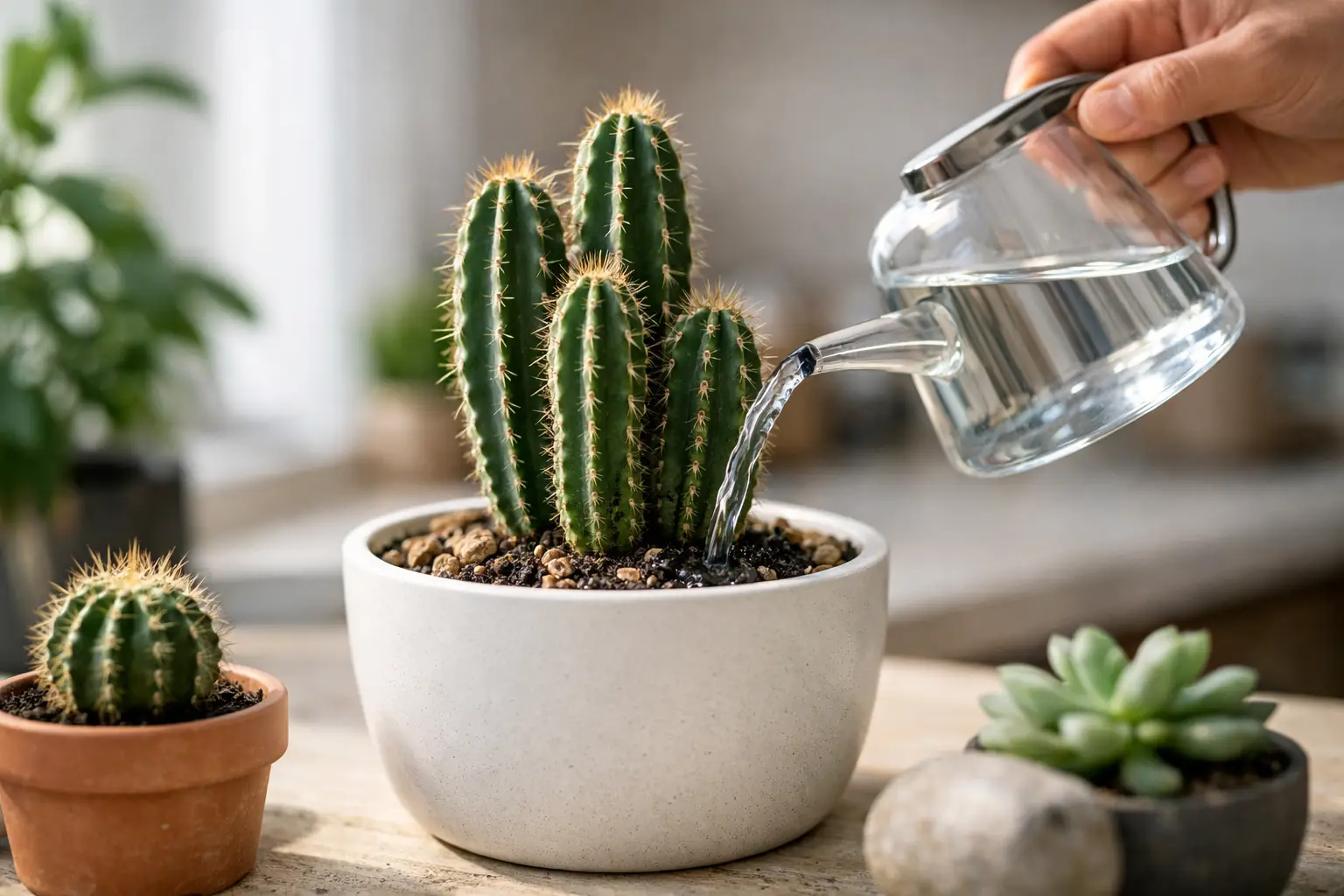
When the soil is dry, water slowly until it runs from the drainage hole. Let the pot drain fully, then empty the saucer.
A small sip every few days keeps the root zone unevenly moist, while a thorough soak followed by dryness better matches the cactus’s natural rhythm.
The Three Things That Change Your Watering Schedule
Light is the biggest factor. A cactus growing in a bright south- or west-facing window uses water faster than one several feet from a window or under weak winter light.
More light can mean more frequent watering, but it never means watering before the soil has dried.
Temperature matters, too. Warm rooms, summer heat, and dry indoor air speed evaporation. Cool rooms slow it down.
If your cactus spends winter in a chilly, dim spot, it may use almost no water. Watering it on its summer schedule at that point can quickly lead to rot.
Finally, consider the container and soil. Unglazed terracotta is porous, so it lets moisture evaporate through the pot walls. Plastic, ceramic, and glazed containers retain moisture longer.
A gritty cactus mix with pumice, perlite, or coarse sand dries much faster than regular potting soil.
The goal is not to make soil dry out overnight, but to make sure extra water can escape instead of lingering around the roots.
Outdoor Cacti Need a Different Look
Outdoor cacti are still drought-tolerant, but their watering needs vary widely by climate and planting location.
A cactus planted in hot, dry ground may need a deep watering every two to three weeks during a long summer dry spell, especially in its first year. Once established, many landscape cacti can rely largely on rainfall.
Cacti in patio containers usually need more attention than those planted in the ground. Container soil heats up and dries quickly, particularly in full sun.
Check pots every week in summer, then water only when the mix is fully dry. During a heat wave, a small container may dry much faster than usual.
Rain is not always enough to skip watering. A brief shower may wet only the top inch of soil, while a heavy storm can saturate a container for days.
Check beneath the surface before making a decision. If your area has humid summers or frequent rain, excellent drainage becomes even more important than a precise watering schedule.
Read the Plant Before Reaching for the Watering Can
Cacti communicate their water needs, although the signs can be subtle. A healthy cactus should generally feel firm and look plump for its type.
Slight wrinkling or a little softness after the soil has been dry for a while can signal thirst, especially in round cacti and holiday cacti.
Overwatering signs deserve faster attention.
Watch for these changes:
- A base that feels soft, mushy, or darkened
- Yellowing that begins near the bottom of the plant
- A cactus that suddenly leans because its roots are failing
- Soil that stays wet for longer than expected or smells sour
A thirsty cactus can usually recover with one careful watering.
A rotting cactus is more urgent. If the base is soft, remove the plant from its pot, brush away wet soil, and inspect the roots.
Trim off black, brown, or mushy sections with clean scissors. Let any cut areas dry and callus for several days before repotting in fresh, dry, fast-draining cactus mix.
Do not water immediately after repotting.
Winter Watering: Less Is Usually Better
Many popular desert cacti rest in winter. They may stop growing, especially if they receive fewer daylight hours and cooler temperatures. This is the season when enthusiastic watering causes the most trouble.
For a dormant indoor cactus, wait until the soil is completely dry, then give only enough water to prevent severe shriveling.
A light monthly check is usually more useful than a monthly watering. If the plant is in a cool garage, basement, or enclosed porch for winter, it may need almost no water at all.
Holiday cacti, including Christmas and Thanksgiving cactus, are the exception that catches many gardeners off guard.
They are forest cacti rather than desert cacti, and they prefer a little more consistent moisture. Let the top inch or two of their mix dry, rather than waiting for the entire pot to become bone-dry.
They still need drainage, but their watering rhythm is closer to a typical houseplant than to a barrel cactus.
Make Watering Easier With the Right Setup
A good container solves half the problem. Always choose a pot with at least one drainage hole. Decorative pots without drainage can work only if you keep the cactus in a nursery pot and remove it for watering and draining. Planting directly into a sealed container leaves no margin for error.
Use a cactus or succulent potting mix, then improve it further if it seems dense or slow to dry. Adding pumice or perlite creates air pockets that roots appreciate.
Avoid using garden soil indoors, as it compacts easily and can stay wet too long.
Water at the soil line instead of misting the plant. Misting does not hydrate roots deeply, and water that sits in dense spines, creases, or the crown can invite disease.
Room-temperature tap water is fine for most cacti. If your water is heavily softened, use filtered, rain, or distilled water instead, since softened water can leave behind salts.
A cactus does not reward constant attention. It rewards the right kind of attention: bright light, gritty soil, a drainage hole, and a careful soak after a real dry spell.
Let checking the soil become a small, satisfying part of your routine, and your cactus can stay a striking, low-fuss piece of your green retreat for years.