A bonsai tree can look calm, sculptural, and almost effortless on a windowsill or patio. The care behind that look is not effortless, but it is wonderfully learnable.
Once you understand how to care for bonsai trees as living trees rather than tiny decorations, the routine becomes much less mysterious.
The biggest beginner mistake is treating every bonsai alike.
A juniper, ficus, Chinese elm, and Japanese maple may all be trained as bonsai, but they need different light, winter conditions, and watering rhythms.
Start by learning your tree’s species, then use the basic habits below to help it thrive for years.
See also: Top 10 Bonsai Trees for Beginners and Enthusiasts >
Start With the Right Bonsai Location
Bonsai is a growing method, not a single type of plant. That distinction matters because the right location depends on where the original tree would naturally grow.
Many popular bonsai, including juniper, pine, maple, and elm, are outdoor trees. They need real sunlight, moving air, changing temperatures, and a winter rest period.
Keeping one of these trees indoors year-round usually leads to weak growth, browning foliage, and eventual decline, even if it initially looks fine.
Tropical and subtropical bonsai, such as ficus, jade, and Hawaiian umbrella tree, can grow indoors in much of the United States.
Give them the brightest available spot, ideally near a south- or west-facing window. If natural light is limited, a grow light can make a dramatic difference, especially through winter.
Outdoor bonsai generally appreciate morning sun and protection from harsh afternoon heat in very warm climates.
A small pot heats and dries faster than garden soil, so a sunny July afternoon can be more intense for a bonsai than for a full-size tree planted in the yard.
Watch how your chosen spot behaves over several days before settling your tree there.
Give indoor bonsai enough light
A dim room is one of the fastest ways to disappoint an indoor bonsai. Place the tree close to a bright window rather than across the room from one.
Rotate it a quarter turn every week or two so growth stays balanced, but avoid moving it constantly from place to place. Plants adapt best to steady conditions.
If leaves become larger, stems stretch toward the window, or growth looks sparse, the tree likely needs more light.
A grow light placed at the proper distance can help keep an indoor bonsai compact and leafy without relying on a perfect sunny window.
How to Care for Bonsai Trees With Smart Watering
Bonsai watering is less about following a calendar and more about paying attention. Because bonsai pots hold a small amount of fast-draining soil, the root ball can go from pleasantly moist to dry surprisingly quickly. At the same time, watering every day automatically can leave roots sitting too wet.
Check the soil daily, especially in warm weather. Press a finger lightly into the surface.
When the top layer feels just starting to dry, water thoroughly.
Pour water slowly over the soil until it runs freely from the drainage holes, wait a moment, then water again. This helps moisten the entire root ball instead of only the surface.
Never let a bonsai sit in a saucer full of water. Drainage is essential because roots need oxygen as well as moisture.
A humidity tray with pebbles and a little water beneath the pot can help indoor tropical bonsai in dry homes, but the bottom of the pot should rest above the waterline.
Your watering schedule will change with the season.
A tree in active summer growth may need water daily or even twice daily during a heat wave. In winter, a slow-growing tree may need much less.
Soil mix, pot size, wind, sun, humidity, and tree species all affect the answer, which is why checking the soil beats relying on a rigid schedule.
Read the tree before it becomes stressed
Crisp, dry leaf edges and very light, shrinking soil often point to underwatering. Yellowing leaves, a sour smell from the soil, or constantly wet potting mix may suggest overwatering or poor drainage.
Leaf drop can happen for either reason, so inspect the soil before reaching for the watering can.
Use Fast-Draining Soil and a Pot With Holes
Regular houseplant potting soil is usually too dense for bonsai. It holds moisture for too long and can compact around the roots, making it difficult for air and water to move through the pot.
Bonsai soil is typically a gritty, open mix that drains quickly while still holding enough moisture for roots to use.
A beginner-friendly bonsai mix often includes particles such as akadama, pumice, lava rock, pine bark, or similar materials.
The best blend varies by species and climate. In a hot, dry region, a mix with a little more moisture retention can be helpful. In a humid area, a grittier mix may prevent soggy roots.
Every bonsai pot needs drainage holes. A beautiful container without drainage may work as a decorative outer cover, but it should not be the tree’s actual growing pot.
Feed a Small Tree Regularly, Not Heavily
Bonsai have limited soil and cannot draw on the deep nutrient reserves available to trees in the ground.
During the active growing season, use a balanced fertilizer at a gentle rate. Many gardeners feed every two to four weeks in spring and summer, following the product directions for dilution.
Do not fertilize a badly stressed, severely dry, or recently repotted tree until it has had time to recover.
Also adjust for the species. Tropical bonsai kept actively growing indoors may need light feeding through winter, while outdoor deciduous trees generally need little or none while dormant.
The goal is steady health, not a sudden burst of oversized growth. Too much fertilizer can burn roots and create long, coarse shoots that are harder to shape.
Prune for Health First, Then Shape
Pruning is where bonsai becomes especially rewarding. A few thoughtful cuts can reveal the trunk, improve the silhouette, and make a tree look older and more balanced.
But pruning is also a source of stress, so avoid removing large amounts of foliage from a weak or newly acquired tree.
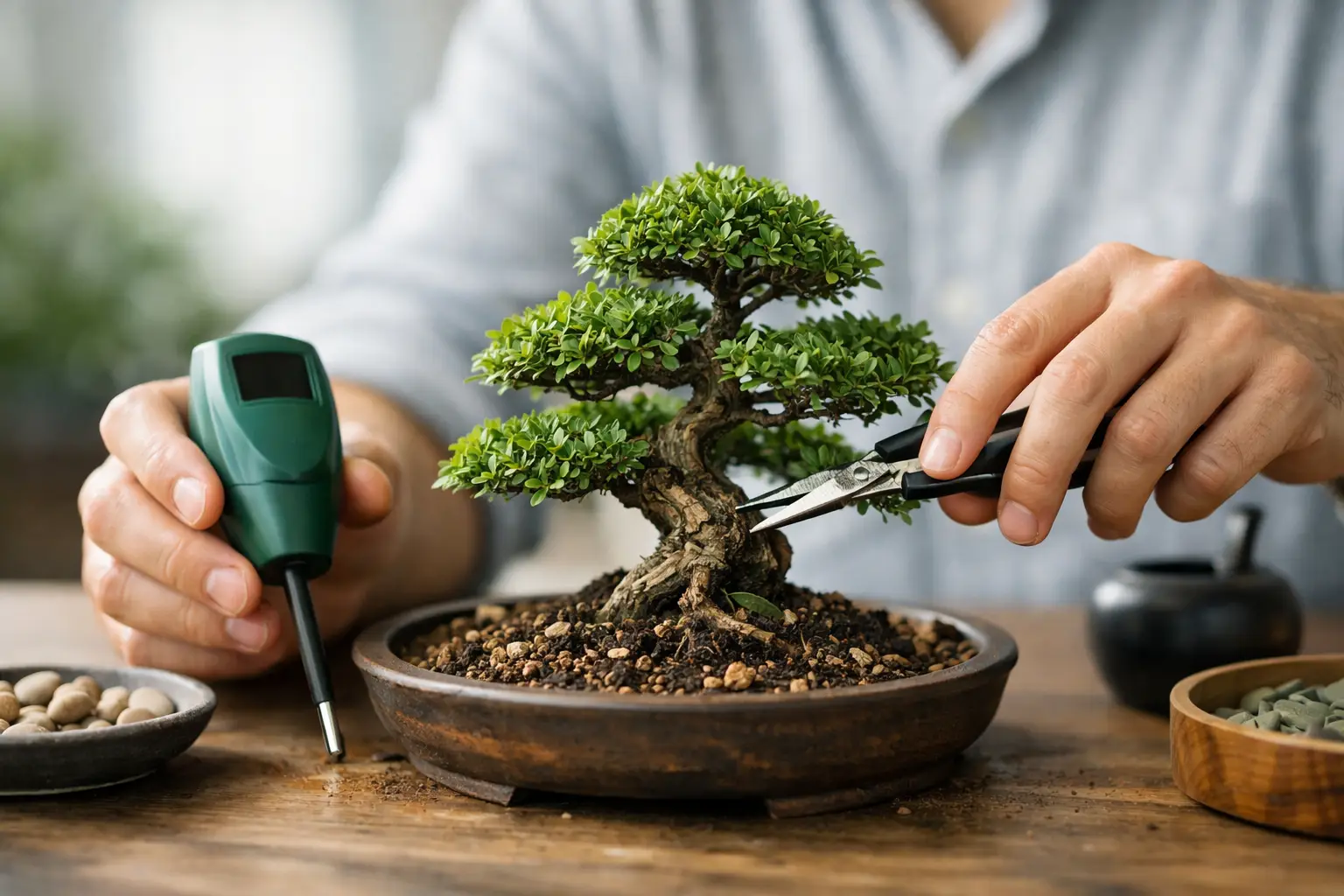
Start with maintenance pruning. Trim shoots that extend beyond the outline you want, remove dead twigs, and take out branches that cross, grow straight downward, or clutter the center of the tree.
Make clean cuts with sharp, sanitized pruners.
For beginners, it is wise to make one cut, step back, and look again. The empty space between branches is part of bonsai design.
A tree with every gap filled can look heavy and crowded, while a thoughtfully pruned tree feels open and natural.
Be careful with wiring
Wire can guide a flexible branch into a graceful new position, but it is not required for every bonsai. If you use it, choose appropriate bonsai wire and wrap it securely without crushing the bark.
Check wired branches often. As a branch thickens, wire can bite into the bark and leave lasting scars.
Major styling, root work, and heavy pruning should not all happen at once. Spread big jobs across seasons so your bonsai has energy to recover.
Repot on the Tree’s Schedule
Bonsai need repotting periodically because roots eventually fill the pot and soil particles break down.
Young, fast-growing trees may need repotting every one to two years, while older, established bonsai can often wait three to five years. The timing depends on the species, soil, growth rate, and root health.
For most temperate outdoor bonsai, early spring just before vigorous growth begins is a reliable repotting window.
Tropical bonsai are usually repotted during warm, active growth. When repotting, remove only a reasonable portion of the roots, refresh the soil, and protect the tree from harsh sun and wind while it settles in.
A tree does not need repotting simply because the calendar says so. If water still moves through the soil well and the roots are not circling densely around the pot, waiting may be the kinder choice.
Adjust Care Through the Seasons
Outdoor bonsai need winter protection, but not necessarily indoor warmth. Hardy trees still need their natural dormancy.
In cold regions, protect the pot and roots from repeated freeze-thaw cycles by placing the bonsai in a sheltered spot, setting the pot on the ground, or insulating it with mulch after the tree has gone dormant. Keep the soil from drying out completely.
During summer, protect bonsai from extreme heat, drying wind, and missed waterings. Shade cloth or afternoon shade can be helpful when temperatures climb.
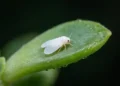
Check for pests while you water, including aphids, scale, spider mites, and mealybugs. Catching a small problem early is far easier than treating a stressed tree later.
A bonsai will teach you its preferences if you slow down and observe it.
Notice when the soil dries, where the strongest new growth appears, and how the foliage responds to the season.
That daily attention is not a chore – it is the part of bonsai care that turns a small tree into a lasting garden companion.