The Chinese Money Plant is one of the few houseplants that modern plant lovers really love. This cute plant has become a favorite among both new and experienced indoor gardeners because of its fun coin-shaped leaves, architectural shape, and reputation for being easy to share with friends.
The Chinese Money Plant, or Pilea peperomioides, is more than just pretty. It’s also flexible, tough, and surprisingly rewarding to grow once you know what it needs.
This complete guide will cover everything you need to know to help your Chinese Money Plant grow well, including where it came from, the best conditions for it to grow in, how to water it, how to propagate it, how to fix problems, and design ideas for your home.
This guide will help you grow with confidence, whether you’ve just brought one home or are trying to save a sickly plant.
Say hello to the Chinese Money Plant
The Chinese Money Plant comes from the mountains in southern China, where it grows in bright but filtered light among rocks and the edges of forests.
During the middle of the 20th century, it became popular in Europe, especially in Scandinavian homes, where gardeners happily gave away baby plants to friends and neighbors. That tradition of sharing is still a big part of the plant’s charm today.
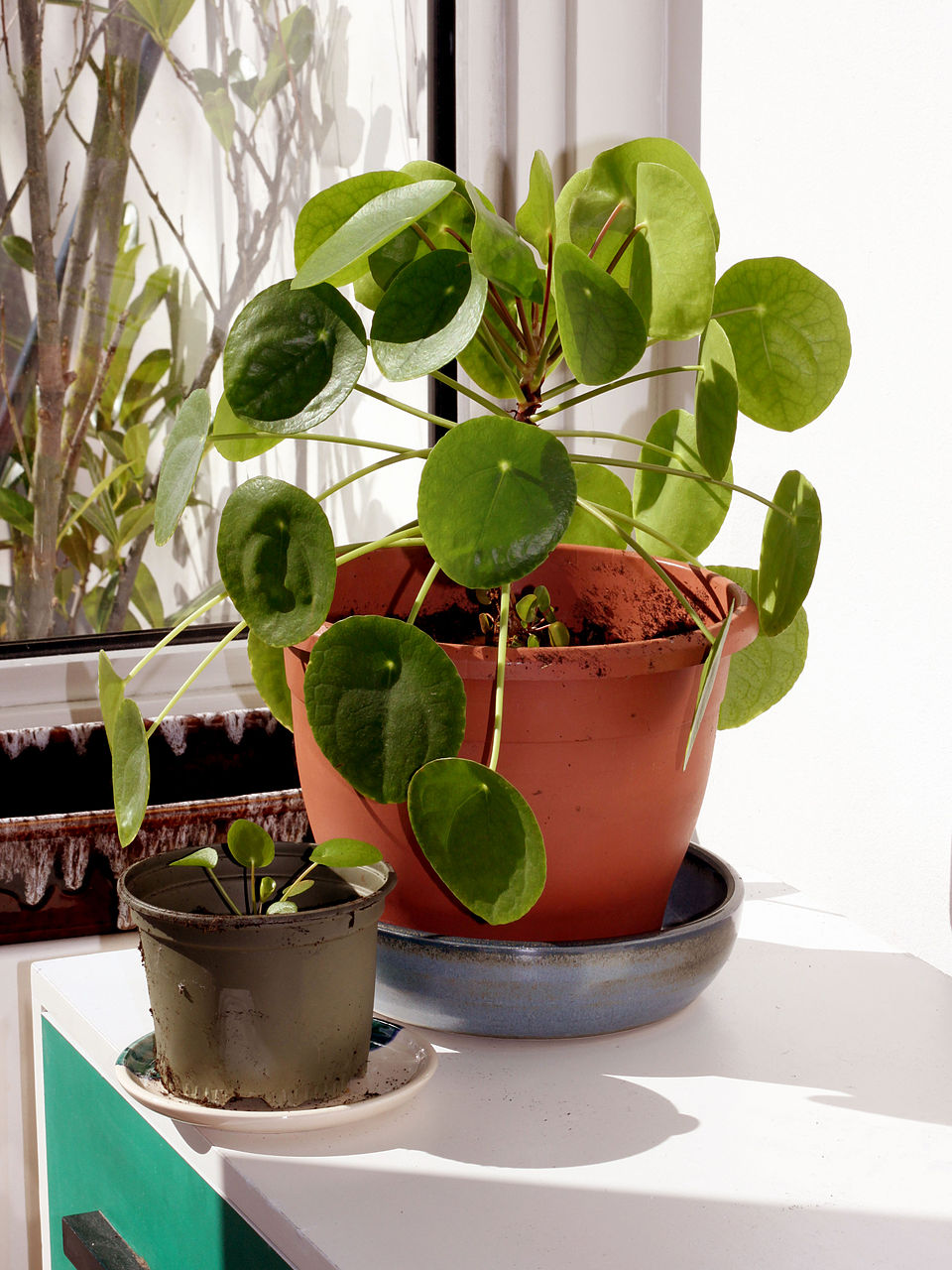
The round leaves on thin stems give it a sculptural look that works well in both simple rooms and rooms with lots of plants.
As plants get older, they grow a trunk-like central stem.
Younger plants, on the other hand, grow small clusters of leaves. They make small offshoots, which are often called “pups,” over time. These can be separated and grown into new plants.
The Chinese Money Plant looks fragile, but it is surprisingly forgiving. It can live for a long time and keep growing if it gets the right amount of light, water, and nutrients.
Picking the Right Place for your Chinese Money Plant
One of the most important things for keeping your Chinese Money Plant healthy is light. It grows best in bright shade in its natural habitat, and it does well in similar conditions indoors.
The best lighting conditions are:
- Indirect light that is bright is best.
- A spot near a window that faces east or west usually works well.
- Stay away from the harsh midday sun, which can burn leaves.
When there isn’t enough light, growth becomes stretched and bent.
If your plant is leaning strongly in one direction, it’s trying to get to the light. To keep the pot’s shape even and balanced, turn it about once a week. Regular rotation helps leaves grow evenly and stops them from looking lopsided.
Moving the plant a little closer to a window or adding a soft grow light can help keep it growing compactly during the darker months of winter.
Things You Need for Soil and Potting
Chinese Money Plants like soil that drains well. Mixes that are heavy and hold water can hurt the roots, especially if the plant is watered a lot.
A good potting mix should:
- Easily drain
- Keep some moisture without getting too wet
- Let air flow around the roots
Mixing standard houseplant compost with perlite or coarse sand is a simple way to get good results. A lot of gardeners also add a little orchid bark to help with drainage and structure.
The pot you choose is just as important as the soil. Always choose a container that has holes for drainage so that water doesn’t build up at the bottom. Terracotta pots are great because they let extra water evaporate through the sides, which helps keep plants from getting too much water.
You usually need to repot every one to two years, or when the roots start to circle the inside of the container. Only move up one pot size at a time; pots that are too big can hold too much water and slow down growth.
How to Water Your Chinese Money Plant the Right Way
Chinese Money Plant owners most often have problems with overwatering. These plants like soil that dries out a little bit between waterings instead of staying wet all the time.
How to water:
- Check the top 2–3 cm (about an inch) of soil and water it when it feels dry.
- Water well, and let the extra water drain out the bottom.
- Take the saucer out so that the roots don’t sit in water.
- During the winter, when growth slows down, water less often.
If the leaves start to droop a little, it could mean the plant needs water, but it could also mean that you are watering it too much. The best thing to do is to check the soil before watering.
Being consistent is more important than sticking to a strict schedule. Some homes are warmer or drier than others.
In the summer, the plant may need to be watered every 7 to 10 days, but in the winter, it may not need to be watered as often.
Learn more about the art of watering your plants >
Giving Food for Healthy Growth
Chinese Money Plants don’t need a lot of food, but they do benefit from being fertilized every now and then during the growing season. Feeding helps make leaves bigger, stems stronger, and more pups.
Here are some tips for fertilizing:
- Use a balanced liquid fertilizer for houseplants that has been cut in half.
- Use every four to six weeks in the spring and summer.
- Don’t fertilize in the winter when plants aren’t growing fast.
- Never fertilize dry soil; first, water it lightly to protect the roots.
If you give your plants too much food, the salt in the soil can build up and turn the edges of the leaves brown. If this happens, you can flush the soil with clean water to get rid of extra fertilizer.
Encouraging full, compact growth
One of the best things about the Chinese Money Plant is how neat and structured it looks. Without enough light or regular rotation, though, the plant can grow tall and thin.
To make it look fuller:
- Give off bright, indirect light.
- Every week, turn the plant.
- Take off the older yellowing leaves to make room for new growth.
- Every now and then, repot to give the soil and nutrients a boost.
As the plant grows, the lower leaves fall off on their own, leaving a thin trunk. Some gardeners like how this tree looks, while others like how it looks fuller when pups grow around the base.
Sharing the Wealth: Propagation of Your Chinese Money Plant
One of the best things about growing a Chinese Money Plant is sharing it. These plants often make small offsets that can be taken off and grown on their own.
How to make more pups:
- Wait until the puppy is at least 5 to 8 cm (2 to 3 inches) tall.
- Carefully take away the dirt around the base to show the connecting root.
- Cut it off from the parent plant with clean scissors or a knife.
- Put the pup in soil that is damp and drains well.
Until the new plant is established, keep it in bright, indirect light and soil that is only slightly moist.
Some pups come straight from the root system, and others grow from the main stem. You can grow both kinds of plants. The new plant should start making new leaves in a few weeks.
The Chinese Money Plant is often called the “friendship plant” because it’s so easy to grow and share.
Changes in Care for the Seasons
Even when kept inside, indoor plants go through small changes with the seasons. Making small changes to care throughout the year can make a big difference.
In the spring and summer:
- As growth picks up, water a little more.
- Start feeding once a month.
- Keep an eye out for faster pup production.
Fall and winter:
- Water less often.
- Stop using fertilizer.
- If the days get shorter, move the plant to a place with more light.
During the winter, keeping the plant away from cold drafts or radiators also helps keep the conditions for growth stable.
How to Fix Common Problems
Even tough plants can have problems now and then. Most of the time, it’s easy to fix problems with Chinese Money Plants once you know what they are.
Yellow leaves: This is often a sign that you are watering too much. Make sure the soil can dry out more between waterings and that it drains well.
Brown edges on leaves can happen if you don’t water them consistently, if fertilizer builds up, or if the air is very dry. Change how often you water and flush the soil every so often.
Leggy, stretched growth means there isn’t enough light. Change the plant’s location to a brighter one and move it around often.
Leaves that droop can be a sign of too much or too little water. Before watering, always check how wet the soil is.
Slow growth: This is usually caused by not enough light or nutrients during the growing season. It can help to give them more light and food every now and then.
Most problems can be fixed quickly with careful observation, which lets the plant heal and start growing again.
How to Style the Chinese Money Plant Indoors
The Chinese Money Plant is a popular choice for home decor because its leaves are graphic and it is small. It works perfectly in many different places.
Ideas for decorating:
- Put a single mature plant in a simple ceramic pot to draw attention to it.
- Put together a few different sizes to make a modern, layered display.
- For a different texture, mix with trailing plants.
- Place it on shelves, desks, or plant stands so that its round leaves are at eye level.
The plant is good for both small apartments and bigger indoor gardens because it stays in a neat shape. Many gardeners like to put propagated pups in pots that match each other to make the whole house look put together.
Long-Term Care and Living a Long Time
Chinese Money Plants can live for a long time and become very interesting over time if you take care of them. As plants get older, their stems get thicker, their leaves get bigger, and they make more pups.
To keep mature plants looking good:
- Change the soil every year or two.
- Cut off old leaves as they get older.
- If you need to, use a small stake to hold up tall stems.
- Keep the lighting the same to stop leaning.
To get new branches to grow near the base of a very tall plant, some gardeners cut off the top of the plant. This can make older plants look new again and give them a fuller shape.
What Gardeners Love About the Chinese Money Plant
The Chinese Money Plant is still popular because it has a unique set of traits. It stands out visually but is easy to take care of. It grows well indoors, spreads easily, and goes with almost any style of decor.
Most importantly, it has a tradition of sharing, with each puppy representing a chance to give a living gift.
It gives beginners a helpful start on how to take care of houseplants. It gives experienced gardeners a plant that grows and changes over time. And for people who like to decorate with plants, its sculptural leaves add a fun, modern touch to indoor spaces.
FAQs
1. How often should I give a Chinese Money Plant water?
When the top 2–3 cm (about 1 inch) of soil feels dry, water it. This means about once a week in the spring and summer and less often in the winter for most homes. Make sure that extra water always drains away.
2. What kind of light does it need?
Chinese Money Plants do best in bright, indirect light. Leggy growth happens when there isn’t enough light, and strong direct sunlight can burn the leaves. Windows that face east or west usually work best.
3. What is making the leaves on my plant turn yellow?
Overwatering or bad drainage are the most common causes of yellow leaves. Make sure the pot has drainage holes and let the soil dry out a little bit between waterings.
4. Why is my plant leaning or not growing evenly?
Plants bend toward the light. To make sure the plant grows evenly, turn the pot every week so that all sides get the same amount of light.
5. How do I grow a Chinese Money Plant?
Wait until the small offshoots, or “pups,” are a few inches tall. Then, carefully separate them from the parent plant and put them in new soil. Keep it slightly wet until it is set.
6. How big do plants Chinese Money Plants get?
Mature plants usually grow 20 to 30 cm (8 to 12 inches) tall when they are inside, but older plants can get taller with a woody central stem.
7. What kind of dirt is best?
Use houseplant soil that drains well, and if possible, mix it with perlite or coarse sand to keep water from pooling around the roots.
8. Do Chinese Money Plants need to be fertilized?
Yes, but not too much. In the spring and summer, give them a diluted balanced liquid fertilizer every 4 to 6 weeks. Stop feeding them in the winter.
9. What makes the leaves curl?
Leaves that curl up may mean that the plant isn’t getting enough water, the humidity is too low, or the environment has changed suddenly. First, check the moisture level in the soil and make sure the conditions inside are stable.
10. Why isn’t my plant making babies?
Not having enough light, the plant being too young, or not getting enough nutrients are all common reasons why pups don’t grow. During the growing season, bright indirect light and feeding every now and then help the pups grow.
Final Thoughts
To make the Chinese Money Plant thrive, you don’t need to use complicated methods.
You just need to know how to keep things in balance: give it bright but gentle light, soil that drains well but still holds some moisture, water it regularly without overdoing it, and feed it every now and then when it’s growing.
When those needs are met, the plant grows thick leaves and makes new babies all the time that are ready to share.
The Chinese Money Plant is still one of the most popular houseplants in modern gardening, whether it’s displayed alone or as part of a large indoor collection. Your plant can thrive for years if you are patient, watch it, and give it a little care every day. It will grow in size and in the small joy it brings to your home every day.