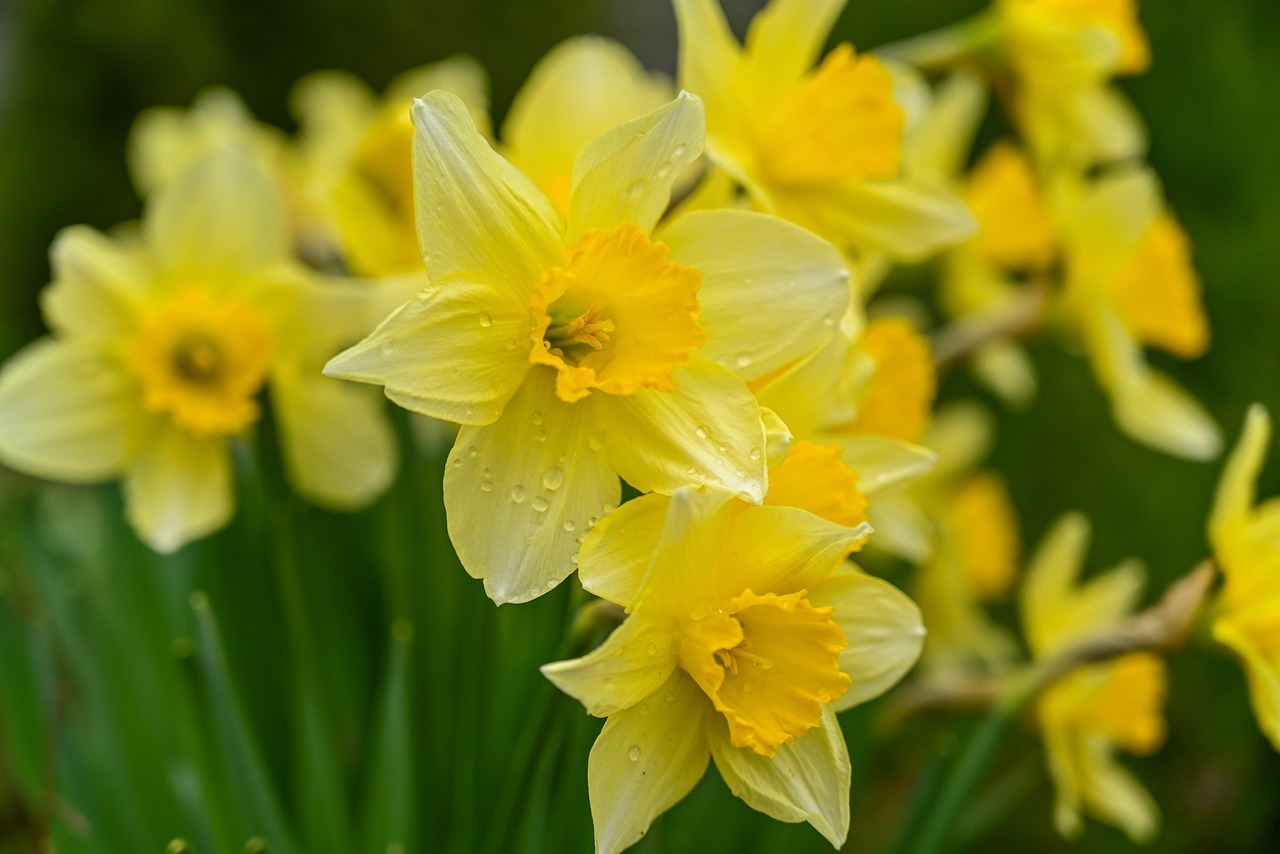
The sun-kissed arrival of daffodils is truly a treat, when the last grip of winter is gone and spring is in full swing.
These vibrant flowers are renowned for their breathtaking golden petals and trumpet-shaped blooms and signify the arrival of a new spring and, in general, the idea of renewal and rebirth.
This article, delves into the lifecycle, significance and cultivation of the beautiful daffodils.
The Lifecycle of Daffodils
Daffodils, scientifically known as Narcissus, are bulbous perennials that complete a fascinating lifecycle.
Understanding the stages of growing daffodils can deepen our appreciation for their beauty:
1. Dormancy
As daffodils go into their dormant state in the fall they are essentially saving up the energy and nutrients they need to burst forth in the spring.
Proper planting during this phase is crucial for growing daffodils into healthy blooms in the spring.
2. Sprouting
Around February or March, the daffodil bulbs can sense the changing seasons, when the winter finally starts to recede.
The cold starts to wear off, and the bulbs, still under the ground, begin to stir. They sprout green shoots, that thrust through the soil and are a clear sign that new life is about to be unleashed.
3. Blooming
Daffodils are hitting their stride and putting on a stunning display, their trumpet-shaped flowers blazing in shades of yellow, white and orange that have been building up for weeks, when mid to late March rolls around.
Coming out of the winter blues, the sight of these flowers sends our spirits soaring and lets us know that the warmer months are on their way.
4. Maturity and Seed Production
They enter a growth phase where they continue to develop their seeds, but most gardeners choose to multiply them by dividing the bulbs, when daffodils have finished flowering.
This period of time is usually until the end of May and gives the foliage time to photosynthesize and prepare for the next year.
5. Dormancy Again
The leaves will soon turn yellow, wilt and die back, returning to a dormant state, they’ll stay there until the autumn, when the flowering period of your bulbs is over.
Proper care during this phase is essential for the bulbs’ vitality for the following spring.
The Significance of Daffodils
When it comes to the symbolic meaning of daffodils you’ll see that they have a lot of significance across different cultures.
In the spring, they’re often seen as a beacon of hope and new beginnings, which is why they’re featured in Easter celebrations.
Well-known in Chinese culture as a good omen, daffodils, in many cultures, are associated with a sense of pure joy, and have been the traditional harbinger of Easter, they are indeed.
The use of daffodil compounds in traditional medicine is a reminder of the plant’s medicinal properties.
Since they only need a little bit of heat, daffodils make great indicators of climate changes.
Their blossoming times can tell us lots about what’s going on in the environment.
Popular Daffodil Species
When looking at the daffodil family, one of the most well-known species is the wild daffodil or Lent lily, Narcissus pseudonarcissus, which originates from Europe, boasting pale yellow petals and a deeper golden trumpet that carpet the meadows and woodlands of early spring, and because it is so hardy and adaptable, serves as the base for lots of modern hybrids.
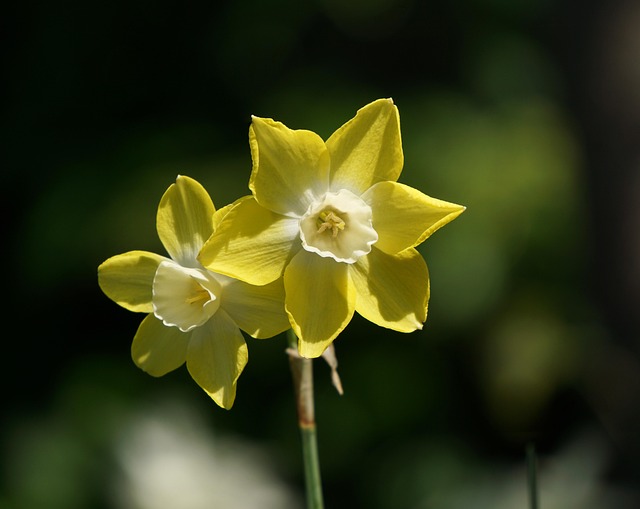
Coming from a different part of the world, Narcissus poeticus, the poet’s daffodil is a strikingly beautiful flower with white petals and a compact, flattened yellow corona that has a crimson edge.
Its heady perfume made it famous in ancient literature, and it is one of the oldest daffodils to be cultivated. Its effortless elegance has made it highly sought after for gardens and perfumes.
One of the smaller species, Narcissus jonquilla, or the jonquil, is a favourite for its clusters of small, intensely fragrant flowers and has a preference for warm, sunny environments. The name “jonquil” is often used to refer to all daffodils, but in botanical terms it specifically refers to this species.
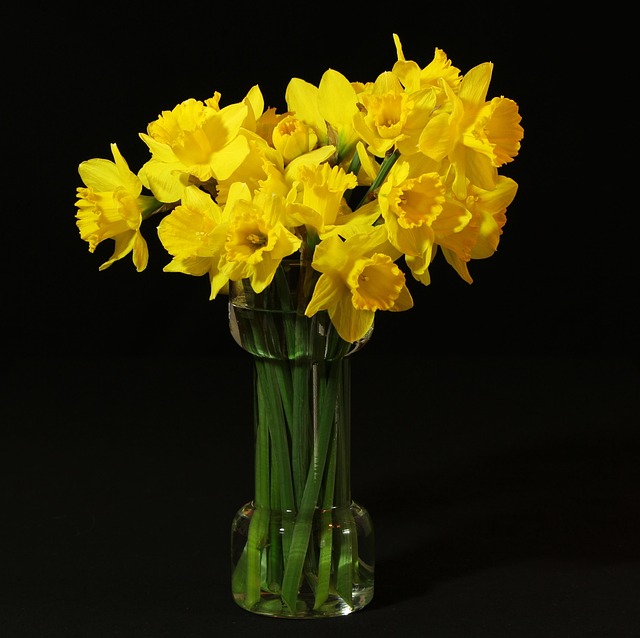
The hoop petticoat daffodil, Narcissus bulbocodium is one of the most unusual species, with a flared, skirt-like trumpet and extremely narrow, grass-like petals that are usually a brilliant yellow. The flower is minuscule and perfect for rock gardens and mass plantings, although its delicate appearance does not mean it is not hardy.
Looking at the world of daffodils, one can’t help but notice the beauty of the Narcissus cyclamineus, a native to northwestern Spain and Portugal, and its uniquely cyclamen-like reflexed petals. Coming into bloom very early in the year, its golden-yellow flowers have given rise to many elegant and hybridised cultivars.
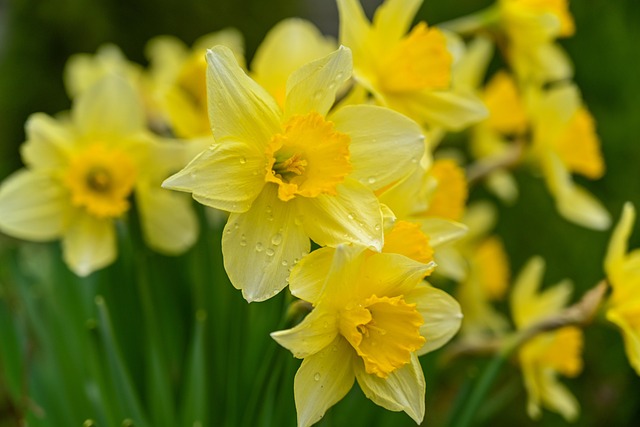
In stark contrast to the N. cyclamineus, the Narcissus triandrus, or the angel’s tears daffodil, presents delicate, and down-facing flowers which seem to be hanging from the stem,.
Normally, three of these flowers sit atop a stem, and are usually creamy white or pale yellow in hue. It requires plenty of moisture and is a popular pick for cottage gardens because of its soft romantic appeal.
The tazetta daffodils, which include the N. tazetta, are known for being intensely fragrant, and are commonly grown in warmer regions, producing clusters of small, cup-shaped flowers, typically white with yellow centres.
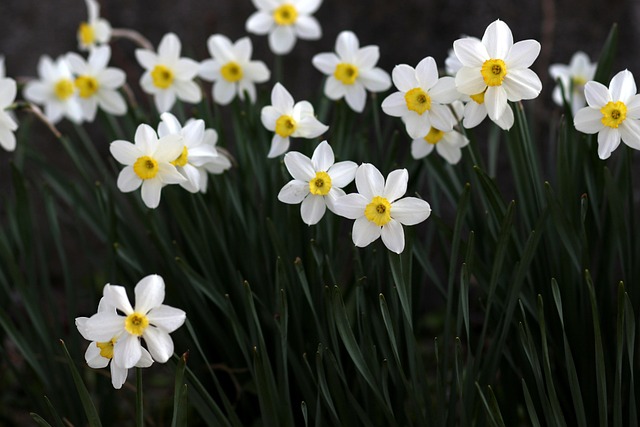
Paperwhites, a well-known indoor-forced daffodil, fall into this category. Since they don’t need a period of chilling, Paperwhites are the go-to choice for winter flowering in indoor settings.
Each one of these species brings something new to the table.
Size, perfume, flower shape, and color, all combine to give the world of daffodils its remarkable range.
From the golden trumpets of wild daffodils, to the dainty grace of angel’s tears and the heavenly, sweet fragrance of tazettas.
These plants captivate gardeners and people who love flowers all over the world, and with thousands of hybrids that have been developed from the base species, the daffodil is a genus that has and will continue to inspire, and has something for every garden, no matter its size, and every heart, no matter its preferences.
- Best Starter Pack: Mixed Daffodils (25 Bulbs) by Willard & May >
- Best Value Mixed: 100 mixed daffodil bulbs by Willard & May >
How to Grow Daffodils
Growing daffodils can be a rewarding experience, whether you are an experienced gardener or a novice.
Here are essential tips to ensure a successful bloom:
1. Choosing the Right Bulbs
It’s crucial to know exactly what you’re looking for to achieve the most vibrant blooms and successful growth, when choosing daffodil bulbs.
Daffodils, or Narcissus, come in a variety of species and cultivars, from classic yellow trumpet varieties to multi-colored and double-flowered types.
So you can find the ones that best match your aesthetic preferences.
When it comes to quality, plump, firm bulbs, free from signs of mold and rot, as well as bulges or blemishes.
The best daffodil bulbs are also completely free from soft spots or any unusual odors, and have an even, healthily colored skin.
Coming in 12-14 centimeters or larger around are the bulbs you’ll want if you want the best results.
Well-known that autumn is the best time to buy daffodil bulbs, and planting them then gives them the chance to establish themselves before the winter.
Buying bulbs that are fresh off the shelf will give you the best outcome, because it eliminates the risk of old or stale bulbs that won’t be nearly so healthy, and also leads to beautiful spring blooms.
Last but not least, check out the guarantee on the bulbs you’re buying. Purchasing from a reputable nursery or garden centre that gives guarantees gives you peace of mind, and will increase the chances of getting the beautiful flowers you want.
2. Ideal Planting Conditions
As planting daffodils you’ll want to make sure they’re getting good drainage and lots of sunlight.
Coming from a bulbous root system, they prefer well-drained soil and won’t do well in wet conditions.
They’re hardy in USDA zones 3 through 8.
It’s a good idea to give them a boost by mixing in some compost or well-rotted manure when planting to give them the best possible start.
3. Planting Timing
Fall is the best time, and it’s ideal to plant them two to four weeks before the ground freezes, when planting daffodil bulbs. This gives the bulbs time to send down their roots before the winter sets in.
4. Watering and Caring
Give them a good soaking with water, when the bulbs have been planted.
Come back to check on them during the growing period, make sure the soil stays moist but don’t drown them, overwatering will cause the bulbs to rot.
Once the flowers have finished blooming, let the foliage die back on its own, feeding the bulbs for the following year.
5. Fertilizing and Mulching
Fertilizing and mulching are two key practices to achieve healthy growth and vibrant blooms, when planting daffodil bulbs in the fall.
A well-balanced, slow-release fertilizer is just what the doctor ordered, and since daffodils love phosphorus, you’ll want to pick a fertilizer that’s high in that department.
Granular fertilizers are usually a good option and need to be applied according to the instructions on the package.
- Best small liquid fertilizer: Complete Liquid Daffodil Bulb Plant Food, 8 oz (250mL)
- Best small bag: Organic Bulb-Tone 3-5-3 Natural & Organic Fertilizer and Plant Food
Mulching around your daffodil bulbs will also help lock in moisture, stabilise soil temperature and kill weeds, and organic mulches like shredded bark or pine needles are fantastic for the job.
They’ll break down over time, adding nutrients to the soil and are easy to apply. A layer of around 2-3 inches is about right, and make sure it doesn’t come into contact with the bulbs themselves.
Common Questions About Daffodils
1. When Do Daffodils Bloom?
Daffodils typically bloom in early to mid-spring, generally from March to April, depending on the climate and specific variety.
2. How Long Do Daffodils Last?
When daffodils are in bloom, their bright yellow and white flowers can be a harbinger of spring, and they last about six to eight weeks, which is determined by how much heat, water, and nutrients the roots get, coming from the soil and the weather.
Well-known for withstanding cooler temperatures, daffodils can remain fresh for a bit longer, whereas hot temperatures will cut their lifespan.
After they’ve finished flowering, you should let the leaves sit until they turn yellow and start to wilt, as this is what gives the bulb the chance to recharge for the next year’s show, and if you cut the leaves back too soon you might be sacrificing next year’s blooms.
If you look after your daffodils they’ll come back year after year, throwing up their cheerful flowers and adding to the beauty of your garden and surrounding landscape.
3. Are Daffodils Toxic to Pets?
Yes, all parts of the daffodil plant are toxic to pets, particularly to dogs and cats. Ingesting daffodils can cause symptoms ranging from mild gastrointestinal distress to severe reactions.
4. Can Daffodils Grow in Containers?
Absolutely!
Pots are a great way to bring the sunshine to your patio, balcony, or smaller garden. Since they can grow so well in containers, daffodils are an excellent choice.
If you do decide to plant daffodils in pots, choose a container that has drainage holes, fill it with well-draining potting soil, bury the bulbs about three times their height, roughly 6 to 8 inches deep, and provide your daffodils with the sunlight they need.
Make sure to water them properly and let the bulbs dry out after the blooming period, because this is what will give them the best chance of healthy growth for next year.
Summary
The vibrant golden daffodils are often a symbol of spring and as the first flowers to bloom, kick start our desire for growth and renewal, when thinking of the new year.
Coming from their enchanting appearance to their life cycle and cultural meanings and being ridiculously easy to care for, daffodils are the go-to flowers for gardeners and those who love the great outdoors.
Well-known as a reminder of the cycle of life and the promise of new beginnings, the blooming of daffodils is something to look forward to every year.
If you’re aiming to grow your own daffodils, a clear set of care instructions will guarantee a stunning display of these beautiful flowers, bringing a smile to the face of anyone who sees them.