
Plant diseases — every gardener’s nightmare! It’s a situation many gardeners know all too well, one day your plants are thriving, lush and full of promise, and the next they’re wilting, and the sight of spots spreading gives you a sinking feeling in the pit of your stomach.
We’ve all been there, powerless, holding a watering can and a fading garden with a desolate outlook. We at Good Garden Ideas know the anguish that can occur when years of hard work are undone by the silent invaders, be it blights, rusts, mildews, or mysterious wilts. Plant diseases come and go, and are capable of turning a thriving garden into a desperate mess.
Well-known in the horticultural community for its capacity to devastate the environment, destroy food supplies, and eliminate species, plant diseases can be contained by the help of expert knowledge, which is what Good Garden Ideas will provide you with, as we delve into some of the most ruinous plant diseases.
Understanding, recognising, and improving your soil health along with boosting your plants’ resistance is your best weapons in the fight back against these garden foes.
Plant diseases won’t just ruin a single garden, they could be taking away the ecological balance of a particular area, affecting the whole food chain, and possibly even snuffing out a whole species, if left unchecked.
What is a plant disease?
When a pathogen invades a plant, it can cause the plant to wilt, turn yellow, develop spots or rot, and in the end, kill it, and a combination of bad soil drainage, overcrowding and too much water doesn’t help either.
Well-known types of plant diseases are aplenty, and most of them can be grouped into a handful of categories, some of which are quite common in gardens.
Common Plant Diseases
Some common plant diseases include:
Powdery mildew
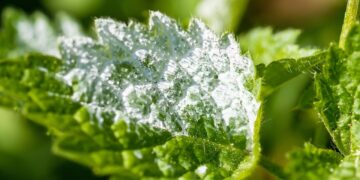
When it comes to garden diseases, one of the most well-known is powdery mildew. It looks like a white or grey powdery coating on leaves, stems and flowers and grows best in warm, dry areas where there isn’t much movement of the air.
Symptoms of powdery mildew include a white coating on the leaves, deformed growth and yellowing of the leaves.
Well-known prevention and treatment methods include providing more space between your plants, so they have better air circulation and not watering from above.
Early morning is also the best time to water so that the plants have time to dry before nightfall. Remove any infected leaves and use sulfur-based fungicides or organic ones if necessary.
Downy Mildew
In the case of downy mildew, it’s not actually a true fungus, but rather a disease that thrives in cool, damp conditions. It’s characterised by its yellow or pale green spots on the upper surface of the leaves that are covered in a fuzzy greyish mould.
Coming in on the heels of a rain shower or high humidity, the first signs of downy mildew are discolored patches, leaf curling and stunted growth.
Well-known methods to combat the disease include watering at the base of the plants to keep the foliage dry, sorting out the drainage and airflow around your plants and promptly removing any infected leaves.
Leaf Spot Diseases
Looking at a plant that’s been hit by leaf spots, you’ll notice small brown, black or yellow circles on the leaves that could get larger over time, ultimately causing the leaf to drop.
Characteristically, these discolored spots have a yellow border.
Well-known measures to prevent and treat leaf spots include not watering from above and drying off the leaves of your plants, clearing up any dead or fallen leaves and debris, and hitting the problem with a fungicide or natural alternatives such as neem oil.
Blight
Blight is a fast-spreading disease that can devastate plants in days. It’s infamous for the Irish Potato Famine, but blight can also ravage tomatoes, peppers, and ornamentals, when a blight hits.
Brown or black lesions on the leaves and stems of the plant are the tell-tale signs of blight, and the collapse of the plant follows.
Rotating crops seasonally is the first step in reducing the buildup of the disease. Remove infected plants right away, taking them away from your garden and not composting them. Disease resistant plant varieties are another way to outsmart the blight.
Rust
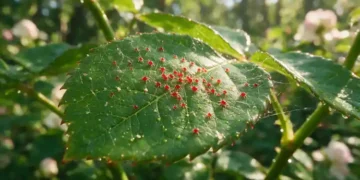
If you’re looking for signs of rust disease in your plants you’ll notice orange, brown or rust-coloured blisters on the underside of the leaves, and these can eventually kill off your plants and even stop them from flowering.
Discoloured patches and powdery pustules are the other way to tell if your plants have got rust.
Well-known ways to stop the spread of rust include cutting off and getting rid of infected leaves, giving the plant lots of space and air and not overwatering. If the infection persists, you can use sulfur or copper-based fungicides.
Root Rot
For plant death, root rot is one of the leading causes, and it’s caused by soilborne fungi such as Pythium and Phytophthora.
Coming into plants via the soil, these fungi love to have their way with plants that have been overwatered and have terrible drainage.
Well-known symptoms of root rot include wilting, brown or mushy roots and stunted growth.
To stop root rot, use well-draining soil and containers with drainage holes. Make sure not to waterlog your soil, and remove any plants that are already suffering from the condition and replant them in brand-new soil.
Botrytis
Botrytis is more likely to affect your plants in humid conditions, and appears as a fuzzy grey growth on the affected areas.
The symptoms of this disease include soft, brown spots covered in grey fuzz, and in order to stop the disease spreading it’s essential to use low humidity and air out the area. Prune out any affected parts of the plant and dispose of them, and avoid overcrowding and damp conditions.
Tomato yellow leaf curl virus
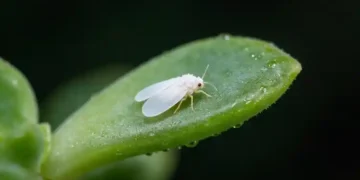
Tomato Yellow Leaf Curl Virus (TYLCV) is a real game-changer. Spread by whiteflies, it causes leaves to curl, turn yellow, and severely diminishes the yield of the plant.
Coming in the tropics and subtropics, it can annihilate entire crops if not caught in the early stages of infection. Recognising the symptoms of TYLCV is crucial to saving healthy, thriving tomato plants.
Impact on Agriculture
In terms of plant diseases, they are not only a concern for home gardeners, but also pose a major threat to global food supplies, economies, and the livelihoods of farmers.
Every year, plant pathogens destroy a significant portion of the world’s crops, decimating yield and threatening farmers’ very survival, and plant disease is one of our most pressing concerns to the sustainability of farming, the viability of our food sources.
Plant diseases can be caused by anything from fungi to bacteria, viruses, nematodes and even some parasitic plants, that get inside the plant tissue and disrupt its growth and work ethic, sometimes killing off whole crops, and any number of unfavourable weather conditions.
High humidity, poor soil health and scorching temperatures can really throw a wrench in the works of a disease outbreak.
According to the Food and Agriculture Organisation, up to 40% of global crop loss is due to plant diseases.
Major Agricultural Diseases and Their Effects
When discussing devastating potato and tomato crops, Late Blight, caused by Phytophthora infestans, is a notorious killer. The disease spread rapidly in the 1840s in Ireland, and continues to haunt modern farmers. Within days, it can destroy the crops that feed the masses.
Wheat rust, with its Puccinia spp. Fungi, is among the oldest and most destructive crop diseases, spreading across millions of hectares of land, leaving reddish-brown pustules, and decaying plant parts in its wake. Modern wheat varieties have reduced in numbers, however new strains threaten crops by putting at perilous strain.
Diseases in wheat, rice and bananas can be lethal. Rice Blast caused by Magnaporthe oryzae is a serious threat as it, kills around 30% of rice crops. Coming at the plant through the wind, rain and any remaining contaminated soil, its assault on the rice plant starts from the leaves and goes right down to the panicles. Coming up with brand-new ways to combat it and breeding resistant varieties have been crucial, yet rice blast disease keeps coming back.
Banana Panama Disease, caused by the soil-borne fungus Fusarium oxysporum f. sp. Cubense, chokes the life out of banana plants by blocking their vascular systems. One of the most destructive strains, Tropical Race 4, has decimated entire plantations and continues to disperse through the soil, water and infected plants, shaking the global banana production.
Economic and Social Impacts
As for the financial impact of plant diseases, the picture can be stark, with the consequences going beyond a single year’s crop loss, and affecting farmers, as well as food supplies and economies.
Farmers often experience long-term economic stress due to higher quality produce which is difficult to be sold, more money being spent on fungicides or disease-resistant seeds and being unable to send their crops to international markets.
Small-scale farmers in developing countries who are already living on the edge, are in particular danger from a single outbreak, which can mean the difference between profit and poverty.
When plant diseases spread at a national level they can completely knock out the food chain and send prices soaring, take for instance, when banana yields drop off or wheat rust spreads, we run the risk of a serious global shortage which would cause a massive increase in costs. In severe cases these effects can go right through entire economies, cutting down jobs and threatening rural communities.
Environmental Consequences
Coming into the environmental mess left behind, our attempts to combat plant diseases all too often rely on nasty chemicals that can wipe out the good guys, contaminate our water supplies and ruin the balance of nature. Well-known problems are also encountered, where pathogens evolve resistance to the chemicals and strike back even harder.
Sustainable farming practices such as crop rotation, biological control and sorting out the soil are becoming more and more important, and these techniques not just keep disease at bay, they also shield biodiversity and long-term soil fertility.
Changing the type of crop grown in a field each season is a great way to break the life cycle of soil-borne diseases, and something that farmers use to their advantage.
Well-known methods such as early detection, using diagnostic tools and remote sensing, and Integrated Pest Management, which combines biological control, resistant varieties, and minimal chemical use, give us a more holistic, eco-friendly approach to fighting diseases.
When it comes to disease prevention and education we’re teaching farmers and communities about the ins and outs of crop health, safe chemical use, and monitoring, and equipping them with the know-how to act quickly and effectively in the event of a problem.
The Global Challenge Ahead
The threat of climate change is redefining the landscape of plant diseases, new patterns and changing temperatures and rainfall have increased the spread of existing diseases.
The best way to get ahead of the curve, is through investment in medical and agricultural research, global co-operation and sustainable practices.
Coming to terms with disease dynamics and working to produce more resilient crops will be key in protecting the world’s food supply, and at the same time saving the environment.
Plant diseases may be microscopic, but their results are devastating, and affect food supplies, jobs and entire ecosystems around the world, and yet, with clever farming, new ideas and community awareness we can knock out their potency.
Impact on Forestry
When discussing the world’s most vital ecosystems, forests are at the top of the list. They control the climate, house biodiversity, and supply timber, food and medicine. But, a nasty threat to their health and stability, plant diseases, have the capability to cut down massive numbers of trees, throw ecosystems off balance and destroy economies that count on the products of those forests.
Well-known fungal blights, as well as invasive diseases, are some of the most devastating of these diseases and can decimate tree populations, alter the delicate balance of ecosystems and wreck economies that rely on them for a living.
Plant diseases in forests are sparked by microscopic fungi, bacteria, viruses and other microorganisms that infect trees. These diseases can be spread by the wind, water, contaminated soil and even human activities. Once a disease is established, it can linger for years and is only discovered when the symptoms. Things like wilting, drooping branches or discoloured bark become extreme.
One of the biggest problems when it comes to forest diseases is the slow growth of the trees. Unlike crops that are grown for a year or two, trees can live for decades, and forest diseases don’t just hit one year, they cause cumulative damage over time. Other types of pathogens move rapidly and can clear out whole sections of forests.
Major Forest Diseases and Their Effects
In the history of European and North American forests you’ll find that Dutch Elm Disease, caused by the Ophiostoma fungus, has decimated millions of elm trees since the 1900s. Coming from elm bark beetles, the disease clogs up the tree’s ability to transport water, and as a result, causes the tree to wilt and die, changing the face of cities and native ecosystems.
Well-known in the US, Chestnut Blight, brought over from Asia in the early 1900s by the fungus Cryphonectria parasitica, almost wiped out the American chestnut which was once the backbone of the forest. The fungus causes cankers that completely encircle the stems, strangling the life out of the tree. Entire forests and the animals that call them home were drastically changed by the loss of the chestnut.
Sudden Oak Death, a disease caused by Phytophthora ramorum is affecting oaks, and also other hardwoods, sending them into a downward spiral with stem cankers, leaves that turn yellowish, and ultimately, death. It has ravaged parts of the United States and Europe and killed off millions of trees, raising the danger of massive fires as the deadwood builds up.
The Asian Pine Wilt Disease has been transmitted to Europe by pinewood nematodes and beetles, and makes pine trees turn brown, killing them off rapidly.
It’s caused a calamity in the Asian and European forests, greatly reducing the yield of timber and pushing some native pine species to the brink of extinction.
Ecological and Economic Impacts
Its impact is not limited to the trees, countless animals, insects and microorganisms lose their habitats, the soil is destabilized and starts to erode, when a disease decimates a forest. Coming economically, the forestry industry faces lower-quality timber, higher management expenses, and restrictions on international trade because of quarantine measures.
Communities who count on the forest for their income, hobbies or tourism suffer financial hardships over the long-term, like the case in California, where the sudden oak death has hurt both the timber trade and the regional tourism that relies on the visual appeal of the forest landscapes.
Managing Forest Diseases
With respect to preventing and managing plant diseases in forestry, watchfulness and teamwork are the keys to success.
Surveying for signs of disease, regular use of satellite imaging, are two ways we can stay on top of the situation.
Removing infected trees, sterilizing equipment, and taking away any contaminated material are also important sanitation measures, and quarantining affected areas and limiting the movement of timber can stop the spread of the disease.
We can also breed tree species that are resistant to disease, which will in the long run, make our forests more resilient to the threats of plant diseases.
Awareness of the problem, as well as what you can do to prevent the spread of the disease is crucial in public biosecurity, making sure that hikers, loggers, transporters don’t accidentally take the disease to a new area.
Well-known plant diseases in forestry have the ability to silently reshape the world’s woodlands, affecting not just ecosystems, economies and people’s lives, but their devastating impact will not be ignored.
Combining science, policy and forward-thinking management is all it takes to slow down and control the spread of these diseases, and in doing so, we can, secure our woodlands, now and in the years to come.
Impact on Landscapes
Looking at out over a beautiful garden, park or urban green space it’s hard not to notice the visual and ecological value that healthy landscapes bring to our surroundings. Well-known problems like plant diseases lurk beneath the surface of these oases, and are a danger to the very thing they’re meant to protect. Rapidly spreading, damaging plants, and disfiguring the aesthetic value of our green spaces.
Understanding how and why plant diseases affect landscapes, allows gardeners, landscapers and communities to safeguard their properties.
Plant diseases in landscaped areas are caused by fungi, bacteria and viruses and can affect anything from ornamental flowers to grasses and trees. We all know that those devastating offenders such as powdery mildew, rust, root rot and blight are a problem. Coming from the soil, through contaminated water or in the air, sometimes even spread by human beings, or attaching themselves to tools, boots and even household rubbish.
Unluckily, because these gardens are so different to their wild counterparts, they often bring together plants that don’t naturally belong together, and with that come the ideal conditions for these nasty pathogens to grow and multiply. Dense planting, overwatering, and inadequate drainage make the situation even worse.
Visible and Hidden Impacts
When a plant becomes diseased, it’s not just the visual appeal that suffers.
One of the first signs of the problem is the unsightly appearance of yellowing leaves, wilted flowers, and dead branches which can transform a once vibrant garden into a dull, lifeless space, in public spaces such as parks, resorts and university campuses a diseased garden is especially off-putting and cuts down on visitor satisfaction.
Diseases don’t just target the affected plants they send the whole ecosystem into disarray, and when a species that’s crucial to the system dies off, everything else that relies on it loses its home and food source.
A chilling example of this is the European ash dieback Hymenoscyphus fraxineus which has affected not only the ash trees, but also the hundreds of creatures that depend on them.
Coming into the financials, the upkeep of large landscapes is a costly business, and disease control measures add to the bill.
Brand-new trees or ornamental plants, fungicides and restoring damaged soil all take a toll on resources and manpower. Councils and homeowners’ associations are also faced with a massive rise in expenses due to recurring problems such as root rot and lawn diseases.
The liberal use of chemical treatments can have severe environmental effects, too.
The runoff from pesticides and fungicides pollutes nearby waterways, and excessive pruning or replanting throws the balance of the soil completely out of whack.
Prevention and Management
Preventing and managing plant diseases requires a proactive approach that includes the following strategies:
Plant Selection
You’ll want to choose disease-resistant varieties, and known disease-resistant options are a great place to start, when planting a garden or landscape. Visiting your local nursery or home improvement store and asking for advice on disease-resistant plants is also a good idea. Take into account the climate, soil conditions and the kind of pests you’re up against.
Cultural Practices
Looking at after your garden you should also think about the nutrients that your plants need and the pruning that may be necessary to keep them healthy.
Any plants that are in need of more water, will show it, and if any of them show signs of disease, you must get rid of the infected area, completely destroying it, so that the disease doesn’t spread to the rest of the garden.
Integrated Pest Management
In the case of controlling plant diseases, an integrated pest management (IPM) program is the way to go.
By combining cultural, biological and chemical methods in a well-orchestrated plan. Regular monitoring is key, check on your plants frequently and intervene at the first sign of infection, to stop the spread of the disease.
Chemical Control
Fungicides, bactericides and insecticides are the life savers, but should be brought out of the medicine cabinet only when the plant is at death’s door, when a plant is struggling with disease.
Rushing in with a chemical solution isn’t a cure-all, but it will kill off the disease that’s killing the plant, and you’ll need to do it right, following the label instructions. Coming to this stage means that all other measures have failed.
Global Efforts to Combat Plant Diseases
Well-known global bodies, such as the Food and Agriculture Organization and the International Plant Protection Convention, have been working together to stop the spread of plant diseases, mainly through the promotion of plant health, and eliminating invasive pests and diseases.
Research and Innovation
Scientifically speaking, researchers and scientists are continually looking into new and innovative ways to diagnose, manage and combat plant diseases, the help of the breakthroughs in areas like biotechnology, genomics, and crop protection make this work much easier.
Education and Outreach
Education and outreach programs, aimed at farmers, gardeners and landscapers, educate them to the importance of healthy plants and disease prevention.
Workshops, extension services and websites provide a wealth of information on spotting, controlling and halting the spread of plant diseases.
Environmental Sustainability
When tackling plant diseases we must also be sure to take the environmental impact into account. This means using integrated pest management, biocontrol methods and organic methods to preserve the natural ecosystem.
Summary
Evaluating the fight against plant diseases, we’re looking at a foe that will never truly be defeated. We’ll need to stay on our toes and think outside the box to succeed.
Coming to grips with the causes and consequences of plant disease, and implementing preventive measures is one of the best ways we can stay on top of the threat, and the battle for global food security is our top priority.