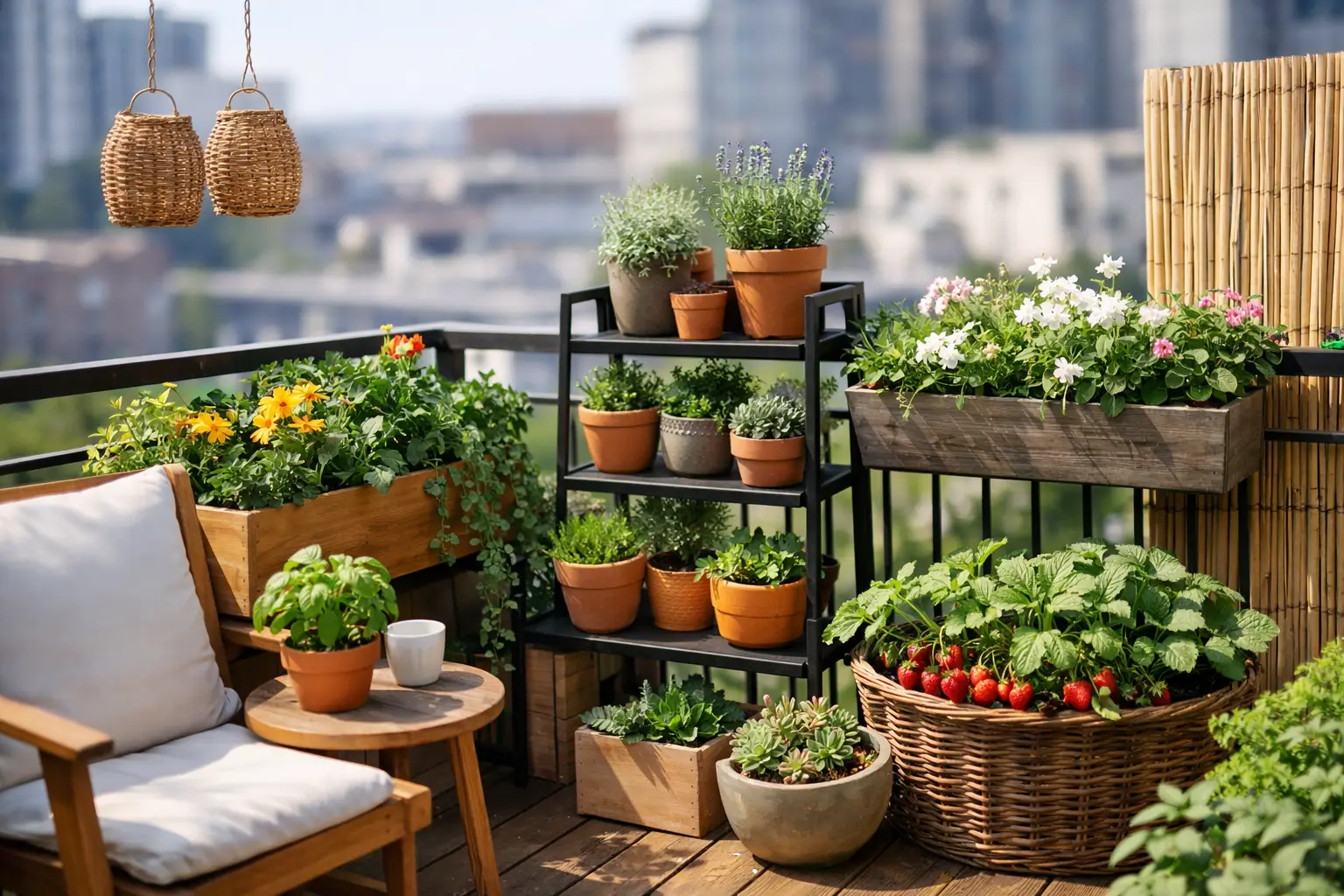
A balcony can grow far more than a few lonely pots of flowers. The best balcony garden examples make smart use of vertical space, match plants to the available sunlight, and leave enough room for you to enjoy your morning coffee.
Whether you rent a compact apartment or want to soften a bare upstairs deck, a small outdoor area can become a gorgeous, green retreat with a clear plan.
See also: Creative Ideas for Your Balcony Garden >
Start With Your Balcony’s Real Conditions
Before choosing a style, spend a day noticing what happens on your balcony. Is it bright from sunrise until noon, shaded by nearby buildings, or blasted by hot afternoon sun?
The answer matters more than the photo on a plant tag.
Tomatoes and basil need plenty of direct light, while ferns, coleus, and many leafy greens are happier with gentler conditions.
Also consider wind, weight limits, drainage, and access to water.
High balconies can be surprisingly windy, which dries containers quickly and can snap tall stems.
Use sturdy, wide-based pots, secure railing planters carefully, and place saucers beneath indoor-facing containers if runoff could bother a neighbor below.
If your building has rules about railings, drilling, or water drainage, check those first.
10 Balcony Garden Examples to Inspire Your Space
1. The Compact Salad Garden
A salad garden is one of the most rewarding choices for a small balcony because lettuce, arugula, spinach, radishes, and green onions do not need deep containers.
Arrange a few rectangular planters along a sunny or partly sunny edge, then sow small batches every two to three weeks instead of planting everything at once.
This approach keeps harvests coming rather than delivering one giant bowl of lettuce all at once. In hot climates, move greens into afternoon shade or grow them during spring and fall, when they are less likely to turn bitter.
2. The Sunny Tomato Corner
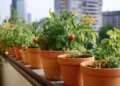
One large container can become a productive tomato station. Choose a patio, dwarf, or determinate tomato variety, use a pot at least 5 gallons in size, and add a cage or compact trellis at planting time.
Tucking basil, chives, or trailing nasturtiums around the base makes the container look fuller while giving you useful harvests.
This garden needs six to eight hours of direct sun for the best results. It is not the easiest option for a dim balcony, but a sunny corner can produce an impressive amount of food from a very small footprint.
3. The Vertical Herb Wall
When floor space is precious, grow upward. A wall-mounted planter, secure trellis with hanging pots, or slim shelving unit can hold herbs at arm’s reach from the kitchen.
Basil, parsley, cilantro, thyme, oregano, chives, and mint are practical choices, although mint should get its own container because it spreads enthusiastically.
Group herbs by water needs. Mediterranean herbs such as thyme, oregano, and rosemary prefer drier soil and lots of sun. Parsley and cilantro appreciate more regular moisture and can tolerate a little less intense light.
See also: Guide to Indoor Vertical Gardening >
4. The Pollinator Pot Collection
A balcony can support pollinators even without a yard. Plant several containers with nectar-rich flowers such as zinnias, salvia, lantana, cosmos, bee balm, and compact coneflowers.
Choose varieties that bloom at slightly different times so something is flowering for as much of the season as possible.
Avoid treating blooms with broad-spectrum insecticides, especially when bees and butterflies are active.
A shallow dish with pebbles and fresh water can also offer pollinators a safe place to drink without creating a drowning hazard.
5. The Relaxing Shade Retreat
A shaded balcony can feel cool, lush, and peaceful rather than limiting. Combine ferns, caladiums, coleus, begonias, impatiens, and trailing ivy in containers of different heights.
Their foliage creates texture even when flowers are not the main attraction.
Use light-colored pots if the area feels dark, and add one small chair, a weatherproof side table, or soft outdoor lighting. The goal is not to pack every inch with plants. A little open space makes a shade garden feel like a place to linger.
6. The Low-Water Mediterranean Look
If your balcony is hot and sunny and you sometimes forget to water, lean into plants that tolerate drier conditions.
Lavender, rosemary, sedum, compact ornamental grasses, thyme, and certain succulents create a sun-washed look with less frequent watering than thirsty annuals.
Drainage is essential here. Use pots with drainage holes and a potting mix designed for containers, not dense garden soil. This style is low-water, not no-water, especially during heat waves when containers can dry out in a single day.
7. The Privacy Screen Garden
Plants can make a balcony feel less exposed without building a solid wall. Use a freestanding trellis or railing-safe support with climbing plants such as black-eyed Susan vine, morning glory, jasmine, or compact clematis.
Tall grasses and narrow evergreen containers can also add gentle screening.
Annual vines grow quickly and are ideal when you want fast summer coverage.
Perennial climbers may take longer but can be worthwhile if you have a stable setup and are allowed to leave containers outdoors year-round.
Be sure supports are firmly anchored, since wind puts extra strain on tall growth.
8. The Color-Theme Flower Garden
For a balcony that looks polished in photos and inviting in person, limit the color palette. You might plant silver foliage with purple flowers, cheerful yellow and orange blooms, or a calm mix of white, blue, and soft green.
Repeating colors across pots makes mismatched containers feel intentional.
For sunny sites, try petunias, calibrachoa, verbena, marigolds, and zinnias.
For partial shade, begonias, fuchsias, and coleus offer long-lasting color.
Include at least one trailing plant near the edge of a planter to soften hard lines.
9. The Family-Friendly Strawberry Garden
Strawberries are fun for children, easy to tuck into containers, and delicious eaten right outside. Use a strawberry pot, hanging basket, railing planter, or wide bowl-shaped container.
Ever-bearing varieties are especially useful for balconies because they can produce fruit in waves rather than all at once.
Place them in full sun and keep the soil consistently moist, never soggy. Hanging baskets can reduce slug problems, but they dry out faster than larger pots.
Check them often during warm weather.
10. The Four-Season Container Plan
A balcony does not have to look empty after the first frost.
Start spring with pansies, bulbs, and cool-season greens.
Shift to heat-loving flowers and edibles for summer, then refresh containers with mums, ornamental kale, asters, and pansies in fall.
In milder regions, evergreen dwarf conifers, heuchera, and hardy herbs can keep the space attractive through winter.
This is one of the most flexible balcony garden examples because it allows you to experiment. Rather than committing every pot to permanent plants, keep a few containers available for seasonal color and new ideas.
Make Small Containers Work Harder
A successful balcony garden usually relies on fewer, better containers. Larger pots hold moisture longer, give roots more room, and need less constant attention than tiny decorative planters.
If possible, choose lightweight resin, fiberglass, or fabric containers instead of heavy ceramic or concrete, especially on upper floors.
Fill pots with quality container mix and fertilize regularly during the active growing season.
Nutrients wash out more quickly from containers than from in-ground beds.
A slow-release fertilizer at planting time, followed by a water-soluble feed according to its label, works well for many flowering and edible plants.
Watering is the daily reality that determines whether a balcony garden thrives.
Test soil with a finger instead of watering on a fixed schedule. When the top inch feels dry, water slowly until it drains from the bottom.
Morning watering is ideal, but a thorough evening drink is better than letting plants wilt overnight in a heat spell.
Choose One Idea and Build From There
You do not need ten containers, a matching furniture set, or expert-level plant knowledge to make your balcony feel alive.
Start with the garden style that solves your biggest need: herbs for cooking, flowers for color, screening for privacy, or a quiet patch of green after a long day.
One healthy, well-loved planter is the beginning of a balcony you will be excited to step into.